


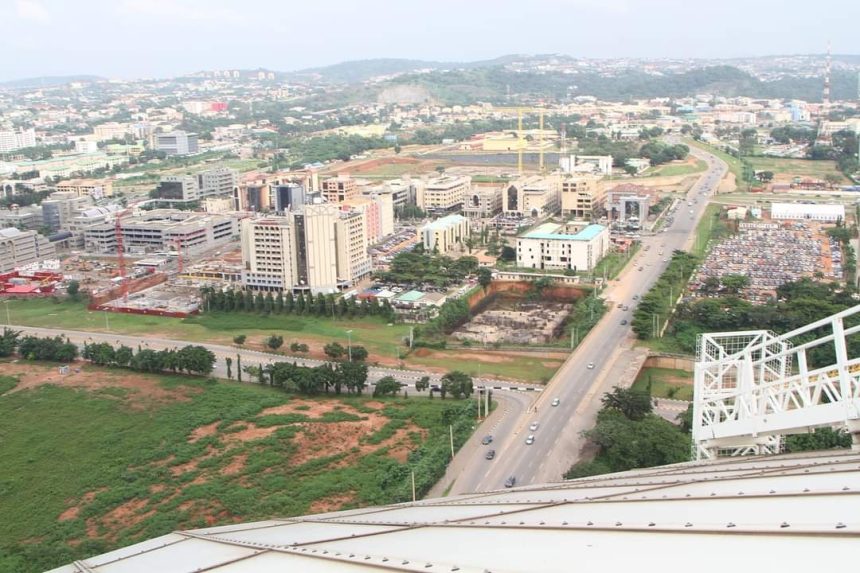
Nigeria’s real estate sector closed 2025 on a paradoxical note—posting impressive economic figures while millions of citizens remain locked out of home ownership.
Fresh data shows a market expanding in value and relevance, yet constrained by deep-rooted structural weaknesses that continue to limit access to decent and affordable housing.
Following the rebasing of Nigeria’s Gross Domestic Product by the National Bureau of Statistics (NBS), real estate emerged as one of the country’s fastest-rising economic contributors.
The sector’s value jumped significantly, placing it among the top three drivers of economic activity, ahead of long-established sectors such as telecommunications and construction.
Analysts say the revised figures reflect better data capture, rising urbanisation and the growing formalisation of property-related services.
Despite these gains, the lived reality for many Nigerians tells a different story. The country’s housing deficit remains estimated at over 20 million units, with demand far outstripping supply—particularly in major urban centres such as Lagos, Abuja and Port Harcourt.
Population growth, rural-urban migration and a youthful demographic continue to fuel demand, even as affordability declines.
One of the most persistent challenges facing the sector is the high cost of construction. Developers have repeatedly pointed to inflation, exchange rate volatility and heavy reliance on imported building materials as key cost drivers.
Although there have been efforts to stabilise the foreign exchange market, many developers say prices of cement, steel and finishing materials remain unpredictable, forcing higher costs onto buyers and tenants.
Access to finance has also remained a major bottleneck. Mortgage penetration in Nigeria is still among the lowest globally, leaving most home buyers dependent on personal savings or informal arrangements.
With commercial bank lending rates hovering above 30 per cent, long-term financing for housing development remains largely out of reach for both developers and prospective homeowners.
Land acquisition and titling continue to slow down investment. Industry players argue that Nigeria’s land administration system is complex, costly and prone to delays, increasing project timelines and legal risks. The absence of transparent and efficient land registries has further discouraged large-scale developments, particularly from foreign investors.
Infrastructure gaps have compounded these challenges. Many potential development areas lack access to roads, power and water, forcing developers to shoulder additional costs that ultimately reflect in property prices. As a result, affordable housing projects struggle to achieve commercial viability without strong government support.
Still, experts say opportunities exist beneath the strain. The massive housing deficit presents a long-term investment window, especially in low- and middle-income housing. Government initiatives such as public-private partnerships and social housing schemes are seen as steps in the right direction, though stakeholders insist that implementation must be scaled and sustained.
As 2025 ends, Nigeria’s property market stands at a crossroads. The numbers suggest growth and rising economic relevance, but until financing, land administration and infrastructure challenges are addressed, the struggle for affordable housing is likely to persist—keeping home ownership beyond the reach of millions.
