


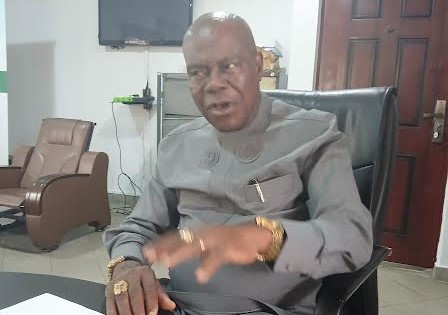
Nigeria Needs Deliberate Social Housing Programme to Ease Rent Crisis — Okoro
The Federal and state governments have been urged to adopt a deliberate social housing strategy that provides affordable homes for low-income Nigerians and reduces growing pressure on the rental market.
Chief M. I. Okoro, a Fellow of the Nigerian Institution of Estate Surveyors and Valuers, said Nigeria’s housing challenges could not be addressed solely through commercially priced developments.
He called on the government to work closely with estate surveyors, valuers and other built-environment professionals to develop sustainable funding structures for large-scale social housing.
Okoro said population growth, rural-to-urban migration and limited housing supply were driving rents and property prices beyond the reach of many households.
He explained that competition for a limited number of homes was creating a displacement effect across Lagos. As accommodation becomes more expensive in premium locations such as Ikoyi and Victoria Island, residents move towards the Mainland and other emerging areas, placing additional pressure on existing communities.
According to him, increasing the supply of affordable homes remains the most effective way to moderate rents and property prices.
Okoro proposed greater involvement by Nigeria’s 774 local government councils in housing delivery, noting that local authorities in some developed countries provide council flats and other forms of subsidised accommodation.
He maintained that functional and properly funded local councils could develop affordable rental homes within their communities, particularly when supported by state governments with land and infrastructure.
“Social housing is not meant to be driven by profit,” he said, stressing that government intervention must be intentional and targeted at households that cannot afford commercially priced properties.
The estate surveyor suggested that public revenue and dedicated contributions from large corporate organisations could be channelled into social housing funds.
He also urged the government to consult housing professionals on how such funds could be mobilised, managed and invested transparently.
Okoro acknowledged the Federal Government’s Renewed Hope Housing Programme as a positive intervention but questioned whether many of the homes being delivered would be affordable to low-income earners.
He argued that properties costing tens of millions of naira would remain inaccessible to workers without adequate incomes, affordable mortgages or substantial personal savings.
Although existing government-backed housing-finance initiatives provide long-term loans to qualified applicants, he noted that many Nigerians do not earn enough to meet the required repayments.
Okoro recommended testing a coordinated social housing programme across every state for at least one year, with local governments participating in the construction of mass housing.
He said simultaneous delivery across multiple communities could significantly increase supply, reduce demand pressure and eventually moderate rents.
The housing expert also identified difficult land-registration procedures as a major obstacle to affordable development.
He said the high official and unofficial costs associated with obtaining Certificates of Occupancy and registering property transactions were frequently passed on to buyers and tenants.
Simplifying land allocation, titling and registration processes, he added, would reduce development costs and encourage more private-sector investment.
Okoro also called for balanced development across Nigeria’s rural areas and smaller cities. Providing electricity, water, roads, communications and employment opportunities outside major urban centres could reduce forced migration to Lagos and other overcrowded cities.
He maintained that addressing Nigeria’s housing crisis would require coordinated action involving all levels of government, professional bodies, financial institutions and responsible private-sector organisations.
