


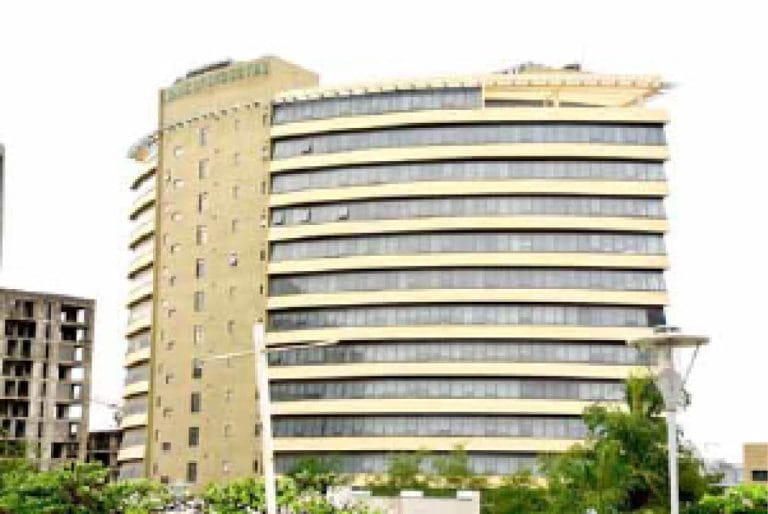
The federal government’s plan to relocate the Bank of Industry (BOI) headquarters to Eko Atlantic City, Lagos, is generating scrutiny from analysts and industry stakeholders.
Critics question the move, highlighting that BOI already maintains substantial offices in Lagos, Abuja, and 33 states across Nigeria.
The relocation, announced last week by Senator John Enoh, Minister of State for Industry, Trade and Investment, received approval from the Federal Executive Council for the design and construction of a new headquarters at Eko Atlantic. The project aims to serve as a central hub for BOI’s expanded financing of industrial growth, SMEs, and export-oriented manufacturing.
BOI at a Glance
Established from a merger of the Nigerian Industrial Development Bank (NIDB) and the Nigerian Bank for Commerce and Industry (NBCI), BOI is Nigeria’s oldest and largest development financing institution (DFI). It supports large, medium, and small-scale projects across sectors such as agro-processing, creative industries, healthcare, renewable energy, and solid minerals, operating from 33 offices nationwide.
In 2024, the bank disbursed ₦510.9 billion to nearly 1 million beneficiaries, including 10,208 farmers who received ₦2.7 billion through agricultural support programs. Under its Rural Area Programme on Investment for Development (RAPID), the bank also provided financial support to 93 micro and small-scale enterprises in rural areas.
Why the Move Sparks Criticism
Eko Atlantic City, a privately funded, 10 million square meter coastal city on Victoria Island, is rapidly attracting major corporations like FirstBank, MTN, Shell, and TVC. While it promises modern infrastructure, land costs range between $1,500 and $3,000 per square meter, making construction of a new BOI headquarters potentially hundreds of millions of dollars in investment.
Analysts argue that the relocation is unnecessary and economically imprudent. BOI already has a 12-storey tower in Abuja, partially leased to other organizations, and a spacious head office in Marina, Lagos. Critics suggest that funds intended for this “vanity project” could be better used to finance SMEs and support industrial growth.
“Every naira going into another structure is money not going into productive work. BOI’s priority should be funding manufacturers and industrial infrastructure, not constructing a new headquarters,” said public affairs analyst Udom Owodiong.
Others note that the relocation may set a precedent for other government DFIs, such as the Bank of Agriculture (BOA) and Nigeria Export-Import Bank (NEXIM), potentially escalating costs for taxpayers without corresponding economic benefit.
Efforts to obtain comments from BOI management regarding the project were unsuccessful at press time.
