


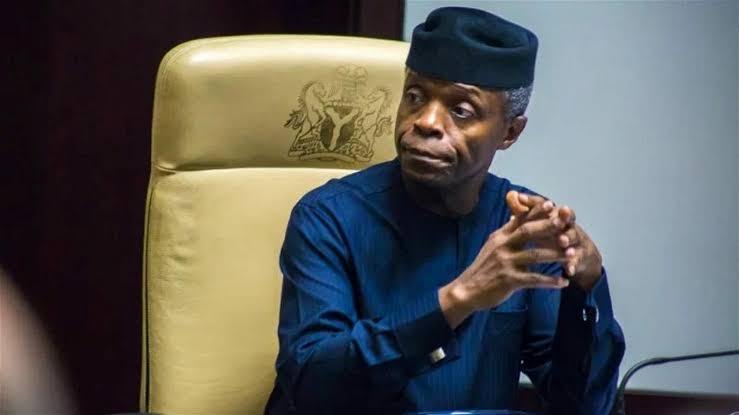
Nigeria’s former Vice President, Prof. Yemi Osinbajo, has emphasized that strong political will, combined with private sector backing, can enable the government to deliver sustainable and affordable housing projects nationwide.
Speaking at the 2026 Wemabod Real Estate Outlook in Lagos, themed “Unlocking Land and Infrastructure for Inclusive Housing,” Osinbajo stated that governments can successfully provide social housing models similar to Bodija Estate, given the right commitment and private sector involvement.
“Within three years of my tenure as Vice President, I inaugurated 15,000 housing units in Borno State. Comparable projects are achievable elsewhere; it is a matter of political will,” he noted.
Osinbajo highlighted that Nigeria’s land management has long been constrained by fragmented records, overlapping claims, and bureaucratic delays. He stressed the need for full digitization of land records, creating a transparent database of ownership and usage rights. Digital titling, he said, would reduce disputes, prevent double allocation, and provide a reliable foundation for investment.
He also called for streamlined land acquisition processes and regional legal frameworks to simplify documentation and ensure predictable timelines. “This will encourage both private sector and public infrastructure development,” Osinbajo added.
The former vice president further explained that modernizing land administration can reduce corruption, enhance security for homeowners and developers, and support proactive land banking and urban expansion strategies coordinated with infrastructure delivery.
“Inclusive, sustainable housing is possible—it is a policy choice and a matter of political will. South-West Nigeria does not lack land, capital, or expertise; what is lacking is a coherent regional vision that treats housing as the backbone of urban development,” he concluded.
Bashir Oladunni, CEO of Wemabod, added that housing is more than a social obligation; it is a foundation for economic productivity, social stability, and sustainable urban growth. He highlighted structural constraints in land and infrastructure as the main challenges limiting access and affordability.
Nureni Adisa, Chairman of Wemabod Limited, remarked on the paradox of Nigeria’s urban growth: vibrant economies alongside deepening housing inequality and land trapped in outdated frameworks, stressing the need for strategic reforms to unlock the nation’s housing potential.