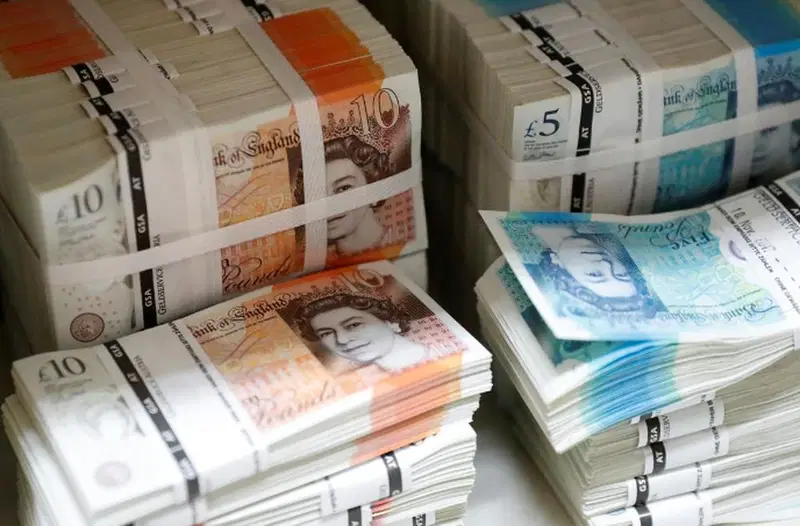
The Pound to Naira exchange rate opened the trading week with moderate gains for the Nigerian Naira against the British Pound on Monday, February 23, 2026, as market participants reacted to fresh supply figures from the Central Bank of Nigeria and improved foreign exchange liquidity.
Official Market (NFEM) Performance
According to data from the Nigerian Foreign Exchange Market (NFEM), the British Pound opened at ₦1,817.40 in the official window. Trading activity during the early morning sessions saw the rate strengthen, with the currency trading around ₦1,810.65 per Pound by 6:00 AM WAT.
This performance marks a recovery from earlier in the month when the Pound traded as high as ₦1,906.29, and reflects gradual stabilisation in the NFEM following sustained interventions by policymakers and the clearing of longstanding foreign exchange backlogs owed to international airlines and service providers.
Parallel Market Trends
In the parallel market, the British Pound is trading at a slight premium, with dealers quoting rates between ₦1,830 and ₦1,842 per Pound. While the informal market continues to support retail demand for travel allowances and personal FX needs, the spread between the official and parallel markets remains relatively contained at around 1.5%.
Traders in major cities such as Lagos and Abuja indicate that demand for Sterling remains steady, without signs of panic buying. This subdued volatility suggests that increased transparency measures in the official FX market may be anchoring market expectations and reducing speculative pressure on the currency pair.
Drivers of the Exchange Rate
Several factors are influencing the Pound to Naira exchange rate as follows:
Global Sterling Strength: The British Pound has shown resilience against major global currencies, supported by stronger-than-expected employment data from the United Kingdom. This external strength has contributed to upward pressure on the GBP/NGN rate.
Domestic FX Liquidity: Improved foreign exchange liquidity in the official FX window has enhanced Nigerian banks’ capacity to fulfill foreign exchange requests, including “Form M” and “Form A” transactions, reducing reliance on the parallel market.
Monetary Policy Environment: The continued high-interest-rate environment in Nigeria — with the Monetary Policy Rate (MPR) maintained at 27.00% — has encouraged some degree of foreign portfolio investment, which analysts say contributes to stabilising the Naira against major currencies such as the Pound.
Outlook
Financial market experts expect the Pound to Naira exchange rate to trade within a relatively narrow band for the remainder of the day, with the official market likely to fluctuate between ₦1,805 and ₦1,818 per Pound, barring significant new developments in global oil prices or local policy shifts.
As Nigeria’s forex markets navigate both external currency movements and domestic policy initiatives, observer sentiment remains cautiously optimistic that increased FX supply and improved liquidity will continue to support stability in key currency pairs, including GBP/NGN.