


Nigeria’s banking sector is undergoing one of its most comprehensive reforms in decades, as deposit money banks move to raise an estimated ₦4.14 trillion in fresh capital ahead of the March 31, 2026 recapitalisation deadline, according to a report by global professional services firm, Deloitte.
The recapitalisation exercise, introduced by the Central Bank of Nigeria (CBN) in April 2024, is aimed at strengthening financial stability, improving resilience to macroeconomic shocks, and positioning the banking system to support Nigeria’s ambition of building a $1 trillion economy by 2030.
Under the new framework, the CBN significantly raised minimum capital requirements, setting thresholds at ₦500 billion for commercial banks with international licences, ₦200 billion for national banks, and ₦50 billion for regional banks.
Merchant banks are required to maintain ₦50 billion, while non-interest banks must hold between ₦10 billion and ₦20 billion, depending on licence scope.
Unlike previous recapitalisation exercises, the apex bank adopted a stricter definition of qualifying capital, limiting it to paid-up share capital and share premium, while excluding retained earnings and other reserves.
This change effectively compelled most banks to raise new funds, even those that previously appeared adequately capitalised.
Deloitte noted that the policy shift became necessary as banks’ capital buffers were eroded by prolonged macroeconomic pressures, including high inflation, rising interest rates, exchange rate volatility, and foreign exchange illiquidity.
The firm said the recapitalisation would enable Nigerian banks to take on larger risks, strengthen liquidity positions, and expand their capacity to absorb losses arising from domestic and external shocks.
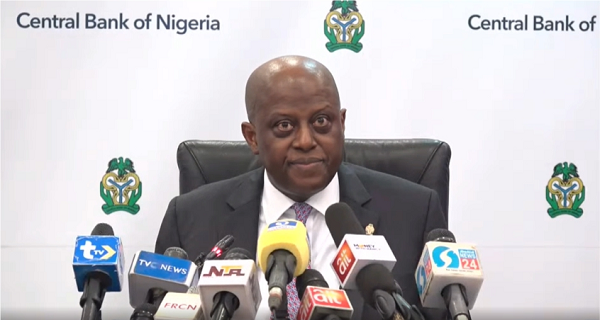
Progress so far suggests the sector is responding positively. CBN Governor Olayemi Cardoso disclosed that 27 banks have raised capital through public offers and rights issues, with 16 banks already meeting or exceeding the new minimum capital requirements well ahead of the deadline.
Speaking at the recent Bankers’ Dinner in Lagos, Cardoso said the recapitalisation programme remains on track, noting that stress tests conducted during the year confirmed the sector’s resilience, with key financial soundness indicators remaining within regulatory benchmarks.
He added that, with months left to the deadline, several banks are well positioned to comply comfortably, while others are making steady progress.
To safeguard the trillions of naira being injected into the financial system, the CBN is redesigning its credit-risk framework, focusing on stronger governance, improved transparency, and firmer accountability. The objective, according to Cardoso, is to prevent the boom-and-bust cycles that followed past recapitalisation efforts.
As part of the reforms, the apex bank has established a dedicated Compliance Department to oversee financial crime supervision, market conduct, corporate governance, enterprise security, and Environmental, Social and Governance (ESG) compliance.
In addition, the Credit Risk Management System (CRMS) has been upgraded and web-enabled, allowing banks to submit statutory returns and conduct real-time borrower checks, with plans underway to integrate the platform more closely with banks’ internal systems.
At its 303rd Monetary Policy Committee (MPC) meeting, the CBN-led committee expressed satisfaction with the banking system’s resilience and urged the apex bank to ensure a smooth conclusion of the recapitalisation process.
Beyond financial stability, regulators view the exercise as critical to Nigeria’s long-term growth strategy. Cardoso said the current capital base of Nigerian banks would be insufficient to finance a $1 trillion economy without decisive reforms.
CBN Deputy Governor Emem Usoro described recapitalisation as a key pillar of national economic planning, while UBA Group Managing Director, Oliver Alawuba, said the policy would strengthen banks’ ability to withstand shocks and fund long-term development.
Despite the higher capital thresholds, the CBN has reassured the public that the sector remains stable, noting that the non-performing loan ratio is within the five per cent prudential limit and liquidity ratios remain above regulatory minimums.
Analysts say the success of the recapitalisation programme will be critical in determining not only the future strength of Nigeria’s banking sector but also its capacity to drive sustainable economic growth in the coming years.
