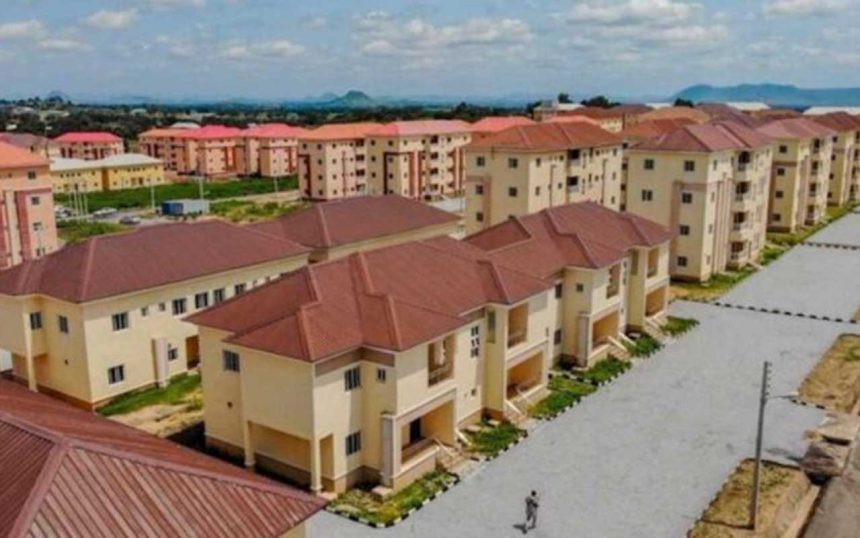
Stakeholders in Nigeria’s built environment sector have criticised the National Assembly for allocating what they described as an inadequate budget to the Federal Ministry of Housing and Urban Development, warning that the housing sector cannot deliver results with limited funding.
The criticism follows the approval of N97.1 billion for the ministry’s personnel, overhead, and capital expenditures in the 2026 national budget.
A property developer based in Lagos, Obiora Okeke, said the allocation is insufficient to address Nigeria’s housing needs across the 36 states and the Federal Capital Territory.
According to him, the budget also covers agencies supervised by the ministry, making the allocation even more limited.
“The National Assembly budgeted N97.1 billion for Housing and Urban Development, N6.5 billion for the Office of the Surveyor General of the Federation and N2.4 billion for the Federal School of Survey in Oyo State,” he said.
Okeke explained that both agencies operate under the ministry, stressing that such a lean budget will worsen Nigeria’s housing deficit.
“With this lean budget, our housing deficit will continue to swell,” he warned.
Stakeholders express frustration
Another stakeholder, Monica Efe Osaghae, Managing Director of Efe Enterprises, accused lawmakers of failing to prioritise the interests of ordinary Nigerians.
She argued that policymakers often promise reform during election campaigns but neglect the needs of citizens after gaining power.
“These people did not go there to protect our interest; rather, they fought for their purses,” she said.
Osaghae added that the housing ministry’s projects are not evenly distributed across the country, noting that several states are unaware of federal housing initiatives.
“The houses the ministry is building are not widespread. Sometimes they claim they are waiting for funding before proceeding,” she said.
She urged both lawmakers and government officials to adopt a more proactive approach to housing development, warning that selective project implementation undermines public trust.
Lawmakers call for stronger housing funding
Despite the criticism, lawmakers have recently acknowledged that the housing sector remains underfunded.
During the 2026 budget defence session, the Senate Committee on Lands, Housing and Urban Development and the House Committee on Housing and Habitat called for increased investment in the sector.
The Senate committee chairman, Aminu Waziri Tambuwal, reaffirmed the Senate’s commitment to strengthening housing delivery nationwide.
“Housing delivery remains central to national development, and the Senate will continue to support initiatives that expand access to affordable homes and strengthen urban infrastructure,” he said.
Tambuwal also encouraged the ministry to maintain close engagement with lawmakers to ensure effective implementation of housing programmes and proper utilisation of allocated funds.
Similarly, the chairman of the House Committee on Housing and Habitat, Abdulmumin Jibrin, emphasised the sector’s importance to economic growth.
“Housing must be prioritised on the government’s agenda because of its multi-dimensional impact on the economy,” he said.
Jibrin noted that the sector generates employment opportunities for skilled workers and stimulates economic activity across several industries.
Ministry outlines priorities
During the budget presentation, the Minister of Housing and Urban Development, Ahmed Musa Dangiwa, led the ministry’s management team to outline its priorities for the 2026 fiscal year.
He explained that the ministry plans to focus on completing ongoing housing projects and maintaining momentum in urban infrastructure development across the country.
Dangiwa added that the budget proposal was designed to consolidate existing initiatives while ensuring continuity in housing delivery nationwide.
However, industry stakeholders maintain that without significantly increased funding, the ministry may struggle to make meaningful progress in addressing Nigeria’s growing housing deficit.