


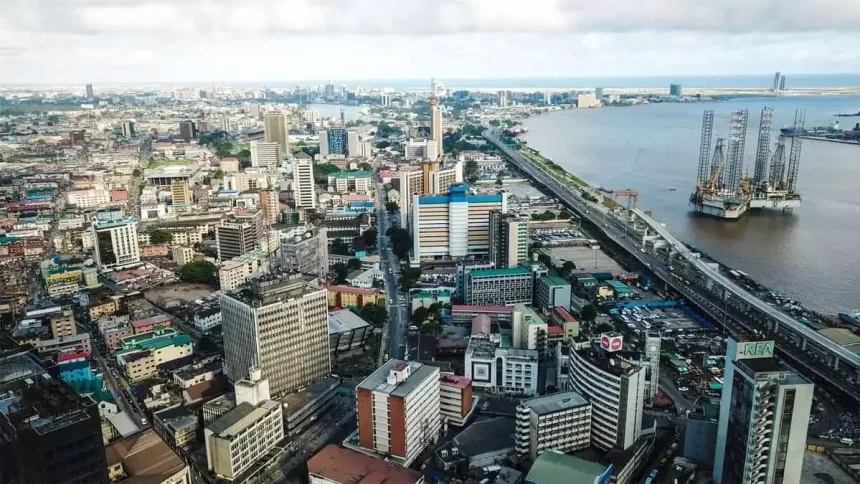
The cost of renting a two-bedroom apartment on Lagos Island has risen to as much as ₦17.25 million annually, highlighting the growing pressure on tenants as housing costs continue to climb across Nigeria’s commercial capital.
The increase reflects a wider trend in Lagos, where strong demand, limited housing supply, rising construction costs and higher property management expenses continue to push rental prices upward. Market data from Nigeria Housing Market shows that premium areas on Lagos Island already command significantly higher rents than many Mainland locations.
Lagos Island remains one of the city’s most expensive residential markets because of its proximity to major commercial districts, employment centres, business hubs and high-value infrastructure. Areas such as Ikoyi and Victoria Island attract professionals, expatriates and corporate tenants willing to pay a premium for location and access.
The latest rent figure illustrates the widening gap between premium housing and what many households can realistically afford. As rents increase, tenants are increasingly forced to consider smaller apartments, less central locations or longer commuting distances.
Housing Supply Remains a Major Pressure Point
One of the major factors behind Lagos’ rental increases is the persistent mismatch between housing demand and available supply.
Lagos continues to attract people seeking employment and business opportunities, increasing pressure on existing housing stock. At the same time, new residential developments face high land, financing, construction and infrastructure costs.
These pressures ultimately feed into the price landlords charge tenants.
The situation is particularly pronounced in locations where demand remains consistently high and available properties are limited. According to Nigeria Housing Market’s broader rental analysis, rents have continued to rise across both Island and Mainland neighbourhoods as demand outpaces supply.
Construction Costs Add to Rental Pressure
The cost of developing and maintaining residential property has also become an important factor.
Developers and landlords face higher expenses for building materials, electricity, security, maintenance and facility management. In many Lagos estates, property owners also provide infrastructure and services that would ordinarily be supplied through public systems.
These additional costs can be reflected in both rent and service charges.
For tenants, the headline rent therefore doesn’t always represent the full cost of occupying a premium apartment. Service charges, power costs, security fees and other property-related expenses can substantially increase the annual housing bill.
Affordability Becomes the Bigger Question
The rise in Lagos Island rents raises a broader question about housing affordability in Nigeria.
A growing number of residents are being priced out of central locations and are increasingly looking towards areas farther from major employment centres. While these locations may offer lower rents, the savings can be offset by longer commuting times and higher transportation costs.
This creates a difficult trade-off for households: pay more to live closer to economic opportunities or pay less and absorb the cost of commuting.
The situation also strengthens the argument for greater investment in affordable housing, mass transportation and infrastructure outside the traditional premium districts.
The Market Is Becoming Increasingly Polarised
Lagos’ housing market is increasingly divided between premium properties serving high-income tenants and a much larger population competing for relatively affordable accommodation.
Two-bedroom apartments remain particularly important because they offer a practical option for small families and working professionals. Nigeria Housing Market has previously identified two-bedroom units as one of the strongest segments of the country’s urban rental market.
However, when rents for such units reach millions of naira annually in premium locations, the category becomes inaccessible to a large section of the population.
The challenge for policymakers and developers is therefore not simply to build more houses, but to increase the supply of homes that ordinary households can actually afford.
Without significant improvement in housing supply, infrastructure and access to affordable housing finance, rising rents are likely to remain one of the biggest pressures facing Lagos residents.
