


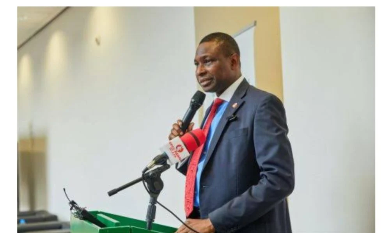
The Economic and Financial Crimes Commission (EFCC) has warned religious leaders against diverting tithes, offerings, zakat and other funds belonging to religious organisations into private businesses.
EFCC Chairman, Ola Olukoyede, issued the warning on Wednesday in Abuja during the 2026 Second Council Meeting of the Nigeria Inter-Religious Council (NIREC), where he urged churches and mosques to strengthen their internal financial controls.
Olukoyede said religious leaders who engage in legitimate private businesses must maintain a clear separation between their personal finances and funds entrusted to the organisations they lead.
He described the diversion of organisational funds into private businesses as criminal and said religious institutions should establish regulatory compliance mechanisms to prevent the misuse of money contributed by worshippers.
His remarks came during a wider discussion on the role of religious institutions in preventing corruption and promoting accountability in Nigeria. The meeting was held under the theme, “Shared Sacred Flourishing in Nigeria.”
EFCC Warns Against Mixing Religious And Personal Funds
Olukoyede said there was nothing wrong with religious leaders engaging in legitimate businesses or other vocations.
However, he stressed that money belonging to a church, mosque or other religious organisation must not be mixed with the personal finances of its leaders.
He specifically cited businesses such as farming and trading as examples of legitimate activities that religious leaders could undertake separately from their religious responsibilities.
“Don’t mix the money from the purse of your organisation with that of your own personal money,” Olukoyede said.
He added that when money is paid to a religious organisation, leaders should not divert it into their private businesses.
“That’s criminal,” he said.
The EFCC chairman said religious organisations should establish clear systems for identifying organisational funds, personal income and expenditure.
He urged religious bodies to develop regulatory compliance templates that would help their leaders and administrators understand the boundaries between institutional resources and personal finances.
Churches, Mosques Urged To Strengthen Compliance
Olukoyede called on churches, mosques and other faith-based organisations to establish financial controls capable of protecting money entrusted to them.
The recommendation is intended to ensure that funds contributed by worshippers are properly accounted for and applied for the purposes for which they were received.
The EFCC chairman said religious leaders should understand that their responsibilities extend beyond preaching against corruption.
He said their management of funds should also demonstrate the accountability and integrity they expect from their followers.
The call for stronger compliance mechanisms comes amid the EFCC’s wider engagement with religious institutions on financial crime prevention.
At the NIREC meeting, the commission also launched an Anti-Corruption Interfaith Manual designed to support Christian and Muslim religious leaders in teaching against corruption.
Religious Leaders Have Role In Fighting Corruption
Olukoyede said religious institutions have an “extraordinary responsibility” in Nigeria’s anti-corruption efforts because of their influence over millions of followers.
He drew a distinction between the role of law-enforcement agencies and the preventive role that faith communities can play.
According to him, the EFCC can investigate suspected financial crimes and prosecute offenders, while religious institutions can influence the values and character that shape people’s conduct.
“The EFCC can investigate a person’s conduct. Faith communities can influence that person’s character,” he said.
He said religious teachings could encourage honesty and challenge attitudes that normalise corruption.
The EFCC chairman argued that preventing corrupt behaviour before it occurs is important because law enforcement typically becomes involved after an alleged offence has already taken place.
EFCC Questions Celebration Of Unexplained Wealth
Olukoyede also criticised religious institutions that celebrate individuals whose wealth cannot be explained by their known sources of income.
He used the example of a public servant who builds an expensive religious structure far beyond what could reasonably be supported by the person’s legitimate earnings.
“A public servant says he has built a mosque that is worth more than his earnings in the next 500 years. And you go there to dedicate it. You are dedicating the proceeds of crime,” he said.
The statement was made as part of his broader criticism of the culture of celebrating wealth without asking questions about its source.
He urged religious leaders to examine the origin of wealth associated with individuals who receive public recognition within worship centres.
The comment was not directed at a specific person in the remarks reported from the NIREC meeting.
EFCC Says Financial Crime Has No Religion
Olukoyede also stressed that financial crime does not belong to any particular religion or ethnic group.
According to him, corruption affects both Christians and Muslims because the consequences of stolen or mismanaged public resources extend across communities.
The EFCC chairman said religious differences should not prevent faith communities from cooperating in the fight against corruption.
He urged Christian and Muslim leaders to use their platforms to encourage peaceful coexistence, responsible citizenship and integrity.
The Anti-Corruption Interfaith Manual launched at the meeting was developed to assist religious leaders in communicating teachings against corruption while promoting peaceful coexistence.
New Anti-Corruption Interfaith Manual
The Executive Secretary of NIREC, Prof. Cornelius Afebu Omonokhua, said the second edition of the anti-corruption preaching and teaching manual was developed through the Interfaith Anti-Corruption Advisory Committee of the EFCC.
The manual and accompanying facilitators’ guides are intended to help Christian and Muslim preachers communicate religious teachings against corruption.
Omonokhua said the initiative would support efforts to promote peaceful coexistence and strengthen the role of religious institutions in the fight against corruption.
The manual therefore provides a structured component to the EFCC’s engagement with faith communities.
EFCC Recalls Earlier Religious Fund Investigations
Olukoyede also referred to previous EFCC investigations involving bodies responsible for religious pilgrimage activities.
According to reports of his remarks, he said investigators had uncovered serious financial irregularities while examining Christian and Muslim pilgrimage boards.
One account attributed to the EFCC chairman said investigators had found a case in which almost 75 per cent of government funds released for pilgrim sponsorship had allegedly been stolen by officials connected with the programme.
However, the reports reviewed did not identify the particular pilgrimage organisation, the period involved or the officials allegedly responsible.
The claim should therefore be understood as Olukoyede’s account of previous investigative findings rather than a new judicial finding against a named individual or organisation.
His reference to those investigations was used to reinforce his call for stronger financial accountability in institutions handling funds for religious purposes.
Religious Institutions Urged To Lead By Example
The EFCC chairman said religious leaders have a responsibility to demonstrate the principles they teach.
He argued that followers often observe the conduct of their religious leaders and may model their own behaviour on it.
Olukoyede therefore urged clerics to ensure that their personal and institutional financial practices reflect the principles of honesty and accountability they preach.
He said religious institutions can help change attitudes toward corruption by challenging the idea that wealth should automatically attract admiration regardless of its source.
The EFCC’s position, as expressed at the NIREC meeting, is that faith communities can contribute to preventing corruption by influencing behaviour before financial crimes occur.
Focus On Honest Living
Olukoyede said one of the most important contributions religious leaders can make to Nigeria’s development is restoring the moral value of honest living.
He urged pastors, imams and other religious leaders to encourage followers to pursue legitimate sources of income and reject financial practices that compromise public trust.
The EFCC chairman also called for religious institutions to distinguish clearly between money belonging to their organisations and personal income belonging to their leaders.
Such separation, he said, would help strengthen accountability and reduce opportunities for misuse of funds.
The warning applies alongside the EFCC’s broader engagement with churches and mosques through NIREC and its interfaith anti-corruption programme.
A Wider Anti-Corruption Role For Faith Communities
The EFCC’s engagement with NIREC reflects a strategy that combines enforcement with prevention.
While the commission investigates suspected financial crimes, Olukoyede said religious institutions could help address the attitudes and values that allow corruption to flourish.
The Anti-Corruption Interfaith Manual is intended to provide religious leaders with guidance for communicating anti-corruption messages within their respective faith communities.
The EFCC chairman’s message also places financial accountability within religious organisations alongside the broader responsibility of religious leaders to promote ethical conduct.
For churches and mosques, the central message from the EFCC is that funds entrusted by worshippers should remain separate from the personal resources and businesses of religious leaders.
Olukoyede said religious leaders remain free to pursue legitimate private vocations, but they must maintain a clear financial boundary between those activities and the organisations they lead.
- The EFCC’s warning comes as the commission seeks greater cooperation from faith communities in addressing corruption, financial crime and the social attitudes that can enable both.
