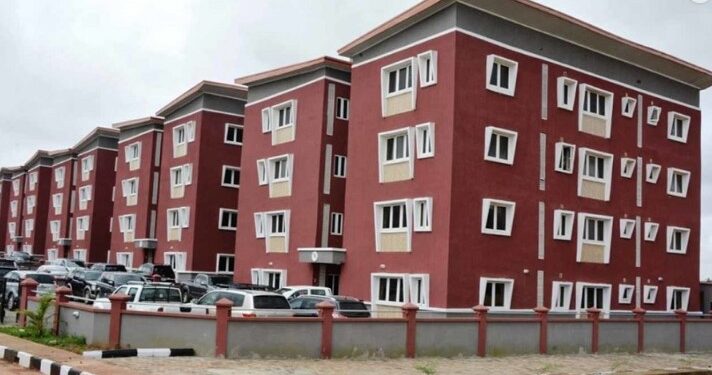
Two-bedroom flats have emerged as the most sought-after residential units across Nigeria, particularly in major cities like Lagos, Abuja, and Port Harcourt. Interviews with tenants, landlords, developers, and real estate analysts reveal that these units strike a unique balance between affordability, functionality, and investment returns, shaping both demand and supply in the market.
Property developers increasingly structure projects around two-bedroom configurations, responding to clear economic incentives. Temple Ugwu, Lead Partner at Blumeen Partners in Port Harcourt, notes that two-bedroom flats account for 55–58% of his portfolio, while, if only flats are considered, they make up about 90%. Ugwu explains that the cost-to-income dynamics favor two-bedroom units: higher construction costs for larger units are not proportionally offset by rental income. For instance, a one-bedroom flat in Port Harcourt rents for about N1.5 million annually, a two-bedroom N2.5 million, and a three-bedroom around N3 million.
In Lagos, where land is scarce and expensive, the economics are even more compelling. Real estate analyst Olabisi Odunsaya explains that on a plot where ten three-bedroom flats could generate N2.8 billion in total revenue, thirteen two-bedroom units could yield approximately N3.25 billion. Two-bedroom flats are cheaper to build, sell faster, rent more quickly, and appeal to a wider range of tenants, including young professionals, first-time buyers, and investors.
From a letting perspective, demand overwhelmingly favors two-bedroom units. Temidayo Ademosu, founder of Arrowhead Homes and Properties, says tenants actively seek two-bedroom flats, which consistently outperform other unit types in rental turnover. Developers have adapted by prioritizing two-bedroom flats in new projects, while three-bedroom units are often reserved for outright sale rather than rental.
Tenants themselves prefer two-bedroom flats for their practicality. They provide sufficient space for small families, work-from-home arrangements, and visiting relatives without the financial burden of larger units. Tenants interviewed in Lagos and Port Harcourt cited affordability and functional layouts as key considerations. Privacy and ensuite features also attract roommates and young professionals. In the short-let segment, two-bedroom flats account for over 70% of active inventory, highlighting their dominance in flexible rental markets.
Landlords and property managers favor these units as well. Victoria Fenibo, managing assets in Abuja, observes that two-bedroom flats are easier for tenants to maintain, reducing wear and tear and improving rental yields. Chimemem Chukwuemeka, a property owner in Lagos, notes that these units appeal to the widest tenant mix, from singles to families with multiple children.
Rental prices for two-bedroom flats vary across Lagos. More affordable areas like Badagry and Epe range from N575,000 to N605,000 annually, while premium districts such as Victoria Island, Ikoyi, and Banana Island command N12.5–N15.5 million per year. Eko Atlantic City averages N26.6 million annually, demonstrating that two-bedroom flats dominate the market across all income segments.
Two-bedroom flats remain the backbone of Nigeria’s residential property market. Developers, landlords, and tenants alike continue to favor these units for their optimal combination of affordability, manageability, and return on investment.