


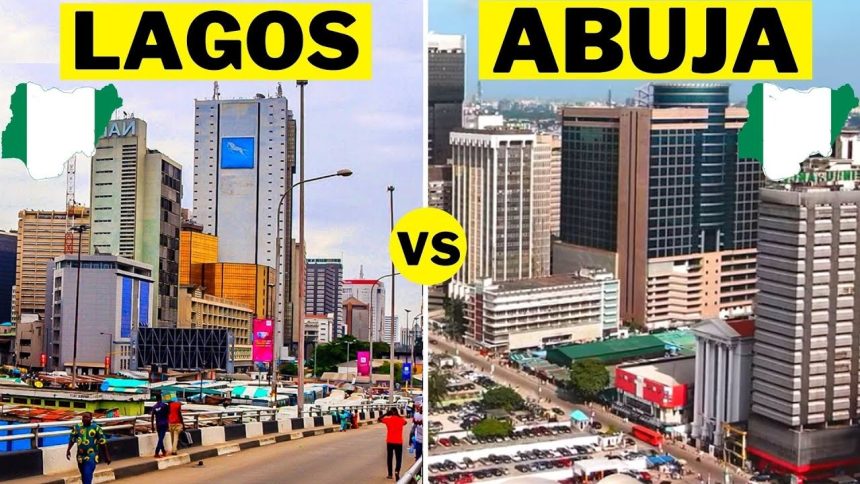
Housing affordability in Nigeria’s two largest cities, Lagos and Abuja, is worsening as annual rent increases of up to 20 per cent push accommodation costs further beyond the reach of millions of urban residents.
The Managing Director of Stallion Cardinal Homes, Dr Waliu Adeoye, raised the alarm while assessing the state of Nigeria’s real estate sector in 2026, warning that rising rents, weak mortgage access, and land administration bottlenecks are converging into a full-scale housing strain.
According to Adeoye, rental costs in several parts of Lagos and Abuja now rise by between 15 and 20 per cent annually, compounding hardship for households already battling inflation and stagnant incomes.
He noted that the situation is particularly severe because the majority of urban Nigerians are renters, while landlords continue to demand one to two years’ rent upfront, a practice he described as a major barrier to housing access.
Adeoye said Nigeria’s housing market is at a pivotal moment, driven by a rare alignment of policy reforms spanning taxation, land administration, housing finance, and data infrastructure.
“For the first time in decades, housing-related reforms are advancing simultaneously rather than in isolation,” he said. “The real test is whether these policies will translate into real homes, accessible mortgages, and secure land titles for ordinary Nigerians.”
He pointed to ongoing initiatives such as the Nigeria Tax Act 2025, the Ministry of Finance Incorporated Real Estate Investment Fund, the Land4Growth digital land titling programme, the recapitalisation of the Federal Mortgage Bank of Nigeria, and plans for a National Housing Data Centre as signs of renewed momentum.
Despite these measures, Adeoye warned that Nigeria’s housing deficit continues to widen, growing from an estimated 17 million units a decade ago to about 28 million units today, underscoring the urgency for implementation rather than policy announcements.
On tax reforms, he acknowledged that provisions allowing rent deductions and tax relief across parts of the construction value chain could ease pressure on developers and tenants. However, he argued that the benefits remain limited in practice.
“A rent deduction capped at ₦500,000 offers minimal relief to tenants paying ₦3 million annually, while mortgage tax incentives mean little when mortgage penetration remains below one per cent of GDP,” he said.
Adeoye identified land administration as the most critical structural challenge in the housing sector, noting that fewer than five per cent of land parcels nationwide are formally titled.
He explained that this leaves between $150 billion and $300 billion worth of property as “dead capital” that cannot be used as collateral, transferred securely, or leveraged for housing finance.
While describing the Land4Growth digital titling programme as potentially transformative, he stressed that its success depends largely on transparency and political will at the state level, particularly in protecting tenure rights for residents of long-established informal settlements.
On mortgage financing, Adeoye said Nigeria’s mortgage-to-GDP ratio of about 0.5 per cent highlights how inaccessible home ownership remains. Although the Federal Mortgage Bank offers single-digit interest loans under the National Housing Fund, access is still extremely limited.
“Fewer than 20,000 Nigerians access NHF-backed mortgages each year in a country of over 200 million people,” he said, adding that over 90 per cent of workers operate in the informal economy and remain excluded from formal housing finance.
While supporting discussions around rental regulation, Adeoye cautioned against excessive controls that could discourage private housing supply. He advocated for standardised lease agreements, efficient dispute resolution mechanisms, and targeted tax incentives to encourage long-term affordable rental housing.
Urban analysts say unless policy reforms are matched with sustained political commitment and private-sector collaboration, rising rents in Lagos and Abuja could continue to accelerate in 2026, deepening housing inequality across Nigeria’s urban centres.
