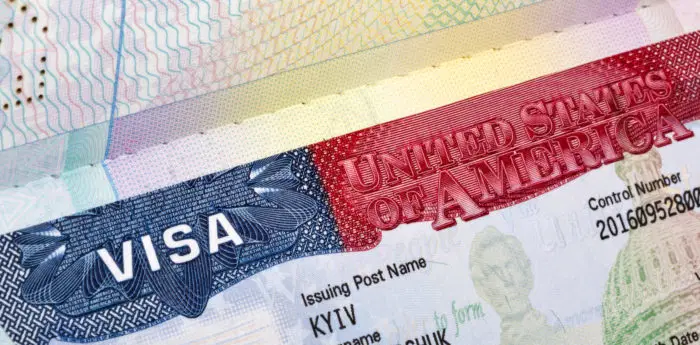
The United States government has announced plans to freeze visa processing for nationals of Nigeria and 74 other countries over concerns that applicants from the affected nations are likely to depend on welfare and public benefits.
According to the US State Department, the pause will take effect from January 21, 2026, and will remain in force indefinitely while a comprehensive reassessment of immigrant visa screening and vetting procedures is carried out.
A State Department memo, first reported by Fox News Digital, revealed that the decision will affect visa applicants from countries across Africa, the Middle East, Asia, Europe and Latin America. In addition to Nigeria, countries listed include Somalia, Egypt, Iran, Iraq, Yemen, Afghanistan, Russia, Brazil and Thailand.
The directive instructs US embassies and consular officers to refuse visas under existing “public charge” provisions of US immigration law while the reassessment is ongoing.
President Donald Trump had earlier in the year published data on welfare dependency rates among immigrant households, noting that about 33.3 per cent of Nigerian immigrant households reportedly received some form of public assistance in the United States.
Under the new guidance, consular officers are empowered to deny visas to applicants deemed likely to rely on government support. This includes older applicants, those considered overweight, and individuals with a history of receiving cash assistance or undergoing institutionalisation.
“The State Department will use its long-standing authority to deem ineligible potential immigrants who would become a public charge on the United States and exploit the generosity of the American people,” a State Department spokesperson, Tommy Piggott, said in a statement.
“Immigration from these 75 countries will be paused while the State Department reassesses immigration processing procedures to prevent the entry of foreign nationals who would take welfare and public benefits,” he added.
In November 2025, a State Department cable circulated to diplomatic posts worldwide had already directed consular officers to enforce stricter screening rules under the “public charge” provision. The guidance instructed officers to assess a wide range of factors, including applicants’ health status, age, English language proficiency, financial capacity and potential need for long-term medical care.
While the public charge provision has existed in US immigration law for decades, its enforcement has varied across administrations, with consular officers historically given broad discretion. However, in 2019, President Trump expanded the definition to include a wider range of public benefits, tightening admissibility standards for immigrants.
The latest move signals a renewed push by the US administration to strictly enforce immigration rules linked to welfare dependence, with Nigerian applicants now among those facing heightened scrutiny.