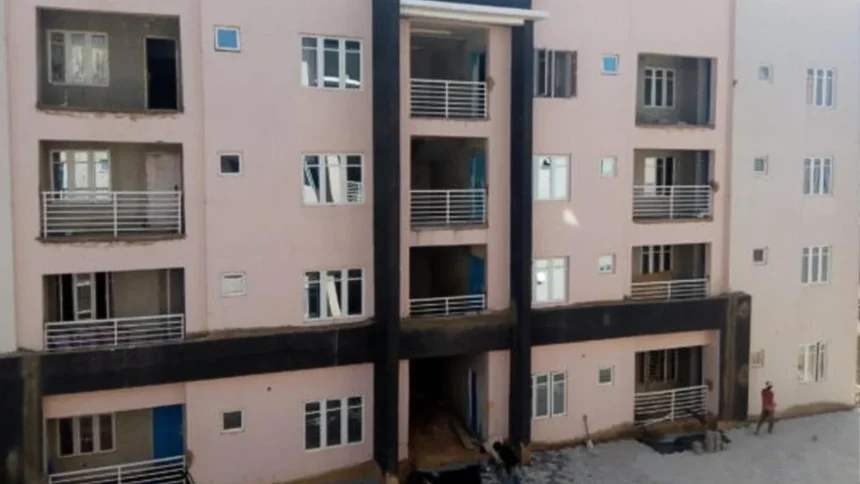
The rapid proliferation and repurposing of existing residential buildings into short-let apartments across major urban centers are structurally rewriting Nigeria’s real estate landscape. Industry analysts warn that this structural shift is directly triggering a steep decline in traditional rental stock and driving up long-term housing costs. The transformation is most pronounced in high-traffic commercial hubs like Lagos, Abuja, Port Harcourt, and Ibadan, which continuously pull in significant numbers of domestic and international visitors.
Seeking to maximize returns on investment, property owners are increasingly abandoning the conventional 12-to-24-month tenancy framework in favor of lucrative short-term lodging models. This unregulated reallocation of assets leaves everyday families competing for a rapidly shrinking pool of long-term homes. Property operators favor the short-stay setup because it bypasses major renovation expenses through frequent turnovers and regular cleaning, while guests enjoy personalized amenities, full kitchens, and greater privacy compared to standard hotels.
The financial scale of this segment is substantial. The BuyLet Live 2024 Nigeria Property Price Index Report indicated that short-let rates in Lagos skyrocketed by over 200 percent in 2024, following a 12.95 percent increase the previous year. Industry data from Edala Development estimated that the short-let sector generated approximately ₦281.03 billion during the 2025 holiday peak alone, with projections positioning revenues to climb to ₦285.5 billion in 2026. Regionally, Lekki Phase I and II served as the primary financial engines, generating nearly ₦165 billion, followed by Victoria Island at ₦34.8 billion. Conversely, Banana Island saw its short-let revenues plummet to ₦9 billion after local estate authorities suspended the practice due to rising security concerns and unauthorized access by criminal elements.
A pricing index across these regions highlights stark disparities based on premium amenities and location. Mid-level studio apartments in Lagos command from ₦40,000 nightly, whereas multi-bedroom units hover between ₦50,000 and ₦160,000. In Abuja, a one-bedroom short-let with guaranteed 24-hour electricity can cost up to ₦180,000 daily, while three-bedroom units demand up to ₦300,000 per night. Port Harcourt averages a daily rate of ₦120,000, while Ibadan properties list between ₦80,000 and ₦150,000.
Mr. Yemi Stephens, Chairman of the Faculty of Estate Agency and Marketing at the Nigerian Institution of Estate Surveyors and Valuers (NIESV), noted that tech platforms like Airbnb and Booking.com have accelerated this real estate migration. He stated that landlords can net daily yields that far eclipse standard annual rental income, effectively pricing out local tenants. Supporting this view, Martin Uche, Research Director at Fortren & Company, affirmed that the conversion trend has created an artificial deficit of residential rental properties, which inevitably pushes lease rates higher. Uche emphasized that Nigeria’s true housing challenge stems from a lack of affordable rental units rather than a shortage of homes for sale. With private developers facing high construction costs and expensive financing, market forces naturally dictate building for immediate sale over long-term rental, highlighting the critical need for robust public social housing interventions to protect vulnerable citizens.