


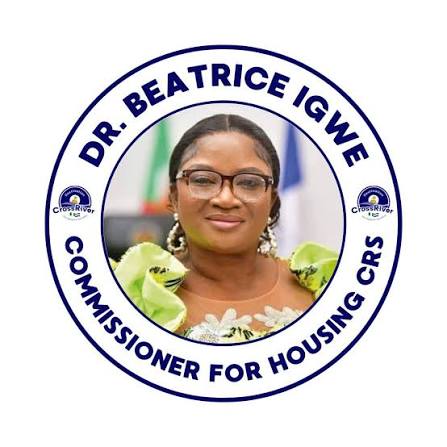
The Cross River State Government has challenged housing corporations across Nigeria to move beyond constructing isolated estates and focus on developing scalable, replicable systems capable of bridging the nation’s widening housing deficit. Speaking on behalf of Governor Bassey Otu at a national housing workshop in Calabar, the Commissioner for Housing, Dr. Beatrice Igwe, emphasized that Nigeria’s shelter demand heavily outpaces current supply. This disparity persists primarily because conventional property development and financing models consistently exclude low-income earners from the formal property market.
To resolve these structural accessibility barriers, the state administration is piloting an innovative Public-Private-Community Partnership framework under its regional development agenda. As a practical step toward this goal, authorities announced the upcoming groundbreaking ceremony for a 500-unit housing estate in the Central Senatorial District on July 4, 2026. The state plans to expand this systematic model across its Northern and Southern senatorial zones to deliver 1,500 units statewide, while a specialized 50-unit social housing project targeted at indigent women has already reached an advanced stage of completion.
The state government urged real estate executives to standardize building designs, improve transparent operational collaborations, and actively engage institutional financiers to unlock long-term capital at scale. In tandem with sub-national efforts, the Federal Ministry of Housing and Urban Development reiterated its commitment to structural reforms aimed at positioning the construction sector as a driver of economic growth. Through the national Renewed Hope Housing Programme, the federal government is advancing property developments across all six geopolitical zones by prioritizing local building materials, overhauling land administration, and expanding mortgage accessibility.
Industry leadership underscored that modern construction technologies and alternative financing structures must be deployed to match the speed of Nigeria’s population growth. Sector experts concluded that sustainable homeownership will remain out of reach for ordinary citizens unless developers abandon fragmented building practices in favor of unified, macro-level structural systems.