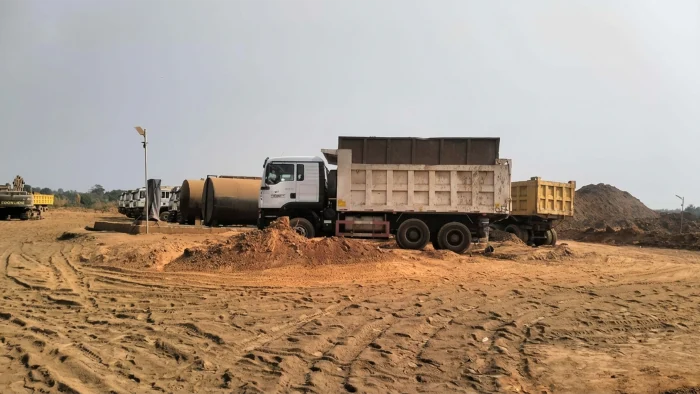
A non-governmental organisation, Bincike International, has called on the Federal Government to revoke illegally issued mining permits operating within Nigeria’s protected reserves and prosecute individuals and organisations involved in unlawful mining activities.
The organisation also urged the government to ensure that degraded areas are properly restored, warning that unregulated mining is damaging agricultural land, contaminating water sources and threatening the livelihoods of communities that depend on the affected environments.
The Executive Director of Bincike International, Dr Elisha Bello, said illegal mining operations are taking place in some areas with little regard for environmental regulations, human rights and worker safety. He also raised concerns about child labour and the links between illegal mining activities and insecurity in some rural communities.
Bello said Nigeria’s significant deposits of critical minerals present an opportunity for economic development, but warned that illegal exploitation is allowing criminal networks to benefit from the country’s natural resources while governments and host communities lose potential revenue.
He specifically alleged that illegal mining activities have encroached on environmentally sensitive locations, including Cross River National Park and Gashaka Gumti National Park. According to him, some operations are being conducted under improperly issued or fraudulently obtained licences, potentially violating provisions of Nigeria’s mining and national park legislation.
The group warned that mining within protected landscapes could accelerate deforestation, soil erosion and water contamination while threatening biodiversity. Species identified as being at risk include the Cross River gorilla, forest elephants and chimpanzees.
Bello also pointed to the commercial importance of Nigeria’s mineral resources, particularly lithium. He argued that the country’s high-grade deposits could generate significant economic value if properly regulated, processed locally and incorporated into formal supply chains.
To address the problem, Bincike International called for stronger transparency measures across the mining sector, including independent audits and public monitoring of mineral extraction. The organisation said such measures could help ensure that royalties and other revenues reach government coffers and host communities.
It also urged authorities to strengthen environmental and human-rights enforcement, tackle child labour, improve protection for conservation personnel and address the relationship between illegal mining, environmental degradation and insecurity.
The organisation further proposed greater involvement of host communities in protecting conservation areas, arguing that communities should have a formal stake in safeguarding protected lands and natural resources.
Bincike International maintained that Nigeria’s mineral wealth should contribute to national development rather than enrich illegal networks at the expense of the environment, local communities and public revenue.