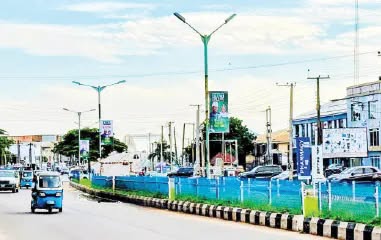
Rising Rents Push Asaba Residents Deeper Into Housing Hardship
Residents of Asaba, Delta State, are facing increasing difficulty securing and retaining decent accommodation as rising rents, inflation, stagnant incomes and the wider cost-of-living crisis put greater pressure on household finances.
Asaba has continued to expand, with new roads, businesses and construction projects changing the city’s landscape. The state capital has also attracted people seeking employment, education, trade and better economic opportunities.
But behind the growth, many residents are struggling to keep up with the cost of housing.
For some households, finding accommodation has moved beyond a normal financial responsibility and become an annual struggle involving difficult choices between rent, food, transportation, school fees, electricity and healthcare.
A 2025 report on the State of Lagos Housing Market cited in the report indicated that rent could consume between 50 and 70 per cent of household income in some cases, reflecting the growing affordability challenge facing Nigerian households.
Residents also face additional costs from estate agents, legal fees and other charges, meaning the amount required to secure a property can be significantly higher than the advertised rent.
In parts of Asaba, a one-bedroom apartment can cost between N700,000 and N1m annually, while larger apartments command higher rents.
For workers whose earnings have not increased at the same rate as inflation, the cost of accommodation can consume a substantial portion of their income.
Workers struggle to keep up with rent increases
Ella, a civil servant living in Ugbolu, said she previously paid N400,000 annually for a three-bedroom apartment but now pays N700,000.
Her salary, however, has not increased by a similar margin, leaving less money available for savings and other family needs.
For Okafor Ikechukwu, a commercial tricycle operator and family breadwinner, the situation has become even more difficult.
His annual rent increased from N150,000 to N360,000, while his income did not rise accordingly. On some days, he said, he works for several hours without getting enough passengers.
Much of his earnings goes towards feeding his family, leaving little available for rent savings.
He said that while he was previously able to pay his rent once a year, he now sometimes has to make payments in instalments because raising the full amount at once is difficult.
Artisans are also feeling the pressure.
Paul Edward, a professional plumber who has worked in Asaba for more than 20 years and chairs the Plumbers Association, said his annual rent had increased from N145,000 to N450,000.
He said that after paying school fees, feeding his family and meeting other household expenses, saving enough money for rent had become increasingly difficult.
According to Edward, some artisans have resorted to living in unfinished buildings because they can no longer afford decent accommodation.
Owen Marvellous, a married commercial tricycle operator and father, said his housing needs changed after he started a family.
He explained that living in a single room was more manageable before marriage, but having a wife and children meant he needed a larger apartment.
The cost of moving into a bigger home, however, has become increasingly difficult to bear.
He said one-bedroom apartments can cost between N700,000 and N1m annually in some parts of Asaba, while agency and other charges add further pressure to prospective tenants.
Single mothers face additional housing pressure
For Doris, a single mother with one child, the housing challenge goes beyond rent.
She lives in a one-room apartment affected by poor drainage and flooding, making living conditions difficult.
Her concerns increased when her landlord threatened to remove the roof of the building during the rainy season.
Doris said she was terrified by the possibility of being left without a roof over her head.
She also faced the prospect of receiving a quit notice and, at one point, had to borrow money to raise enough funds to remain in her accommodation.
For a single-income household, the loss of accommodation could create wider consequences for the stability and security of the family.
Commercial rents squeeze businesses
The pressure is not limited to residential accommodation. Business owners are also dealing with increasing commercial rents.
Ikechukwu Emmanuel, who has been in the plumbing materials business for 15 years, said shops in Asaba now cost between N1m and N1.5m annually, depending on location and other factors.
He explained that when commercial rent is combined with residential accommodation, transportation, electricity, staff salaries and other operating costs, business owners can end up spending most of their earnings simply to remain in operation.
According to him, some entrepreneurs are now using money that would otherwise have gone into expanding their businesses to cover operating expenses.
Others, he said, have been forced to shut down after years of trading because the cost of maintaining their businesses became unsustainable.
Precious, a fashion designer in Okpanam, said rising shop costs had also affected her business.
She said that when a customer brings work worth N10,000, she may accept the amount without negotiating because she needs the money to meet her growing expenses.
“Rent keeps increasing, but my income has not increased at the same pace,” she said.
Housing demand outpaces supply
Estate agents in Asaba said the rental market had changed considerably in recent years.
Anthony, an estate agent with 12 years of experience in the city, said the market began changing significantly around 2023 as Asaba’s population grew and infrastructure improved.
According to him, demand for accommodation increased while the supply of available homes did not grow at the same pace.
Another estate agent, Gozie, attributed part of the increase in rents to higher construction costs.
He said the cost of building materials, labour, transportation and other development expenses had increased, with developers passing some of the additional costs on to tenants through higher rents.
Okolie Alexander, a building materials dealer, also said construction commodities had become more expensive.
He attributed the increases to fuel costs, transportation expenses, government policies and international economic conditions.
Economist links rent crisis to supply gap
Prof Anthony Monye-Emina, Head of the Department of Economics at Dennis Osadebay University, identified the imbalance between housing demand and supply as a major factor behind the rising rents.
He said Asaba was attracting more residents but affordable housing was not being developed quickly enough to meet the growing demand.
According to him, inflation has worsened the situation because the prices of goods and services continue to rise while wages do not automatically increase at the same pace.
As a result, households are forced to devote a larger share of their earnings to basic needs, leaving less money for savings, investments and emergencies.
Solomon Eyikwe, Chairman of the Asaba Branch of the Nigerian Institution of Estate Surveyors and Valuers, said Nigeria’s largely market-driven housing system gives private property owners significant control over rental prices.
He also pointed to exchange-rate fluctuations and inflation as factors that have increased the cost of imported building materials and property development.
Samuel Ekiyor, a married resident and father, expressed concern that continued increases in rent could eventually make it difficult for many workers to afford to live in Asaba.
Developing rural areas could ease pressure on cities
Monye-Emina said part of the response to rising urban housing demand should involve developing rural communities.
He argued that better roads, healthcare, schools and economic opportunities in rural areas could reduce the pressure driving people into cities such as Asaba.
According to him, reducing the need for people to move into urban centres could help moderate pressure on available housing.
The housing situation has broader consequences because accommodation costs affect household welfare, business operations and residents’ ability to save or invest.
The experiences of civil servants, artisans, commercial tricycle operators, traders, business owners and single parents in Asaba show how rising housing costs are affecting different categories of residents.
For many of them, the demand is not for luxury accommodation but for a decent home that can be sustained alongside other basic household expenses.
As rents continue to rise, residents are increasingly being forced to reduce spending, postpone plans, use instalment payments, borrow money or consider cheaper accommodation options.
The situation has also raised concerns about the ability of workers and small businesses to remain in the city as accommodation and operating costs continue to increase.
For many residents, a home that should provide security and stability is increasingly becoming another source of financial uncertainty.