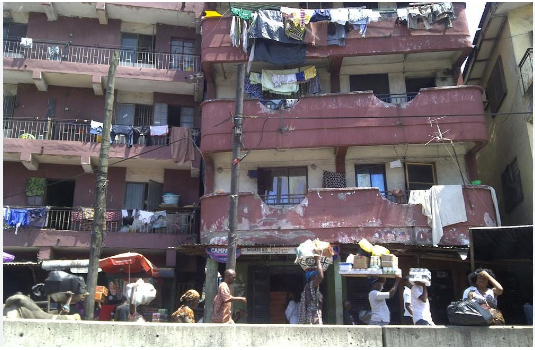
Nigeria’s housing crisis is deepening as rents rise faster than the income of many households. The problem is most visible in Lagos, where a large housing shortage continues to push up rental costs.
The crisis goes beyond a lack of houses. Many Nigerians also live in overcrowded homes or buildings without basic services. This makes access to safe and decent housing an urgent economic and social issue.
Nigeria’s Housing Deficit Remains High
The Federal Ministry of Housing and Urban Development estimates Nigeria’s housing deficit at between 14.9 million and 15.2 million units as of early 2026.
The figure is lower than earlier estimates of more than 20 million units. However, it still shows a major gap between housing supply and demand.
The shortage also includes homes that do not meet basic standards. Poor building quality, overcrowding and limited access to basic services remain part of the problem.
Lagos Faces Severe Housing Pressure
Lagos has one of the clearest examples of Nigeria’s housing challenge. The state’s housing deficit is estimated at more than 3.4 million units.
The city continues to attract people seeking jobs and business opportunities. However, housing supply has not grown fast enough to meet demand.
Rents have therefore increased across many parts of the state. A basic self-contained apartment can now cost between ₦1 million and ₦1.5 million a year in areas such as Ajegunle, Ikorodu and Agege.
For many low-income workers and small business owners, these prices are difficult to sustain. High rent can take a large share of household income and leave little money for other needs.
High Construction Costs Push Up Rents
The cost of building homes is another major factor behind rising rents.
Prices of cement, iron rods, roofing materials and other building inputs have increased. Inflation and the depreciation of the naira have added to the pressure on developers.
Industrialist Aliko Dangote has also raised concerns about government charges in the cement value chain. He claimed that such charges account for as much as 56 kobo of every ₦1 earned from cement sales.
Higher production and development costs can eventually affect the price of homes. Developers may pass part of these costs to buyers and tenants through higher property prices and rents.
Land Costs and Informal Charges Add Pressure
The cost of acquiring and developing land is another challenge for Nigeria’s housing sector.
Land documentation can be slow and expensive. Land grabbing and property racketeering can also increase acquisition costs and create risks for genuine developers.
Informal charges can add to the burden. Local groups may demand payments before construction materials are discharged at development sites.
Estate agents can also add significant costs for tenants. The source notes that some agents charge as much as 20 per cent of annual rent as commission.
Regulation Remains a Challenge
Building regulation is another part of the housing problem.
The Lagos State Building Control Agency is responsible for enforcing building standards. However, concerns over inconsistent enforcement and alleged corruption have been raised.
Developers can also face several approval processes and informal payments. These additional costs may eventually affect the price of housing.
More efficient building approvals could help reduce delays and lower development costs. Strong enforcement is also needed to ensure that new homes meet safety standards.
Housing Supply Is Not Meeting Demand
Population growth and migration continue to increase demand for housing in Lagos.
At the same time, private developers face high construction costs and limited access to affordable finance. Many therefore focus on higher-value properties that offer stronger returns.
This can leave low- and middle-income households with fewer affordable options.
Government housing programmes can help close this gap. However, affordable housing needs to be delivered at a scale that matches the size of the demand.
Rising Rent Has Wider Economic Effects
The impact of high rent extends beyond the housing market.
When households spend more on accommodation, they have less money for food, education and healthcare. Housing instability can also affect family welfare and economic productivity.
This means Nigeria’s housing crisis is also an economic issue. High housing costs can reduce household spending power and make it harder for workers to build financial security.
Lagos Tenancy Law Offers Some Protection
Recent tenancy legislation in Lagos seeks to address some problems faced by tenants. These include excessive advance rent demands and arbitrary evictions.
However, tenancy rules alone cannot solve the housing shortage.
More homes must be built, while access to housing finance must improve. Land administration and building approval processes also need to become faster and more transparent.
Technology Could Improve the Rental Market
Technology could help make the rental market more transparent.
A central digital platform for rent payments and tenancy records could improve accountability. It could also make it easier to track transactions between landlords, agents and tenants.
Rent controls may also provide relief in some areas. However, such measures must be carefully designed. Poorly designed controls could reduce private investment and make the housing shortage worse.
Affordable Housing Requires More Investment
Nigeria needs greater investment in affordable housing for low- and middle-income households.
Public-private partnerships could support this goal if projects are designed around clear social and housing objectives. Government can also reduce construction costs through tax reforms and incentives for local production.
Better supply chains could further reduce the cost of building materials. Affordable housing finance would also make it easier for more Nigerians to rent or buy decent homes.
A Wider Housing Reform Is Needed
Nigeria’s housing challenge cannot be solved by building houses alone.
Land administration, construction costs, building regulation, housing finance and rental practices all affect the final cost of housing.
As rents continue to rise, the need for coordinated action is becoming more urgent. Expanding affordable housing supply while improving regulation and access to finance will be critical to making decent housing more accessible to Nigerians.