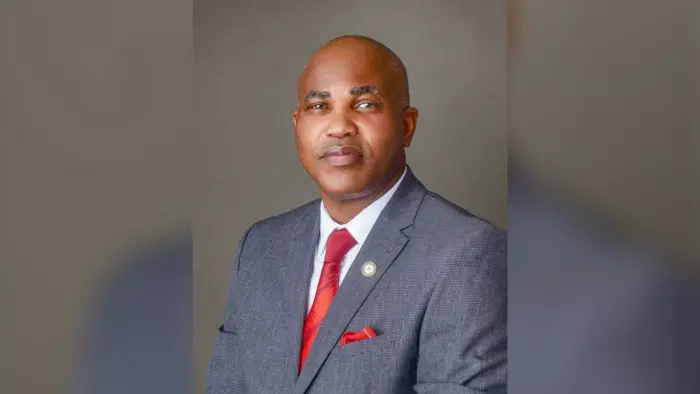
More than 20,000 Lagos families have benefited from government-backed mortgage and rent-to-own housing programmes since the establishment of the Lagos State Mortgage Board, according to the agency’s General Manager and Chief Executive Officer, Bayowa Foresythe.
Foresythe said the Lagos Home Ownership Mortgage Scheme, popularly known as LagosHOMS, was created to provide a more affordable pathway to homeownership for low- and middle-income residents.
The Lagos State Mortgage Board was inaugurated in 2014 following concerns over the state’s growing housing deficit and the inability of many residents to purchase homes through outright payment.
According to Foresythe, the government recognised that the conventional cash-and-carry property market excluded many working families whose incomes could support gradual repayment but not immediate property acquisition.
The state consequently introduced mortgage and rent-to-own options that allow eligible residents to make an initial equity contribution and spread the outstanding cost of their homes over 10 years.
Foresythe said LagosHOMS properties had been allocated across the state’s five administrative divisions, known collectively as IBILE: Ikeja, Badagry, Ikorodu, Lagos Island and Epe.
Among the locations identified under the programme are Sangotedo Phases I and II, Surulere, Igbogbo and Ibeshe in Ikorodu, Epe, Ogba, Ilupeju, Ajara in Badagry, Odonosa and Idale.
The housing portfolio includes 360 units in Igbogbo, 420 units in Ibeshe and about 360 units in Epe.
Other developments include 96 and 144 units within the Sir Anthony Enahoro Housing Scheme in Ogba, 120 units at the Oba Mufutau Olatunji Hamzat Housing Estate in Ilupeju and more than 400 units in Ajara, Badagry.
Foresythe said additional housing developments were still under construction as the state worked to expand the supply of homes.
He explained that reduced equity requirements, relatively lower interest rates and the 10-year repayment period had made the programme more accessible to participating residents.
The state government has also introduced an optional early-completion arrangement for beneficiaries with consistent payment records.
Under the arrangement, qualified beneficiaries who have maintained uninterrupted payments for six years may be permitted to settle their outstanding balances instead of waiting until the end of the original 10-year period.
Foresythe identified life insurance, fire insurance, estate-management services and continuing support for beneficiaries as important measures introduced to sustain the scheme.
Despite the reported progress, he acknowledged that Lagos continues to face a substantial housing shortage because demand is growing faster than supply.
The state attracts new residents daily, and each additional household requires accommodation, placing further pressure on the existing housing stock.
Foresythe said neither the government nor private developers could independently deliver all the homes required in Lagos. He therefore advocated stronger partnerships with private investors to accelerate housing construction.
He also urged existing beneficiaries to meet their repayment obligations promptly, explaining that recovered funds would help the government extend housing opportunities to other residents.
The LagosHOMS experience demonstrates how rent-to-own and long-term mortgage arrangements can help workers move from tenancy into homeownership without paying the full property price at once.
However, meeting Lagos’ housing demand will require significantly increased construction, serviced land, affordable development finance and sustained public-private collaboration.