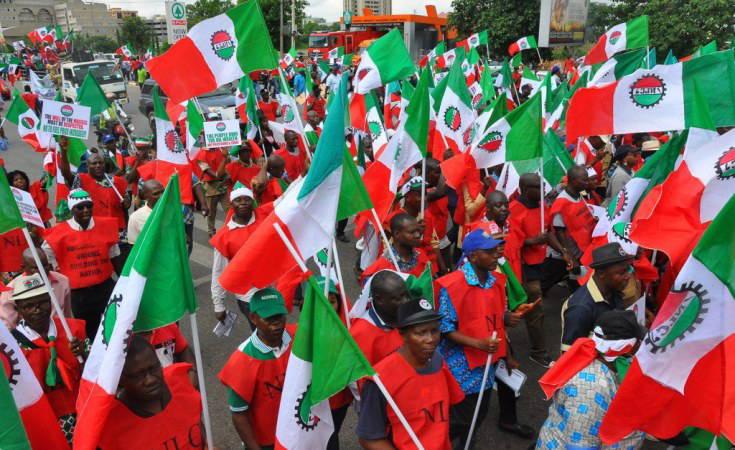
Public sector unions under the Joint National Public Service Negotiating Council (JNPSNC) have directed federal, state and local government employees to commence a three-day warning strike from midnight Friday, October 2, 2026.
The action follows the expiration of the council’s September 30 deadline for the Federal Government to respond to demands on petrol prices, a wage award and negotiations for a new national minimum wage. The JNPSNC had earlier announced the planned strike, and reports on October 1 confirm that the action is proceeding.
In a circular dated October 1 and signed by the council’s National Secretary (Trade Union Side), Olowoyo Gbenga, affiliate unions were directed to ensure compliance with the industrial action.
The strike is scheduled to run from October 2 to October 4.
Why Public Servants Are Striking
The JNPSNC said the decision followed what it described as worsening economic and mental hardship among workers and other Nigerians.
The council’s major demands include:
- Reduction of petrol prices to N500 per litre.
- Immediate approval of a wage award for workers.
- Establishment of a tripartite committee to begin negotiations for a new national minimum wage ahead of 2027.
- Measures to reduce the impact of rising living costs.
The council had written to President Bola Tinubu on September 21 outlining the demands and subsequently gave the government until September 30 to respond.
Eight Unions Under JNPSNC
The JNPSNC comprises eight public-sector unions, including the Nigerian Civil Service Union, Medical and Health Workers Union, Association of Senior Civil Servants of Nigeria and National Association of Nigerian Nurses and Midwives.
Others are the Amalgamated Union of Public Corporations, Civil Service Technical and Recreational Employees; Nigeria Union of Public Service, Reportorial, Secretarial, Data Processors and Allied Workers; National Union of Printing, Publishing and Paper Products Workers; and National Union of Agriculture and Allied Employees.
Workers Demand N500 Petrol
The council is demanding that the Federal Government take steps to reduce petrol prices to N500 per litre.
It proposed measures including intervention funding to address landing costs and support oil and gas operators.
The unions also called for crude oil to be supplied to the Dangote Refinery and modular refineries on terms that would support increased domestic refining and potentially reduce petroleum product prices.
Wage Award, New Minimum Wage Also Demanded
The JNPSNC is also demanding an immediate wage award to cushion workers against the prevailing cost-of-living pressures.
It further wants the government to establish a tripartite committee to begin negotiations for a new national minimum wage expected to become due in 2027.
The council said early negotiations would help prevent administrative delays in implementing a new wage framework once an agreement is reached and enacted.
NLC Supports Public Sector Unions
The Nigeria Labour Congress (NLC) has expressed support for the position of the public-sector unions.
In its Independence Day message, NLC President Joe Ajaero highlighted petrol prices, inflation, stagnant wages, unemployment and insecurity as factors affecting workers and other Nigerians.
The NLC also called for measures to reduce petrol prices, an immediate nationwide wage award and negotiations for a new minimum wage ahead of 2027.
The labour centre also called for implementation of tax-relief measures it said were agreed during the October 2023 dialogue between government and labour.
Government Response
Reports published before the strike said efforts to obtain a detailed response from the Federal Ministry of Labour and Employment were unsuccessful.
A source within the ministry, however, said the matter was being handled by the appropriate government authorities.
For now, the JNPSNC has directed its members across federal, state and local government services to participate in the three-day warning strike beginning October 2.