


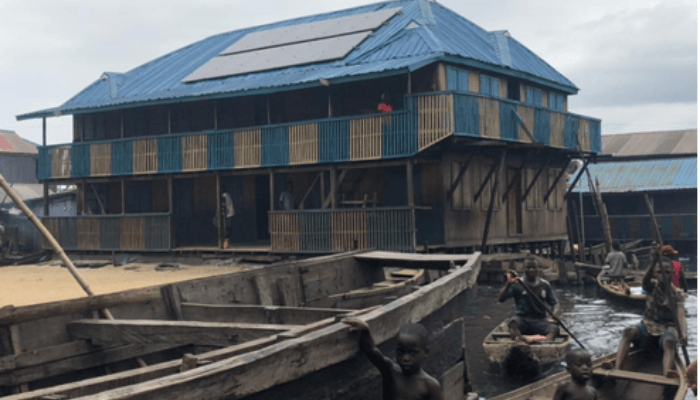
Civil society organisations (CSOs) and residents of Makoko, Oko Agbon, and Sogunro communities have criticised the Lagos State Government over what they describe as unlawful and forceful evictions that threaten to displace tens of thousands of people without resettlement or compensation.
The groups, operating under the Nigerian Slum/Informal Settlement Federation and Justice & Empowerment Initiatives (JEI), accused the state government of breaching court orders, Nigerian laws, and international human rights standards through the ongoing demolition exercise.
In a joint statement signed by Megan Chapman of Justice & Empowerment Initiatives, alongside Jude Ojo, Bisola Akinmuyiwa, and Kunnu Paul of the Nigerian Slum/Informal Settlement Federation, the organisations said the demolitions began just two days before Christmas as part of a planned clearance around high-tension powerlines running through the waterfront settlements and the Third Mainland Bridge corridor.
According to the statement, residents initially cooperated with the exercise after government officials assured community leaders that the demolition would be limited to a legally recognised 30-metre setback from the powerlines, as stipulated under Lagos State Building Control Regulations. There were also assurances that affected households would receive some form of compensation.
The first phase of demolition reportedly continued until January 3, 2026, excluding Christmas Day, displacing thousands of residents. Many families were forced to crowd into neighbouring homes or sleep in open canoes due to the sudden loss of shelter.
However, tensions escalated on January 4, 2026, when residents alleged that demolition equipment, including amphibious excavators, moved beyond the agreed 30-metre setback and began destroying homes deeper within the communities.
Community members staged protests between January 4 and 5, but were allegedly met with force by police officers attached to the demolition team. Witnesses claimed tear gas was deployed across the settlements, while some structures were set ablaze during the confrontation.
Amid the unrest, community leaders reportedly met officials at the Lagos State Ministry of Physical Planning and Urban Development in Alausa, where they were informed that the clearance would extend to an additional setback of up to 100 metres or more—an action residents say has no legal backing and contradicts earlier assurances.
“As of January 9, 2026, demolitions had already gone beyond 100 metres and were still ongoing,” Chapman said, warning that while thousands have already been displaced, tens of thousands more remain at risk.
The CSOs referenced a house-numbering exercise conducted in 2020–2021 by Makoko youth groups, with support from JEI and the Federation, which estimated the population of Makoko’s four villages at over 80,000 people. The figure excludes neighbouring communities such as Oko Agbon and Sogunro, which also face potential displacement.
The organisations warned that the continued demolitions could trigger a major humanitarian crisis if urgent intervention is not taken. They called on the Lagos State Government to immediately halt further demolitions, respect court rulings, and engage affected communities through inclusive urban planning and resettlement solutions.
