


The Federal Government has approved a monthly transport allowance of ₦70,000 for public service workers across all levels for six months, beginning in November 2026, to cushion the impact of rising living costs.
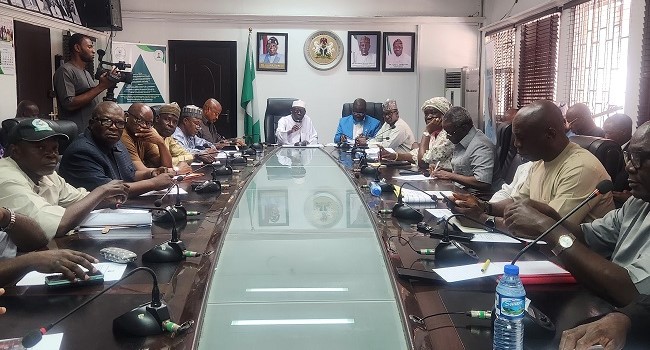
The approval was announced in a memorandum of understanding (MoU) issued after a conciliation meeting between government representatives and leaders of the Nigeria Labour Congress (NLC) in Abuja on Tuesday.
The MoU was signed by Tanimu Yakubu, Director-General of the Budget Office; Joe Ajaero, NLC President; Garba Abdul, Permanent Secretary of the Service Welfare Office in the Office of the Head of the Civil Service of the Federation; and Muhammad Dingyadi, Minister of Labour and Employment.
The meeting followed weeks of tension between organised labour and the government over workers’ welfare, rising living costs and outstanding agreements.
FG Approves Outstanding Allowances
According to the MoU, the government also approved the payment of outstanding peculiar allowance arrears dating back to May 1, 2026.
The arrears will be paid in three equal monthly instalments, beginning in November.
The document also outlined agreements on outstanding allowances, health workers’ remuneration, tax relief and hazard allowances for agricultural officers.
However, the government and the NLC failed to agree on the effective date for implementing the national minimum wage.
Both parties agreed to establish a committee to negotiate the matter, with meetings expected to commence immediately.
The MoU did not specify the exact date each month for payment of the ₦70,000 transport allowance or provide details of the administrative arrangements for its disbursement.
Government Responds To Labour’s Concerns
The MoU stated that the NLC leadership had expressed concern over the Federal Government’s handling of issues affecting workers.
In response, the government said it “fully respects the right of the congress to advocate for improved working conditions for Nigerian workers and is genuinely trying to address every aspect of it through a structured intervention.”
The agreements represent progress on some of labour’s demands, although key issues, including the effective date of the national minimum wage and the demand for lower petrol prices, remain unresolved.
NLC Had Threatened Nationwide Action
The development followed the NLC’s decision to extend its initial two-week ultimatum to the Federal Government until Tuesday, October 27, over demands relating to workers’ welfare and the rising cost of living.
The union had warned of possible nationwide action if negotiations failed to produce satisfactory outcomes.
In a statement, Benson Upah, Acting General Secretary of the NLC, said the extension followed a meeting between government representatives and organised labour leaders that ended without a resolution.
He explained that the meeting was adjourned at the request of the Minister of Labour and Employment to allow the government to assemble relevant ministers and heads of departments and agencies for further discussions.
According to Upah, the union demanded a reduction in petrol prices to 2024 levels, renegotiation of the national minimum wage and implementation of agreed tax relief measures.
Other demands included implementing the terms of settlement reached with the Joint Health Sector Unions and Assembly of Healthcare Professionals (JOHESU), as well as addressing outstanding issues raised by the Joint Public Sector Negotiating Council (JPSNC).
Upah said the outstanding JPSNC issues included peculiar allowances, wage awards and hazard allowances.
He added that the NLC remained committed to dialogue but would not accept indefinite delays in resolving workers’ demands.
While the transport allowance and payment of outstanding allowances address some of labour’s concerns, negotiations over the minimum wage and other unresolved demands are expected to remain central to discussions between the government and organised labour.