


Nigeria’s housing deficit stands at approximately 15 million units, according to data from the Federal Government’s Housing Market Information Portal (HMIP).
However, experts say the country’s housing challenge extends beyond increasing the number of available homes. Access to affordable financing remains a major obstacle for households seeking decent accommodation.
For many Nigerians, the difficulty lies not only in finding suitable properties but also in accessing financing arrangements that match their income, circumstances and preferences.
For households whose religious or ethical convictions discourage interest-based transactions, conventional mortgage financing presents an additional barrier.
In response to the need for more diverse housing finance options, the Federal Mortgage Bank of Nigeria (FMBN) introduced its Non-Interest Mortgage Product on October 27, 2026.
Formally known as the Non-Interest Lease-to-Own Housing Scheme, the product operates under the Ijarah Muntahia Bittamleek (IMBT) model.
Launched by the Minister of Housing and Urban Development, Muttaqha Darma, the scheme provides eligible National Housing Fund (NHF) contributors with an alternative route to accessing homes and eventually acquiring ownership.
Its introduction raises an important question about inclusion in Nigeria’s mortgage market: can alternative financing arrangements bring more households into a system where participation has historically remained limited?
Addressing Gaps In Nigeria’s Mortgage Market
Nigeria’s mortgage market faces several structural challenges, including limited long-term financing, high property acquisition costs and low purchasing power among many households.
The structure of available mortgage products also limits participation for people who prefer alternatives to conventional interest-based financing.
FMBN’s Non-Interest Mortgage Product seeks to address this gap by providing a financing arrangement that does not rely on the conventional interest-on-loan principle.
The scheme is not restricted to any particular religious group. Any Nigerian who satisfies the applicable NHF eligibility requirements can potentially access it.
Its significance therefore extends beyond religious considerations. It introduces greater choice into the mortgage market and recognises that different households require different financing arrangements.
However, its ability to improve inclusion will depend on affordability, public awareness, property availability and the accessibility of the facility to eligible contributors.
FMBN Managing Director and Chief Executive, Shehu Usman Osidi, said the initiative reflected the bank’s commitment to making homeownership more accessible and responsive to NHF contributors’ diverse aspirations.
He added that the product builds on the bank’s efforts to create additional pathways to homeownership, including the Diaspora NHF Mortgage Loan launched in August 2026.
How The Non-Interest Mortgage Scheme Works
The major difference between FMBN’s Non-Interest Mortgage Product and a conventional mortgage lies in their underlying contractual and financing structures.
Under a conventional mortgage, a financial institution provides a loan for property acquisition. The borrower repays the principal alongside interest over an agreed period, while the property serves as security.
The Non-Interest Lease-to-Own Scheme follows a different arrangement.
Based on the Ijarah Muntahia Bittamleek model, it combines leasing with the eventual transfer of ownership.
Under this structure, the financial institution acquires and owns the property before leasing it to the customer for an agreed period.
The customer makes rental payments for the use of the property. The contractual arrangement provides for ownership transfer after the customer fulfils the agreed obligations.
The underlying principle is profit for lease rather than interest on a loan.
Rather than providing an interest-bearing loan for the customer to purchase a property, the arrangement centres on leasing an identified asset and transferring ownership at the end of the agreed period.
This distinction goes beyond changing the terminology used to describe payments. It rests on the transaction structure, ownership arrangement and contractual relationship between the parties.
The facility offers eligible beneficiaries access to up to ₦50 million, with a lease period of up to 30 years, subject to applicable terms and approval conditions.
It also allows early repayment without additional charges. The beneficiary’s payment obligation is assessed against income to support affordability.
The product includes applicable insurance arrangements covering specified risks, including death, critical illness and property damage.
Prospective beneficiaries must understand the contractual obligations, payment structure, ownership arrangements and conditions governing the eventual transfer of title before committing.
Although the scheme does not resolve Nigeria’s wider housing affordability challenges, it expands the financing options available to prospective homeowners.
Implementation Will Determine The Scheme’s Success
Experts say introducing an alternative mortgage product is not enough to guarantee wider access to homeownership.
Its success will depend on how many Nigerians can use it to secure decent and affordable homes.
At the launch, Housing and Urban Development Minister Muttaqha Darma challenged FMBN to anchor implementation on four principles: simplicity in application, speed in processing, transparency in transactions and scale of delivery across the country.
“The test of this product is not today’s launch but how many Nigerians become homeowners through it,” he said.
He also urged the bank to extend the benefits beyond Kano State to other parts of the country.
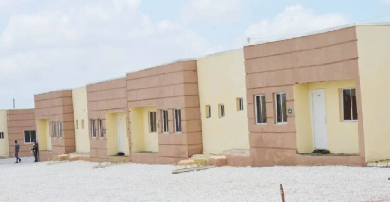
The commissioning of the FMBN-Ijarah-01 Estate in Bichi, Kano State, alongside the presentation of keys to the pilot project’s first beneficiaries, provided an initial demonstration of the arrangement.
The development also highlights the relationship between housing finance and actual housing supply.
For the scheme to reach more Nigerians, stakeholders say FMBN must ensure a sustained supply of qualifying properties across different locations.
This will require partnerships with credible developers and efficient project delivery arrangements.
Public awareness will also matter. Prospective beneficiaries need clear information about eligibility, contractual obligations, payment structures and application procedures.
Such information will help Nigerians make informed decisions rather than simply viewing the initiative as another mortgage product.
Ultimately, the scheme’s performance will depend on whether it creates a practical and sustainable pathway to homeownership.
FMBN Looks Beyond Homeownership With Rental Support
While homeownership remains important, Nigeria’s housing challenge also includes the difficulties facing households that depend on rented accommodation.
In major urban centres, rising rents and substantial upfront payments have made decent accommodation increasingly difficult to secure for low- and middle-income earners.
A typical two-bedroom apartment in a satellite town in the Federal Capital Territory costs between ₦2.5 million and ₦3.5 million annually.
Similar pressures affect Lagos and other major cities.
For a three-bedroom apartment, annual rental obligations can reach between ₦3.5 million and ₦5 million, particularly in locations several kilometres from major city centres.
Using the recommendation that housing expenditure should not exceed one-third of household income, such rental costs would require annual household earnings of approximately ₦8 million to ₦15 million.
Many Nigerians cannot afford these amounts and therefore resort to cheaper accommodation to manage their housing expenses.
To address rental affordability, the Federal Government, through FMBN, is preparing to introduce a Rent Assistance Loan.
Scheduled for launch in November 2026, the proposed facility will help eligible NHF contributors meet rental obligations.
Under the arrangement, approved rental payments will go directly to landlords. Beneficiaries will repay the facility over 10 months, subject to approved terms.
Eligible Nigerians will be able to access up to ₦2 million to support their rental payments.
FMBN is also preparing a Micro Home Improvement Loan to help eligible beneficiaries finance improvements to their homes.
Once introduced, these initiatives will expand the bank’s housing finance offerings beyond property acquisition to rental support and better living conditions.
Building A More Diverse Housing Finance Ecosystem
The introduction of alternative mortgage financing, alongside proposed rental assistance and home improvement facilities, reflects a broader approach to Nigeria’s housing needs.
Some households want to acquire homes through financing arrangements that align with their preferences.
Others need financial support to secure decent rental accommodation while working towards greater financial stability.
The NHF Mortgage Loan continues to provide a conventional interest-based route to homeownership.
Eligible contributors can access up to ₦50 million at an interest rate of six per cent annually, with repayment periods of up to 30 years, subject to applicable conditions.
Other FMBN interventions address different housing needs. These include the Rent-to-Own Scheme, Home Renovation Loan, Individual Construction Loan and Cooperative Housing Development Loan.
The Diaspora NHF Mortgage Loan Scheme also extends mortgage participation to eligible Nigerians living abroad.
Together, these products provide different routes for accessing housing finance, depending on individual circumstances and eligibility.
For the Non-Interest Mortgage Product, the critical questions will be whether it offers a credible alternative to conventional financing, whether its payment obligations remain affordable and whether it reaches Nigerians previously reluctant to participate in interest-based mortgage arrangements.
With Nigeria facing a housing deficit estimated at 15 million units, the success of these interventions will ultimately depend on effective implementation, affordability and the delivery of homes that ordinary Nigerians can access.