


Housing Finance Bank, NSSF and NHCC Sign Agreement to Expand Affordable Homeownership in Uganda
Housing Finance Bank, the National Social Security Fund (NSSF), and the National Housing and Construction Company (NHCC) have partnered with Shelter Afrique Development Bank and the Amaka Umbrella Fund to establish a framework for expanding affordable homeownership in Uganda.
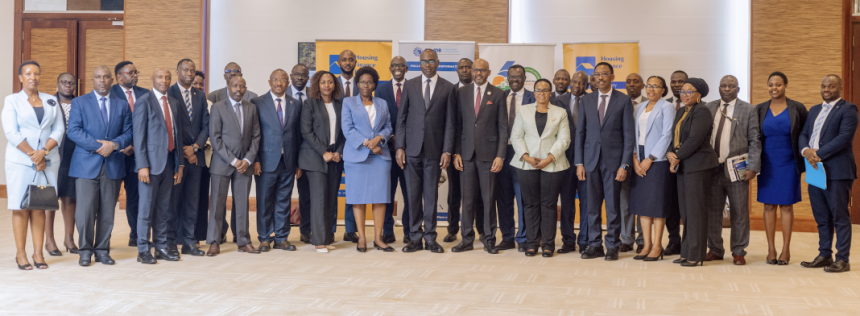
The institutions signed a multilateral Memorandum of Understanding (MoU) to establish Uganda’s inaugural Affordable Housing Project Framework, bringing together expertise in housing development, land management, long-term savings, investment and housing finance.
The signing ceremony was attended by Judith Nabakooba, Minister of Lands, Housing and Urban Development; Henry Musasizi, Minister of Finance, Planning and Economic Development; Lt. Gen. (Rtd) Henry Tumukunde, Minister of Gender, Labour and Social Development; and Persis Namuganza, Minister of State for Lands, Housing and Urban Development.
The initiative aligns with Uganda’s national development priorities and Tenfold Growth Strategy, which seeks to stimulate investment, expand the construction sector, create employment opportunities and improve livelihoods.
Under the agreement, Housing Finance Bank will provide banking infrastructure for the programme, facilitate project collections, support mortgage liquidity initiatives and finance eligible homebuyers. The bank will also contribute its experience in housing finance and project development.
Speaking at the signing, Housing Finance Bank Managing Director, Michael K. Mugabi, said Uganda’s housing challenge requires more than constructing additional houses. He emphasised the importance of connecting available land, long-term savings, financial institutions and housing developers to create sustainable pathways to homeownership.
A survey of 4,141 respondents presented during the engagement showed that 95 per cent expressed a desire to own a home, while 59 per cent identified saving for an initial deposit as their biggest challenge.
To address these barriers, the proposed SMARTLIFE AMAKA model introduces a savings-first, rent-to-own arrangement. Under the model, families can save towards a deposit, move into a home and make payments that contribute towards eventual ownership. A smaller mortgage may be used to finance the outstanding balance where necessary.
The framework also provides different routes to homeownership, including outright purchases, mortgage financing and tenant-purchase arrangements, allowing households to access options that reflect their financial circumstances.
During the engagement, Lt. Gen. (Rtd) Henry Tumukunde called for stronger collaboration among developers, lenders and insurance companies to explore longer repayment periods and lower upfront deposits.
He also highlighted the potential role of insurance in helping financial institutions introduce more flexible financing arrangements for households capable of meeting monthly repayments but unable to raise substantial deposits.
The partnership comes as Uganda faces an estimated annual housing demand of 300,000 units, while fewer than 100,000 units are delivered annually.
Beyond increasing housing supply, the framework emphasises sustainable urban planning, efficient land use and adequate infrastructure as important components of developing communities that can accommodate the country’s growing housing needs.
The initiative is expected to attract investment, support the construction industry, create employment and strengthen businesses connected to housing development.
The participating institutions aim to create a coordinated approach that connects housing development with accessible financing, ultimately expanding opportunities for more Ugandans to achieve sustainable homeownership.