


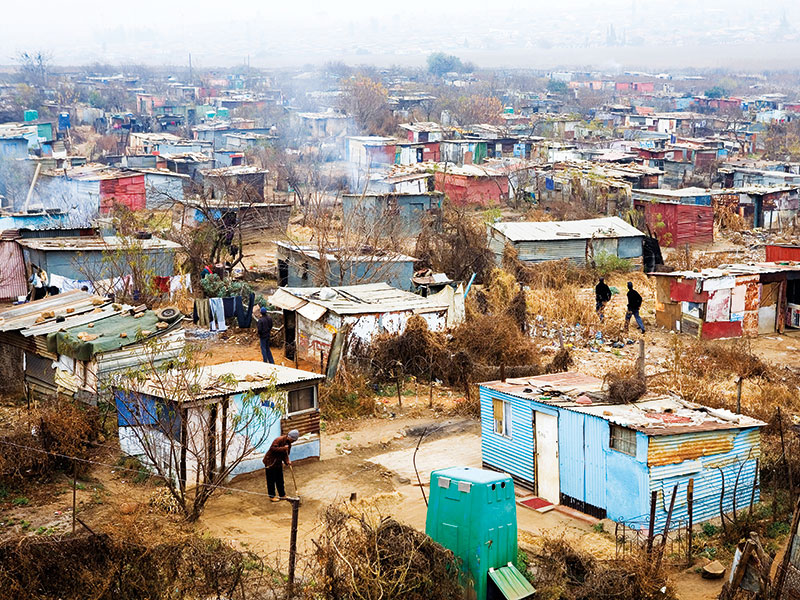
Lagos requires about ₦6 trillion in annual housing investment to address its growing housing shortage, with the state’s deficit estimated at 3.4 million units, according to research presented by GTI Capital Research.
The findings were presented by Prof. Timothy G. Nubi, Founding Director of the University of Lagos Centre for Housing and Sustainable Development, at a housing and capital forum in Lagos. The research estimates that the state needs to deliver about 227,576 additional homes each year to meet population growth, migration and rising housing demand.
Lagos’ housing deficit has increased from an estimated 2.95 million units in 2016 to 3.4 million units in 2025, representing a 15 per cent rise over the period.
The research links the growing shortage to the difficulty of providing housing at prices that households can afford. Despite Lagos’ role as Nigeria’s major commercial centre, housing supply has not expanded sufficiently to match demand, contributing to higher rents and property prices.
₦6tn Financing Gap
GTI Capital Research estimates that Lagos faces an annual housing capital gap of roughly ₦6 trillion. The figure represents the estimated funding required to provide the housing supply that formal development does not currently deliver each year.
The research noted that the annual gap is nearly three times Lagos State’s 2026 capital expenditure budget of ₦2.337 trillion, highlighting the scale of the challenge for government.
The figures suggest that public spending alone is unlikely to provide enough capital to close the housing deficit. Greater participation from private developers, mortgage lenders, institutional investors and the capital market will therefore be important to expanding housing supply.
Housing Costs Outpace Income
The research also points to worsening affordability for Lagos residents. Rents across the state reportedly increased by between 80 per cent and 120 per cent from 2024 to 2026, while wages rose by only about 7 per cent to 9 per cent.
The disparity has placed additional pressure on household finances and made the transition from renting to homeownership more difficult for many residents.
Lagos also recorded a property price-to-income ratio of 19.2 times, compared with the five-times level used in the research to indicate severe unaffordability.
Rental prices vary significantly across the state. Two-bedroom apartments in Ikoyi were estimated at between ₦8 million and ₦70 million annually, with an average field-survey figure of about ₦30 million. In Victoria Island, rents ranged from ₦3 million to more than ₦50 million, with an average of approximately ₦18 million.
Yaba, Surulere and Ikeja recorded estimated two-bedroom rents ranging from ₦1.5 million to ₦12 million, while Lekki Phase 1 recorded a range of ₦1 million to ₦40 million.
Infrastructure and Property Values
GTI’s research identified infrastructure as the most significant factor influencing property prices across the 15 Lagos zones examined.
Roads, transport systems, drainage, electricity and other public infrastructure can improve access and raise the attractiveness of locations. However, improvements can also increase land values and housing costs when new housing supply fails to keep pace with demand.
The finding reinforces the connection between infrastructure investment, land values and housing affordability. For urban planners, coordinating infrastructure expansion with housing development could therefore become increasingly important.
Pension Funds Seen as Potential Housing Capital
The research identified Nigeria’s pension industry as another potential source of long-term housing finance.
Nigeria’s pension funds hold about ₦30 trillion in assets and can allocate up to 30 per cent to instruments such as Real Estate Investment Trusts, mortgages and asset-backed securities. According to Nubi’s presentation, however, only about 5 per cent is currently allocated to housing-related instruments.
Greater institutional investment could expand the pool of long-term capital available to developers, provided suitable investment structures, risk-management systems and affordable housing projects are available.
Nubi also argued that Nigeria needs to treat housing increasingly as an investment asset rather than depending mainly on government-funded construction. Potential financing channels include REITs, bonds, asset-backed securities, crowdfunding and mortgage innovations.
GTI Financing Proposals
GTI Research has proposed alternative mechanisms to unlock capital tied to Lagos’ land and property market.
One proposal is a Micro-Title Regularisation Window, which would seek to convert informal land occupation into mortgageable titles using satellite imagery and drone mapping.
Another proposal is a Lagos Infrastructure Value Capture Authority, designed to capture part of the increase in land values associated with public infrastructure investment and direct the proceeds towards infrastructure financing.
GTI estimates that its proposed financing instruments could mobilise between ₦2.75 trillion and ₦3.85 trillion annually, equivalent to about 45 per cent to 65 per cent of the estimated housing capital gap.
Housing Supply Remains the Central Challenge
The scale of Lagos’ housing shortage points to substantial unmet demand, but the research also highlights the importance of targeting affordable and middle-income segments rather than focusing predominantly on high-end developments.
Developers face significant challenges from construction costs and financing conditions, which can make it difficult to deliver homes at prices accessible to ordinary households. Rental housing, student accommodation and other demand-driven segments could offer opportunities where projects can be structured around sustainable financing.
Closing the housing gap will require coordinated action among government, developers, financial institutions, pension funds and capital-market operators. Measures such as improved land administration, infrastructure provision, faster approvals and lower development costs could help create conditions for greater private-sector participation.
For Lagos, the issue extends beyond building more houses. The state must also mobilise enough long-term capital to support development while ensuring that new homes are located where residents can afford both housing and the transport and essential services associated with them.
