


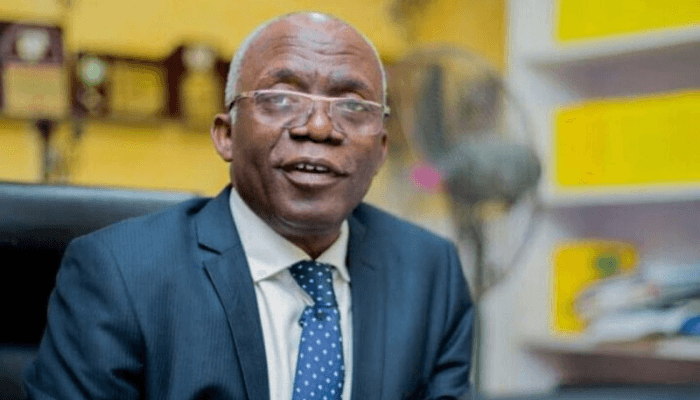
Human rights lawyer and Senior Advocate of Nigeria, Femi Falana, has raised concerns over the conduct of security operatives during a recent protest against alleged illegal demolitions and forced evictions in the Makoko waterfront area of Lagos State, accusing the police of deploying expired tear gas canisters on demonstrators.
Falana spoke at the Lagos State University Teaching Hospital, LASUTH, where he visited protesters who sustained injuries during the demonstration organised by activists Hassan Taiwo, popularly known as Soweto, and Dele Frank. The protest was aimed at drawing the attention of the Lagos State government to demolitions affecting waterfront communities.
The demonstration was initially peaceful but later turned chaotic after police operatives reportedly fired tear gas at close range, leading to injuries among protesters. The incident has drawn criticism from human rights organisations and civil society groups.
Reacting to the injuries observed at the hospital, Falana described the police action as unconstitutional and dangerous, stating that the nature of the injuries raised questions about the safety of the tear gas canisters used.
In over four decades of participating in protests across the country, Falana said he had never seen tear gas cause such severe injuries, adding that the effects observed were unusual and alarming.
At LASUTH, a burns and plastic surgery nurse, Adedeji Hassan, briefed Falana on the condition of one of the injured protesters, Kafayat Muftaudeen. He disclosed that Muftaudeen sustained a serious leg injury but was fit to be discharged and would continue treatment through regular wound dressing and weekly hospital visits before undergoing skin grafting.
Falana stressed that the 1999 Constitution guarantees Nigerians the right to peaceful assembly and expression, noting that protest organisers are only required to notify the police, not seek permission. He added that the Police Establishment Act places a duty on the police to provide protection during lawful protests.
Meanwhile, the Lagos State government has defended the demolition of structures in parts of Makoko, stating that the exercise was carried out to protect lives and prevent potential disasters.
Speaking at a joint ministerial press briefing in Alausa, the Commissioner for Information and Strategy, Gbenga Omotoso, said many of the wooden buildings affected were erected directly beneath high-tension power lines, posing serious risks to occupants.
Also speaking, the Governor’s Special Adviser on E-GIS and Urban Development, Babatunde Olajide, explained that the demolition formed part of a long-term safety and redevelopment plan. He added that only structures within high-tension corridors were removed and assured that displaced residents would be compensated following ongoing enumeration.
The Lagos State House of Assembly has also summoned leaders and stakeholders from Makoko and adjoining waterfront communities to a meeting following petitions submitted over the demolition and eviction of residents. The engagement is expected to provide a platform for dialogue and resolution.
In a separate reaction, the Centre for Human and Socio-Economic Rights condemned the alleged use of force against protesters and called for independent investigations into reported killings and demolitions linked to enforcement actions across Lagos State.
The group said peaceful protest remains a constitutional right and urged authorities to pursue justice, compensation, and restoration for affected communities.
