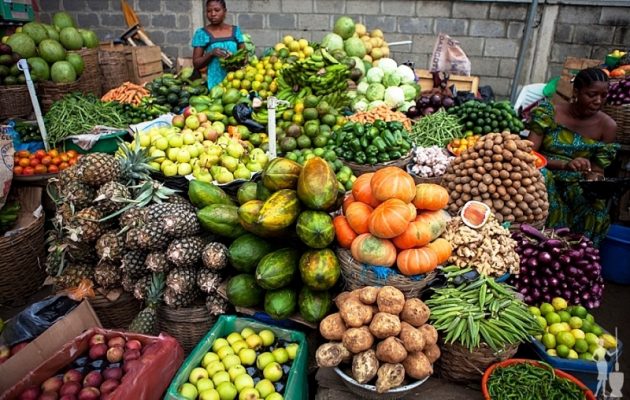
Nigeria’s food inflation rate rose to 12.12 percent in February 2026 on a year-on-year basis, according to the latest data released by the (NBS).
The report revealed that on a month-on-month basis, food inflation stood at 4.69 percent in February, marking a significant increase compared to January 2026, when the rate declined by -6.02 percent.
However, the February 2026 food inflation figure was considerably lower than the 26.98 percent recorded in February 2025, indicating a gradual easing in the pace of rising food prices.
Rising food prices drive increase
According to the statistics agency, the increase in food inflation was driven by higher average prices of several food commodities across the country.
These include beans, carrots, okazi leaf, cassava tuber, crayfish, millet flour, yam flour, snails and dried ogbono.
The bureau also stated that the average annual rate of food inflation for the 12 months ending February 2026 stood at 19.08 percent, significantly lower than the 37.40 percent recorded during the same period in 2025.
Headline inflation slightly declines
The report further indicated that Nigeria’s headline inflation rate eased slightly to 15.06 percent in February 2026, down from 15.10 percent recorded in January.
On a month-on-month basis, however, the headline inflation rate stood at 2.01 percent in February, representing an increase compared to the -2.88 percent recorded in January.
This suggests that the pace of price increases in February was higher than the previous month despite the marginal decline in the overall yearly inflation rate.
Core inflation also drops
Core inflation, which excludes volatile agricultural products and energy prices, stood at 15.88 percent on a year-on-year basis in February 2026.
This represents a notable drop compared to the 25.66 percent recorded in February 2025.
Meanwhile, the average annual core inflation rate for the 12 months ending February 2026 was estimated at 22 percent, compared to 27.25 percent during the same period in 2025.
States with highest and lowest inflation
The report showed that year-on-year headline inflation was highest in at 23.57 percent, followed by at 22.85 percent and at 22.0 percent.
The lowest inflation rates were recorded in at 7 percent, at 11.66 percent and at 11.71 percent.
For month-on-month inflation, the highest increases were seen in , and Anambra State, while , and Katsina State recorded a decline.
Food inflation highest in Kogi, Adamawa, Benue
On a year-on-year basis, food inflation was highest in Kogi State at 26.9 percent, followed by at 23 percent and Benue State at 21 percent.
The slowest increases in food inflation were recorded in Katsina, Bauchi and Imo states.