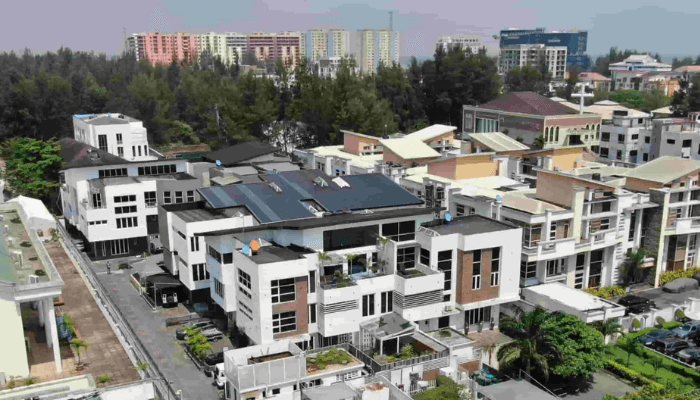
Lagos, Abuja, and Port Harcourt—are increasingly highlighting the nation’s stark economic divide. Their skylines tell a dual story: gleaming skyscrapers, luxury estates, and affluent enclaves contrast sharply with the struggles of ordinary residents who find home ownership increasingly unattainable.
In Lagos, areas like Ikoyi and Ibeju-Lekki showcase luxury apartments and waterfront estates. Yet, Knight Frank’s Lagos Market Update 2025 reveals that the average price of a two-bedroom apartment in Ikoyi is N105 million, while units in Lekki or Victoria Island range between N70 million and N90 million.
For middle-income professionals earning N800,000 to N1.5 million monthly, owning such properties could take decades.
The affordability gap has pushed renters to peripheral areas like Ajah, Sangotedo, and the Lekki-Ajah corridor.
However, rising land prices and unregulated rent hikes are quickly eroding these options. In mid-tier neighbourhoods, yearly rent for a two-bedroom flat now ranges between N3 million and N6 million, often payable upfront for one or two years.
Data from Estate Intel shows that only about 10 percent of property buyers in prime Lagos districts are local professionals.
The majority are diaspora investors, politically connected individuals, or speculative buyers, often purchasing properties without ever living in them. According to the 2025 Digital Landlord survey, 30 percent of diaspora remittances, totaling $600 million, flow into real estate, inflating prices beyond local affordability.
Much of the housing crisis stems from a poorly regulated property ecosystem. Developers price properties in dollars, linking costs to foreign exchange fluctuations instead of domestic wages. Land registration is often opaque and cumbersome, creating opportunities for fraud and double sales.
Weak oversight allows speculative investors to inflate prices without ensuring homes are livable or accessible.
Government efforts to digitize land administration and promote mortgage access have been slow. The CBN’s proposal to unlock dormant assets has yet to create tangible results in affordable housing or fairer pricing.
For middle-class renters, the cost of housing has become unsustainable. In Lagos, tenants spend 35–50 percent of income on rent, surpassing the UN’s recommended 30 percent threshold. Mortgage rates exceeding 18 percent effectively exclude most people from home ownership.
As one Lagos-based software engineer noted, “I’ve been saving for five years, but prices rise faster than my salary. Home ownership feels like a race I was never allowed to join.”
Experts argue that inclusive housing policies are essential for sustainable urban development. Cities must balance luxury investment with affordable housing for the professionals who sustain their economies. Without intervention, Nigeria risks creating exclusive enclaves of empty luxury apartments surrounded by sprawling informal settlements.
The solution is clear: fair regulation, inclusive financing, and sustainable building practices. Lagos, in particular, has the potential to become Nigeria’s first truly inclusive city—where economic contribution, not privilege, determines access to housing.