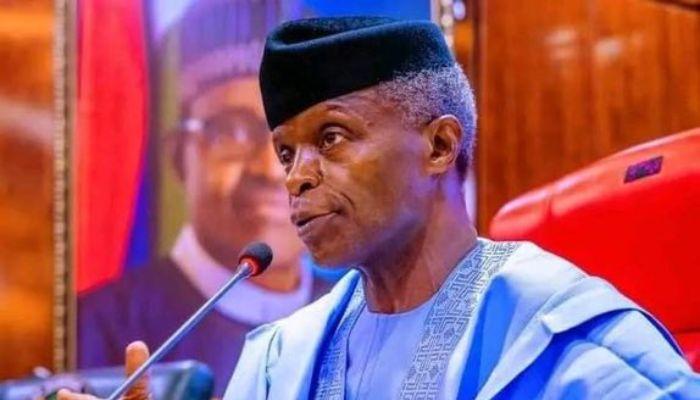
Former Vice President of Nigeria, Yemi Osinbajo, has said Nigeria cannot solve its housing deficit by merely constructing more buildings, stressing that sustainable solutions require long-term planning, effective legal frameworks and policies that match the country’s rapid population growth.
Speaking at the 35th anniversary dinner of Ubosi Eleh & Co in Lagos, Osinbajo noted that addressing the nation’s housing challenges demands strategic planning for both present and future needs.
He explained that beyond increasing the number of housing units, government must establish legal and institutional structures that encourage investment in the housing sector while ensuring efficient dispute resolution mechanisms.
Recalling his experience during the administration of President Bola Ahmed Tinubu as Governor of Lagos State, Osinbajo revealed that a survey at the time showed a decline in low- and middle-income housing investments.
According to him, many investors were discouraged from building rental properties because of difficulties in recovering rent from defaulting tenants and prolonged litigation processes in magistrates’ courts.
“One of the reasons the housing stock was declining was because investors were afraid that tenants could stay in their properties for years without paying rent, while legal disputes took too long to resolve,” he said.
Osinbajo explained that the challenge led to the establishment of mediation centres in Lagos State to provide faster alternatives for resolving tenancy and land-related disputes.
He noted that while magistrates’ courts handled about 2,000 cases annually, the introduction of mediation centres increased dispute resolution capacity to between 8,000 and 9,000 cases yearly, with more than 20,000 cases now resolved annually.
The former vice president also called for comprehensive national planning to accommodate Nigeria’s growing population, which he said increases by approximately five million people every year.
He warned that the country must prepare adequately for future demands in housing, education, healthcare and other critical sectors.
“By 2030, there will be at least 85 million children under the age of seven. There is no question that we must plan for education and other essential services,” he said.
Osinbajo further urged policymakers to pay close attention to emerging technologies, particularly Artificial Intelligence, noting that technological advancements are rapidly transforming economies and labour markets worldwide.
He observed that AI could significantly alter employment patterns over the next decade, especially in finance, law, consulting and technology-related professions.
According to him, Nigeria’s future success depends on deliberate planning, innovation and proactive policies capable of addressing both current and emerging challenges.