


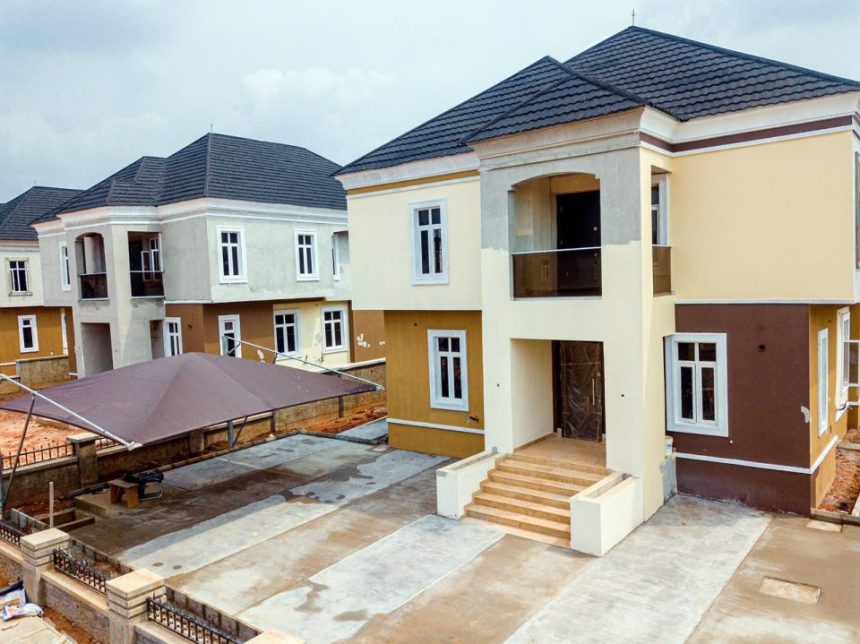
Housing development is increasingly becoming part of a broader urban transformation strategy in Ogun State, where new residential projects are emerging alongside roads, infrastructure and expanding economic activity.
One of the areas reflecting this transformation is the corridor around Kobape and the Siun-Sagamu Expressway, where locations that were once largely undeveloped are gradually taking on the characteristics of emerging residential communities.
Under Governor Dapo Abiodun, the state government has positioned housing as an important component of its wider development agenda, linking residential construction with infrastructure and the expansion of urban centres.
The approach reflects a shift from viewing housing simply as the construction of individual homes to treating residential development as part of a larger urban-planning process.
Housing and Infrastructure Moving Together
The growth of new housing communities depends heavily on infrastructure.
Road networks, drainage, electricity, water supply and other services determine whether a housing development can evolve into a functioning neighbourhood.
The development around the Kobape corridor illustrates how new residential projects can contribute to the expansion of Ogun’s urban footprint when supported by improving connectivity and infrastructure.
For Ogun, this is particularly important because of its proximity to Lagos and its growing role as a destination for residential development, manufacturing and other economic activities.
As land becomes increasingly expensive in parts of Lagos, neighbouring areas of Ogun have attracted developers and households looking for alternatives.
Kobape and the Emerging Ogun Urban Corridor
The landscape around Kobape provides an example of how housing can accelerate development in previously underdeveloped areas.
Residential construction brings demand for roads, commercial centres, schools, healthcare facilities and other services. As more people move into an area, private businesses also have greater incentives to establish operations there.
This can create a development cycle in which housing becomes an entry point for broader urban expansion.
However, the long-term success of such developments depends on whether infrastructure keeps pace with population growth.
The Affordability Question
Increasing the number of houses is important, but housing delivery ultimately has to be measured by accessibility.
A development can transform an area physically without necessarily solving the housing affordability problem if the completed homes remain beyond the reach of average households.
This makes issues such as land cost, construction expenses, mortgage availability and household income critical to the success of housing programmes.
For Ogun, the challenge will be ensuring that urban expansion produces communities that are not only attractive to investors but also accessible to workers and families who need affordable housing.
Beyond Building Houses
The wider significance of Ogun’s housing strategy lies in its potential to connect residential development with economic growth.
Well-planned housing can support population growth around employment centres while reducing some of the pressure on Lagos.
But that outcome requires coordinated planning.
Without adequate transportation, drainage, public services and land-use controls, rapid housing development can create new challenges, including congestion, flooding and infrastructure deficits.
The lesson is that housing policy cannot be separated from urban planning.
As Ogun continues to expand, the effectiveness of its housing strategy will ultimately depend not just on how many houses are built, but on whether those developments become sustainable, connected and economically productive communities.
