


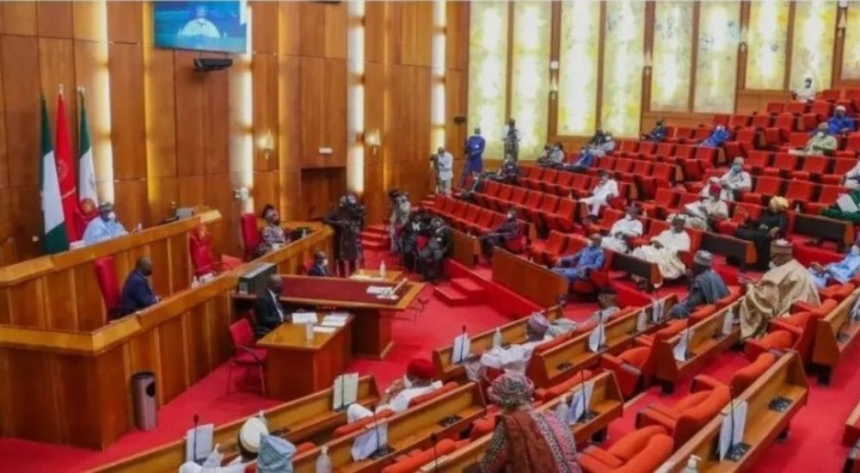
The Senate has passed for second reading a bill seeking to establish mandatory timelines for emergency medical treatment in Nigerian hospitals.
However, lawmakers raised concerns over the continued practice of hospitals demanding police reports before treating gunshot victims and other emergency patients.
The proposed legislation, sponsored by Senator Abdulaziz Musa Yar’Adua (Katsina Central), seeks to amend the National Health Act, 2014, by introducing enforceable standards for emergency medical care.
Titled the National Health Act (Amendment) Bill, 2026 (SB 759), the proposal requires licensed healthcare facilities to assess emergency patients within 15 minutes of arrival.
It also stipulates that hospitals must begin stabilisation within 30 minutes, while life-saving interventions must commence immediately in life-threatening situations.
The bill further proposes structured referral procedures and sanctions for healthcare facilities and personnel found guilty of wilful negligence.
Yar’Adua Explains Proposed Emergency Treatment Rules
Leading the debate on Wednesday, Yar’Adua said the amendment would address the absence of clearly defined timelines for emergency medical attention.
He identified delays in treating road accident victims, maternal emergencies, stroke patients, cardiac arrest cases and people with severe infections as major contributors to preventable deaths.
The senator said the first few minutes after a medical emergency could determine whether a patient survives.
He argued that access to life-saving treatment should not depend on a patient’s social status, financial capacity or geographical location.
“Mr President, this amendment is simple in its purpose but profound in its effect. It seeks to ensure that every Nigerian, regardless of status, wealth, influence or geography, receives timely life-saving care during medical emergencies,” he said.
Yar’Adua explained that Section 20 of the existing National Health Act prohibits healthcare providers from refusing emergency treatment but does not specify timelines or operational procedures.
Under the proposed amendment, hospitals would conduct compulsory triage within 15 minutes and begin stabilisation measures within 30 minutes.
Such measures could include oxygen administration, intravenous fluids and pain management.
The bill also seeks to protect healthcare workers who act in good faith within documented resource limitations while holding those responsible for deliberate refusal or neglect accountable.
Senators Raise Concerns Over Gunshot Victims, Police Reports
Although the bill does not specifically address the requirement for police reports before treating gunshot victims, senators raised the issue during the debate.
The Senate Minority Leader urged the sponsor and relevant committee to address the practice of hospitals demanding police reports before attending to accident victims and other emergency patients.
He maintained that medical personnel should prioritise saving lives before allowing investigations into the circumstances surrounding an injury.
Lawmakers also argued that patients suspected of involvement in armed robbery, banditry or other criminal activities should receive emergency treatment before security agencies take custody of them.
“Treat a human being first, whether it’s an armed robber, whether it’s a bandit, then get him arrested. Arrest him there and then. Get him treated and then, of course, hand him over to the police,” lawmakers argued.
Senators said the committee should consider how the amendment could prevent delays that put emergency patients at risk.
Faduyile Warns Against Criminalising Healthcare Workers
Supporting the bill, Senate Chief Whip Mohammed Tahir Monguno (Borno North) described it as timely.
He argued that criminal liability for healthcare providers who deliberately abandon emergency patients could improve compliance and discourage negligence.
Senator Diket Plang (Plateau Central) also supported the proposal, particularly its provisions on prompt medical attention, trained personnel and structured referral arrangements.
However, Senator Francis Faduyile (Ondo South), a medical professional, cautioned against criminalising healthcare workers without addressing inadequate staffing, equipment, drugs and hospital funding.
He argued that doctors should not face personal liability for delays caused by institutional failures.
Using an example of a hospital that requires five doctors but has only one available, Faduyile questioned how the facility could adequately handle multiple emergencies.
“The first question we want to ask is that we have what we call supply and demand. If the supply is not adequate to demand, there is no way the demand can be met,” he said.
He also called for stricter enforcement of the annual Certificate of Standards for healthcare facilities.
“I don’t think sincerely just criminalising health professionals is going to improve the health system in this country,” he added.
Senators Question Hospital Deposits And Proposed Penalties
Senator Jibrin Isa (Kogi East) supported the bill but raised concerns about hospitals demanding deposits before treatment.
He questioned whether hospitals should deny emergency care to patients who cannot afford upfront payments.
Jibrin also raised concerns about the handling of patients suspected of criminal activities and the adequacy of the proposed sanctions.
He described the existing provision of a ₦100,000 fine and imprisonment of up to six months as inadequate to deter violations.
“One hundred thousand naira, to me, is negligible compared to people’s lives. We are talking about people’s lives,” he said.
The Senate Minority Leader also called for a stronger emergency response system involving ambulances, paramedics, firefighters and other first responders.
He cited his experience in Mexico, where emergency responders arrived promptly at accident scenes.
Senate Refers Bill To Health Committee
Despite the concerns raised during the debate, senators supported the bill’s second reading.
Senate President Godswill Akpabio subsequently referred it to the Committee on Health, Secondary and Tertiary for further legislative consideration.
The committee received four weeks to examine the proposal and submit its report.
Its review is expected to cover healthcare staffing, medical equipment, emergency treatment funding, hospital deposits, referral arrangements, protection for healthcare workers and appropriate penalties for negligence.
If passed into law, the amendment would establish enforceable emergency treatment timelines across Nigeria and strengthen hospitals’ obligations to provide prompt medical attention.
The bill has not yet become law and remains subject to further legislative consideration.