


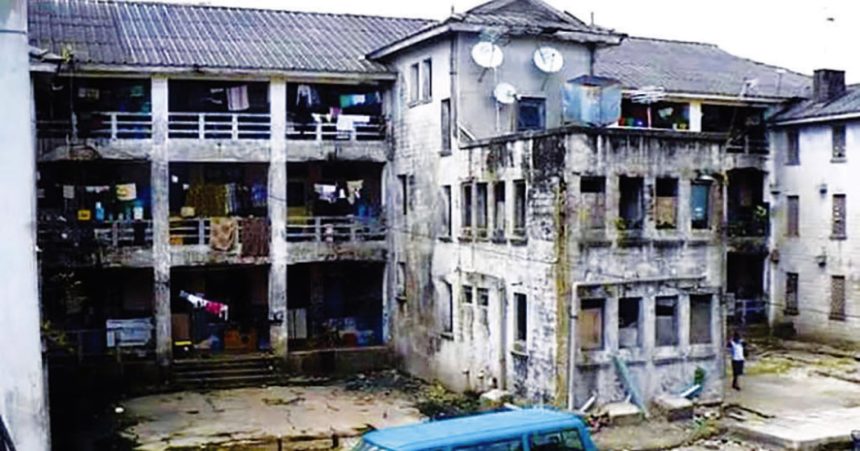
Decaying Police Barracks Force Officers Into Unsafe Homes and Costly Rentals
Thousands of police officers and their families are living in ageing and overcrowded barracks marked by leaking roofs, damaged sewage systems, cracked walls, unreliable water supply and inadequate security.
A multi-state investigation into police accommodation found that years of limited maintenance and insufficient investment have left many residential facilities unfit for decent living.
The investigation covered barracks in Kano, Borno, Yobe, Benue, Kaduna, Abia, Enugu, Niger, Kebbi and Bauchi states.
In Kano, some old residential blocks have been demolished for reconstruction, while others remain visibly deteriorated. Some officers displaced by the redevelopment reportedly complained that they had not been returned to the new buildings despite expectations that former occupants would receive priority.
The affected officers also expressed concern about being removed without adequate arrangements to protect them from rapidly increasing rents outside the barracks.
Across Borno and Yobe, decades of use, inadequate maintenance and damage associated with insurgency have placed considerable pressure on police accommodation.
Some barracks reportedly have cracked walls, damaged ceilings, poor electricity and non-functioning toilets. In certain locations, multiple families share a single toilet, while the absence of perimeter fencing leaves residents exposed to security risks.
Officers in Benue said many residential buildings were older than their occupants and that personnel frequently used personal funds to repair apartments before moving in.
Although interventions by the Nigeria Police Trust Fund have supported renovations in some areas, officers described the scale of the work as insufficient compared with the widespread deterioration.
In Kaduna, residents contend with broken drainage channels, leaking roofs, damaged doors and windows, failing sanitary facilities and overgrown surroundings. Flooding and muddy compounds reportedly make conditions worse during the rainy season.
The police quarters at Aba Central Police Station in Abia State include buildings dating back to the 1960s. Residents said previous renovations largely involved roofing and painting without comprehensively addressing electricity, water, sanitation and structural problems.
In Enugu, an officer estimated that about 80 per cent of personnel live outside the barracks because available accommodation is inadequate or unsuitable. Rising rents have consequently placed additional pressure on officers’ salaries.
One female constable said she paid ₦300,000 annually for a single room in a building where six tenants shared one toilet, despite earning approximately ₦90,000 monthly.
Conditions in Niger State are equally concerning. The main police barracks in Minna was reportedly constructed in 1952 and accommodates only about 10 per cent of the approximately 2,000 officers serving in the state capital.
Some officers in Kebbi reportedly squat with colleagues or sleep in offices and places of worship because they cannot secure official accommodation or afford private rent.
In Bauchi, residents of some barracks have reportedly dug private wells to obtain water, while many repairs have been financed directly by the officers occupying the buildings.
The findings highlight the need for a properly funded national police-housing programme covering structural assessments, rehabilitation, sanitation, drainage, water supply, electricity and the construction of additional homes.
Any redevelopment programme should also provide temporary accommodation or adequate rent support for displaced officers and adopt a transparent process for allocating completed units.
Improving police accommodation is not only a welfare matter. Safe and decent housing can support morale, family stability, operational readiness and the overall effectiveness of the country’s security institutions.
