


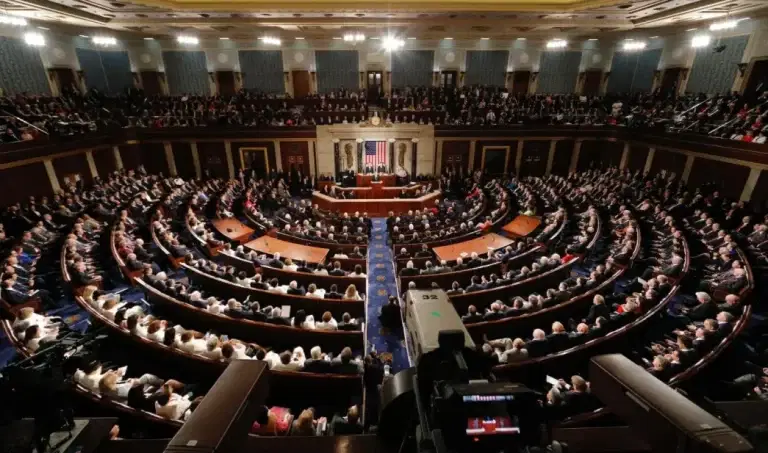
The United States Congress has recommended a series of measures aimed at addressing what it described as escalating Christian persecution in Nigeria, urging stronger institutional reforms, enhanced security cooperation and possible sanctions against perpetrators.
The recommendations followed months of investigation by congressional committees after Donald Trump redesignated Nigeria as a Country of Particular Concern (CPC).
Call For Sanctions And Institutional Reforms
US lawmakers urged the American president to formally invoke the CPC directive to publicly identify and sanction individuals responsible for violence against Christians. They also called for continued visa restrictions and the strengthening of anti-money laundering frameworks to curb terrorist financing.
The report, prepared in conjunction with the House Foreign Affairs Committee and the House Appropriations Committee, described Nigeria as one of the most dangerous places globally for Christians, citing attacks by armed groups and militias.
Lawmakers further recommended repealing Sharia codes and blasphemy laws in northern states, arguing that such laws have been used to silence dissent and target minorities.
Security, Trade And Military Recommendations
The congressional panel proposed that the United States leverage bilateral relations to press for the disarmament of armed Fulani groups. It also suggested measures such as blocking beef exports to certain African markets as a potential pressure mechanism.
Additional recommendations included:
- Expanding counter-terrorism cooperation
- Supporting demobilisation and disarmament initiatives
- Divesting from Russian military equipment in favour of American defence partnerships
- Countering alleged destabilising foreign influence, including from China
Lawmakers also called for a Government Accountability Office (GAO) audit of US aid to Nigeria to ensure transparency and accountability.
Nigerian Government Rejects Religious Bias Claim
In response, the Federal Government denied any state policy of religious persecution. The Minister of Information and National Orientation, Mohammed Idris, stated that while Nigeria faces serious security challenges, they are not rooted in religious bias or official policy.
He emphasised that the Constitution guarantees freedom of religion and equal protection under the law, adding that the violence stems from terrorism, organised criminality and longstanding communal tensions.
According to the minister, security operations have intensified in affected regions, including forest clearance missions, deployment of specialised forest guards and improved intelligence-sharing mechanisms.
He also highlighted humanitarian interventions for internally displaced persons and peacebuilding initiatives aimed at restoring stability in impacted communities.
CAN Warns Against Repeal Of Sharia
The Christian Association of Nigeria (CAN) reacted cautiously to the US recommendations, warning that calls to repeal Sharia and blasphemy laws could heighten religious tension.
A senior CAN official suggested that rather than focusing on repealing specific legal frameworks, Nigeria should pursue a comprehensive, people-driven constitutional reform that accommodates the country’s diverse religious and ethnic interests.
The official cautioned that mishandling sensitive religious matters could destabilise the country, stressing the need for dialogue and responsible engagement.
Strategic Implications For US-Nigeria Relations
The congressional recommendations underscore growing international scrutiny of Nigeria’s security landscape and religious freedom record. Lawmakers framed the issue as an opportunity to redefine US-Nigeria relations through enhanced cooperation, accountability and institutional strengthening.
While Washington pushes for firmer action, Abuja maintains that its security challenges are multifaceted and not the result of systemic religious persecution.
The debate is likely to shape diplomatic engagement between both countries in the months ahead, particularly regarding security assistance, sanctions policy and constitutional reform discussions.
