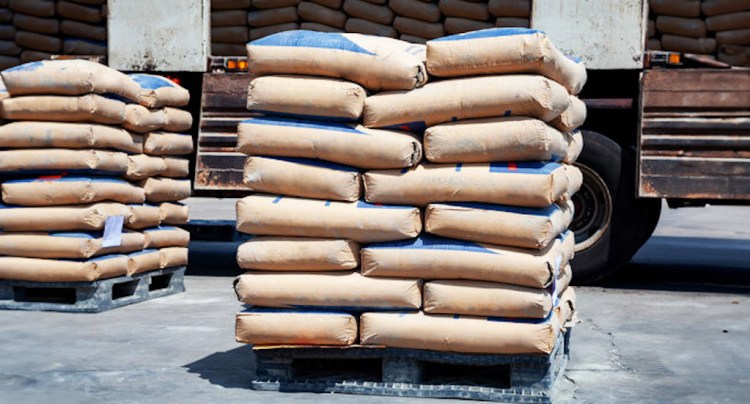
.A new report by policy think tank Agora Policy has attributed the persistently high price of cement in Nigeria to weak competition and market concentration within the industry, despite the country achieving self-sufficiency in cement production more than a decade ago.
The report, published on Tuesday, noted that rising cement prices have significantly affected construction costs, limiting the delivery of affordable housing and slowing infrastructure development across the country.
According to Agora Policy, Nigeria became formally self-sufficient in cement production in 2012, yet prices have remained elevated compared to other countries in Sub-Saharan Africa. The report observed that industry profitability continues to exceed regional and international benchmarks.
In September 2025, Nigerian cement producers recorded average core operating profit margins of about 49 per cent, an increase from roughly 34 per cent in 2024. Agora Policy said these margins are unusually high and suggest that consumers are not benefiting from increased production capacity.
The report stressed that the expansion of production capacity by major manufacturers such as Dangote Cement, BUA Cement, and Lafarge WAPCO has not translated into lower prices for households, builders, or government-funded projects.
Questioning the justification offered by cement manufacturers, the report highlighted that Nigerian producers sell cement at lower prices in some foreign markets while remaining profitable.
“Producers attribute high domestic prices to taxes, energy costs, transport challenges, and financing constraints, arguing that exports are cheaper due to exemptions from certain levies,” the report stated.
“However, this explanation raises a critical question: if costs are the main constraint, why are producers able to sell cement profitably abroad at lower prices than those paid by Nigerian consumers?” it added.
Agora Policy argued that the pricing gap suggests that market structure and pricing power play a major role in sustaining high cement prices in Nigeria.
The report traced the roots of the current situation to policy decisions made in the late 1990s and early 2000s, when Nigeria relied heavily on cement imports due to low domestic production. To address shortages, the government introduced import restrictions and investment incentives aimed at boosting local production and stabilising prices.
These incentives included import protection, preferential access to foreign exchange, tax holidays, and exclusive limestone mining rights. According to the report, these measures were intended to be temporary and tied to affordable pricing outcomes.
While Nigeria successfully achieved cement self-sufficiency by 2012 and installed capacity exceeded domestic demand, the report said the expected benefits of competition-driven pricing never materialised.
Instead, the industry consolidated into what Agora Policy described as a highly concentrated oligopoly, with a few dominant firms controlling production, distribution, and pricing.
“Cement is not an ordinary commodity. It is a critical input for housing, infrastructure, and industrial development,” the report noted, warning that persistently high prices undermine employment, productivity, and long-term economic growth.
The think tank also assessed the Federal Government’s response to rising cement prices, including proposals to reopen import channels. It cautioned that cement imports are unlikely to offer lasting relief due to high transportation costs, limited global spare capacity, and the dominance of a few global producers.
According to the report, import liberalisation would at best provide short-term relief and would not address the underlying competition issues in Nigeria’s cement market.
As a long-term solution, Agora Policy recommended strengthening domestic competition rather than relying on imports. The report outlined five key policy measures, including ending exclusive control of limestone and clinker by a few firms and enforcing “use-it-or-lose-it” rules for mining licences.
It also recommended separating cement production from distribution, allowing at least 30 per cent of cement sales to pass through independent third-party distributors to increase market access and consumer choice.
Other proposals included enforcing antitrust measures to address regional dominance, mandating export pricing parity, and introducing automatic pro-competition triggers when plant utilisation falls below certain thresholds.
The report further urged mandatory quarterly disclosures of plant capacity, ex-factory prices, and regional sales data to help regulators monitor pricing patterns and supply constraints.
Agora Policy concluded by calling on the Federal Competition and Consumer Protection Commission to establish a dedicated cement competition desk to oversee market power, limestone access, transport bottlenecks, and barriers to new entrants.