Stakeholders across Nigeria’s housing and land administration sectors have renewed calls for an urgent review of the Land Use Act (LUA), insisting the law no longer reflects present-day realities, especially in tenure security, land acquisition, compensation and title registration.
The call was made at the 3rd International Conference and Fair on Land and Development and the 7th Lateef Jakande Lecture, organised by the University of Lagos Centre for Housing and Sustainable Development (CHSD), the ARUA Centre of Excellence in Urbanisation and Habitable Cities, and the Real Estate Developers Association of Nigeria (REDAN).
The event was themed “Sustainable Land Development and Urban Infrastructure in Africa.”
Setting the tone, Principal Partner at Ubosi Eleh & Company, Chudi Ubosi, said the current Land Use Act had slowed progress across several sectors. He urged government at all levels to fast-track reforms through broader stakeholder collaboration, reduced bureaucracy, improved public awareness and the adoption of digital systems such as GIS and blockchain.
He added that easier access to land titles remains fundamental to attracting investment and unlocking economic growth.
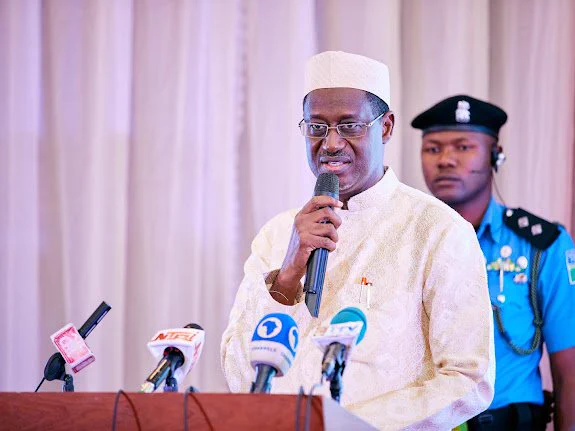
Minister of Housing and Urban Development, Ahmed Dangiwa, declared that transforming Nigeria into a trillion-dollar economy is impossible without unlocking land value through structural reforms, digital titling and integrated urban infrastructure planning.
Warning that Africa’s rapid urbanisation—70 per cent occurring in informal settlements—could trigger future crises, Dangiwa stressed the need for stronger land governance.
“Africa must not urbanise into poverty. Our cities must become engines of inclusive prosperity and resilience,” he said.
Represented by the Managing Director of the Federal Mortgage Bank of Nigeria, Shehu Osidi, the minister revealed that the newly launched National Land Registry in Kano is designed to unify title processes, digitise land records, improve service delivery and unlock more than $300 billion in dead capital nationwide.
He also directed states to allocate one to three per cent of their annual budgets to land administration, with half dedicated to digitisation, cadastral surveys and dispute resolution.
On urban development, Dangiwa announced that the Federal Government has completed over 150 slum-upgrade and renewal projects across Nigeria’s six geopolitical zones.
UNILAG Vice Chancellor, Prof. Folasade Ogunsola, emphasised that Africa—expected to gain 950 million new urban residents by 2050—must overhaul planning systems to avoid infrastructure collapse, land conflicts and rising inequality.
She noted that UNILAG continues to develop evidence-based solutions in climate resilience, transport systems, land-use efficiency and smart cities.
Second Deputy President of the Association of Professional Bodies of Nigeria, Toyin Ayinde, reaffirmed the need for integrated land governance to support sustainable urban infrastructure, warning that fragmented planning can no longer sustain Africa’s growing cities.
President of REDAN, HRM Oba Akintoye Adeoye, praised the legacy of the late Lateef Jakande, describing him as a visionary whose social housing model remains relevant. This year’s Jakande Lecture focused on financing sustainable housing infrastructure amid rising construction costs and widening housing deficits.
He called for innovative financing, stronger public-private partnerships and transparent regulation to drive affordable housing delivery.
Lagos State Commissioner for Housing, Moruf Akinderu-Fatai, also paid tribute to Jakande, recounting how over 30,000 affordable housing units were delivered during his administration.
He said the real honour lies in adapting Jakande’s principles to modern realities where families no longer have to choose between affordability and dignity.