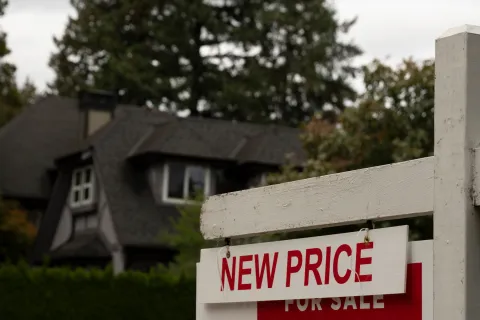
After years of soaring prices, tight inventory, and elevated borrowing costs, the United States housing market may finally be approaching a critical turning point in 2026, according to economists and housing analysts.
Following a prolonged slowdown that priced millions of Americans out of homeownership, market observers say conditions are gradually aligning for a modest reset—driven less by dramatic price drops and more by stabilisation, increased listings, and improved income dynamics.
Several industry players have already branded 2026 as a defining year. Real estate brokerage Redfin has described the period as “The Great Housing Reset,” while Compass has characterised it as the beginning of a “new era” for residential property in the US.
The cautiously optimistic outlook comes as President Donald Trump signals that housing affordability will be a central policy priority in 2026. Although concrete policy details remain limited, the administration has repeatedly hinted at regulatory reforms aimed at boosting housing supply and easing approval processes.
A market frozen in place
Over the past several years, the US housing market has been defined by an unusual contradiction: historically low sales activity alongside relentlessly rising prices.
According to data from the National Association of Homebuilders, average home prices nationwide surged by nearly 55 per cent between early 2020 and the third quarter of 2025. During the same period, transaction volumes fell sharply as high mortgage rates and affordability pressures discouraged both buyers and sellers.
Many homeowners, locked into ultra-low mortgage rates secured during the pandemic, chose to stay put rather than list their properties. This behaviour further constrained housing supply, keeping prices elevated despite weaker demand.
Mike Simonsen, Chief Economist at Compass, said the market has effectively been “stuck” for years, with limited inventory preventing any meaningful correction.
“That dynamic is likely to change,” Simonsen said, noting that more homeowners are gradually adjusting to mortgage rates above six per cent and may be more willing to sell in 2026.
Will home prices fall in 2026?
Despite growing optimism, analysts caution against expectations of a sharp nationwide decline in home prices next year.
While some states—including Florida, Texas, and California—recorded modest price declines in 2025, most economists expect prices to remain broadly stable across the country.
Compass forecasts home prices will rise by approximately 0.5 per cent in 2026, a figure Simonsen described as “essentially flat.” Such stability, rather than a steep drop, is seen as a healthier outcome for the market.
Even so, affordability challenges are likely to persist, particularly for first-time buyers. Analysts agree that the most sustainable solution remains increased housing supply—a goal the US has struggled to achieve for decades.
“We are still behind when it comes to building enough homes,” Simonsen said.
Mortgage rates and buyer confidence
Mortgage rates have shown signs of easing in the second half of 2025. The average 30-year fixed-rate mortgage recently stood at 6.18 per cent, down from nearly seven per cent earlier in the year.
Looking ahead, economists expect rates to remain above six per cent in 2026, although further declines are possible if inflation continues to cool or the labour market weakens, prompting additional interest rate cuts by the Federal Reserve.
While mortgage rates do not move in lockstep with the Fed, they closely track yields on the 10-year US Treasury, which are sensitive to monetary policy signals.
Jason Waugh, President of Coldwell Banker Affiliates, stressed that consumer confidence will play a decisive role in determining market activity.
“For most people, buying a home is a 15- or 30-year commitment,” Waugh said. “If buyers feel uncertain about their income or job security, they’re more likely to pause, even if rates improve.”
Rent prices may rise again
Renters experienced some relief in 2025 as rent growth cooled across major US cities. Bank of America data shows rents were flat year-on-year in October—the first such pause in more than three years.
However, that relief may prove temporary.
With homeownership still out of reach for many Americans, rental demand is expected to remain elevated. At the same time, fewer new apartment projects are coming online, tightening supply in the rental market.
Redfin projects rents could rise by between two and three per cent annually by the end of 2026.
What Trump’s housing agenda could mean
Earlier this month, President Trump pledged to pursue what he described as the “most aggressive housing reform” in US history.
Although the White House has yet to release a detailed policy framework, National Economic Council Director Kevin Hassett indicated that regulatory reform would be a key focus, particularly measures designed to speed up housing approvals and incentivise states to ease building restrictions.
White House spokesperson Kush Desai said homeownership remains a top priority within the administration’s broader affordability agenda, promising further announcements in the coming months.
In recent months, the administration has floated unconventional ideas such as 50-year mortgages and portable mortgages that could move with homeowners. However, policy analysts remain sceptical about their implementation in 2026.
Jaret Seiberg, a housing policy analyst at TD Cowen, said there are practical limits to how much the federal government can achieve in the near term.
“Even with strong political will, there are constraints on what the president can realistically deliver next year,” Seiberg wrote in a note to clients.