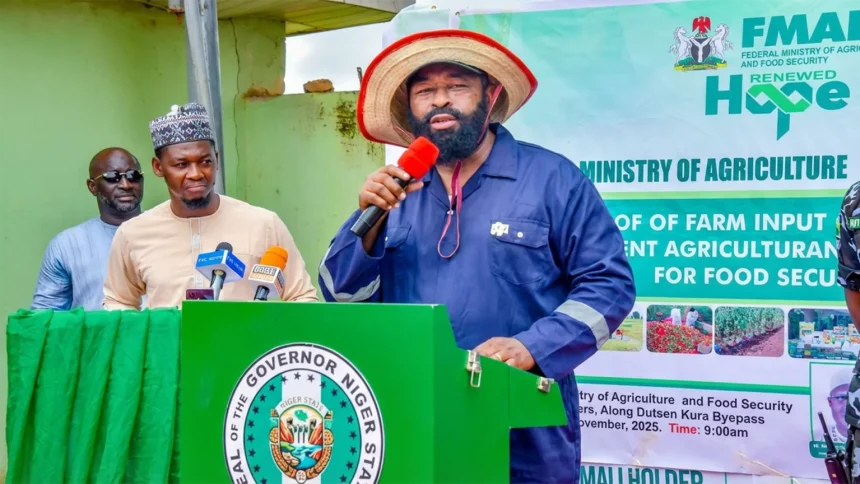
Governor Mohammad Umaru Bago of Niger State has pledged to allocate 1,000 hectares of land to the Nigerian Army for its post-service housing development programme aimed at supporting retired military personnel.
The governor made the commitment during a meeting with the Managing Director and Chief Executive Officer of the Post-Service Housing Development of the Nigerian Army, Major General Ishaiah Allison, at the Niger State liaison office in Abuja.
Support for veterans’ welfare
Bago described the Army’s housing initiative as a strategic intervention that aligns with his administration’s broader agenda of promoting agriculturally sustainable housing schemes.
He noted that many military personnel face uncertainty after years of service to the nation, stressing that structured post-service housing would provide retired officers with stability and a renewed sense of belonging.
According to the governor, the proposed 1,000 hectares would accommodate both residential units and agricultural activities to ensure long-term sustainability for beneficiaries.
He added that the Niger State Government would collaborate closely with the Army’s implementation team to guarantee the success of the project.
Army seeks state collaboration
Earlier, Major General Allison explained that the post-service housing initiative is designed to provide affordable accommodation for retired Army officers as part of an enhanced welfare package.
He said the programme seeks to address housing deficits among veterans while reducing the financial burden typically associated with home ownership after retirement.
The Army chief emphasised that partnerships with state governments are critical to the success of the initiative, particularly in the provision of suitable land for development.
Allison commended Governor Bago for his continued support for the Nigerian Army and urged him to sustain the momentum in advancing veterans’ welfare.
Strategic housing and agricultural integration
The proposed housing scheme is expected to integrate residential infrastructure with agricultural ventures, enabling beneficiaries to engage in farming activities as an additional source of livelihood.
Stakeholders believe the initiative could serve as a model for other states seeking to enhance social protection systems for retired security personnel.
The development underscores growing collaboration between state governments and federal security institutions in addressing post-service welfare challenges.