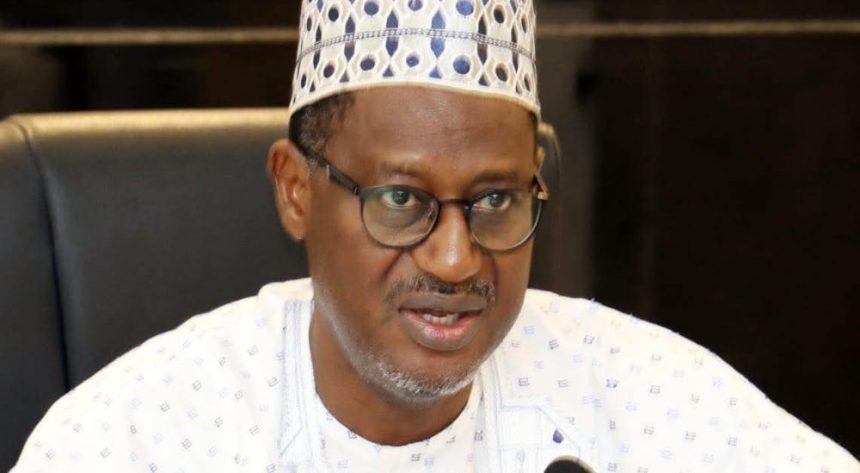
The Federal Government’s push to accelerate housing delivery and urban renewal is facing mounting pressure from limited budgetary allocations, with the Minister of Housing and Urban Development, Ahmed Musa Dangiwa, admitting that funding constraints are slowing the pace of reform implementation across the country.
Speaking during a high-level engagement with officials from UN-Habitat in Abuja, the minister acknowledged that while the Ministry has articulated a clear policy direction and ambitious targets, inadequate financial resources are restricting large-scale execution, particularly in climate-responsive housing and urban resilience initiatives.
Dangiwa noted that the fiscal limitations have compelled the Ministry to rethink its financing model and explore alternative funding mechanisms beyond traditional budgetary allocations. According to him, innovative financing structures will be critical to meeting Nigeria’s growing demand for affordable housing and sustainable urban infrastructure.
He explained that Nigeria’s rapid urbanisation trend requires coordinated planning, resilient infrastructure, and long-term investment in climate-smart development. However, without expanded funding channels, scaling reforms in housing delivery, slum upgrading, and land administration will remain challenging.
The minister commended the European Union-funded Sustainable Integrated Development Programme for Internally Displaced Persons in Nigeria (SIDPIN), describing it as a model intervention that aligns with the Ministry’s broader housing and social cohesion objectives. The programme is currently being implemented with support from UN-Habitat in Adamawa, Kano, and Borno states.
According to Dangiwa, SIDPIN has delivered durable housing solutions, strengthened community integration, and improved living conditions for internally displaced persons (IDPs) and host communities. He emphasized that such initiatives are crucial in rebuilding livelihoods and stabilising post-conflict regions.
Beyond housing construction, the minister highlighted the programme’s support in reviewing Nigeria’s National Urban Development Policy, contributing to planning reforms, and offering technical assistance for the National Land Registration Documentation and Titling Programme, also known as Land4Growth. He added that these interventions support urban renewal and slum upgrading efforts across major cities.
“These interventions are vital as Nigeria confronts rapid urbanisation that demands coordinated planning, sustainable infrastructure, and climate-responsive development,” Dangiwa said.
However, he admitted that meeting obligations under the existing Memorandum of Understanding with UN-Habitat presents its own set of financial and administrative challenges. While the Ministry values the partnership, he stressed that predictable funding remains essential to sustaining long-term collaboration and achieving tangible outcomes.
Earlier in his remarks, Mathias Spaliviero, Head of the UN-Habitat West Africa Hub in Dakar, reaffirmed the agency’s commitment to its institutional partnership with the Federal Government of Nigeria. He maintained that collaboration would remain a priority regardless of funding cycles.
Spaliviero provided updates on ongoing interventions, including a major joint programme being implemented alongside the International Organization for Migration and the United Nations High Commissioner for Refugees. The initiative focuses on delivering sustainable and durable solutions for internally displaced persons through structured urban integration strategies across Kano, Yobe, Adamawa, and Benue states.
He explained that the programme adopts a multi-scale planning approach, integrating housing provision with infrastructure development, livelihood support, and governance reforms. According to him, state governments are increasingly demonstrating ownership and responsiveness, a development he described as encouraging for long-term sustainability.
Nigeria’s housing deficit, estimated in millions of units, continues to place pressure on federal and state authorities to accelerate reforms. Analysts argue that budgetary shortfalls, rising construction costs, and limited access to long-term financing remain key obstacles to scaling affordable housing projects nationwide.
The Ministry’s renewed focus on alternative financing options could include public-private partnerships, blended finance models, housing bonds, and multilateral development support. Industry experts say that unlocking private capital will be essential to bridging funding gaps and achieving inclusive urban growth.
Urban planners also stress the importance of land reform and digitised titling systems in attracting investment. Improved land administration under initiatives like Land4Growth could help streamline property registration, reduce disputes, and enhance investor confidence in the real estate sector.
As Nigeria’s urban population continues to expand, the urgency of climate-smart housing solutions is becoming more pronounced. Flood resilience, energy efficiency, and sustainable building materials are increasingly central to housing policy discussions.
Despite fiscal headwinds, Dangiwa expressed optimism that deeper collaboration with international development partners will help accelerate affordable housing delivery and support the development of resilient, inclusive cities.