


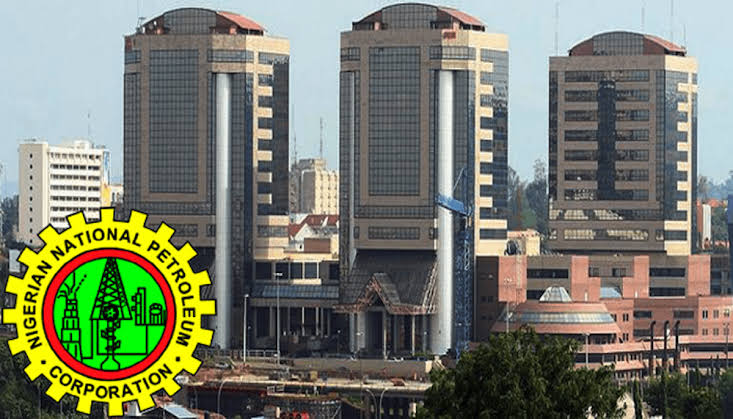
The Nigerian National Petroleum Company Limited experienced a financial downturn in May 2026, with total earnings contracting by nearly 13 percent despite maintaining steady output across its oil and natural gas fields. According to data published in the national oil company’s recent Monthly Report Summary, monthly revenue dropped to N4.335 trillion from the N4.971 trillion recorded during the preceding month. This drop representing a N636 billion decline occurred alongside a slight reduction in monthly profit after tax, which slid from N481 billion in April to N462 billion in May.
Operational disclosures from the firm indicate that market dynamics and technical bottlenecks impacted overall earnings despite consistent volume extractions. The state-backed energy corporation maintained an average daily output of 1.73 million barrels of crude oil and condensates, complemented by a daily natural gas production rate of 7,774 million standard cubic feet. While upstream infrastructure performed optimally with a 98 percent pipeline availability rate, retail distribution channels faced tighter constraints, leaving fuel availability at NNPC retail stations at 57 percent during the month under review.
To mitigate future financial exposure, management revealed it is intensifying efforts to resolve technical issues, reservoir pressure declines, maintenance shutdowns, and lifting constraints. These interventions aim to minimize production deferments and ensure asset reliability going forward. Despite the monthly financial squeeze, the national oil firm remained a critical driver of public finance, contributing a cumulative statutory sum of N4.858 trillion to the Federation Account between January and May 2026.
Strategic energy infrastructure projects also advanced significantly during the review period. The Ajaokuta-Kaduna-Kano Gas Pipeline progressed to 94 percent completion and remains on schedule to initiate gas deliveries to the Federal Capital Territory later this year. Concurrently, the OB3 River Niger Crossing project reached 97 percent completion, with final tie-in and pre-commissioning milestones projected for full activation before the end of the third quarter of 2026.
Beyond its core commercial activities, the organization utilized its corporate foundation to deliver critical healthcare infrastructure in the South-East region. The company handed over a high-capacity 1.5 Tesla Magnetic Resonance Imaging diagnostic machine, along with specialized cooling and backup power systems, to the Nnamdi Azikiwe University Teaching Hospital in Nnewi, Anambra State. Corporate representatives emphasized that the new diagnostic unit will enhance early disease detection and significantly lower the necessity for inter-regional medical referrals.
