


Valuers Urge FG to Ease Land Access, Expand Infrastructure to Cut Housing Deficit
Estate surveyors and valuers have called on the Federal Government to make land more accessible and increase infrastructure development as part of measures to address Nigeria’s housing deficit, which they estimate at more than 21 million units.
The professionals also urged increased investment in housing, particularly for low- and middle-income earners, while stressing the importance of reliable national data for property valuation, infrastructure planning and broader economic development.
The calls were made on Thursday at the Estate Surveyors and Valuers Registration Board of Nigeria Valuers Assembly in Abuja, where professionals discussed challenges affecting the housing sector and the contribution of estate surveyors and valuers to national development.
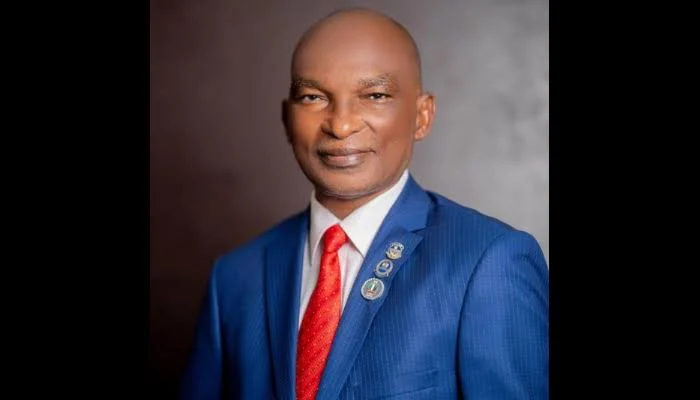
The President of the Nigerian Institution of Estate Surveyors and Valuers, Bature Muhammad, said greater access to land would enable more Nigerians to develop their own homes rather than depend entirely on government-built housing.
Muhammad said the government could also adopt site-and-services schemes by opening up land, providing basic infrastructure such as roads, demarcating plots and making the serviced plots available to individuals for construction.
He added that government should continue to build housing units to complement efforts by individuals and private developers.
“The issue of housing deficit in Nigeria has been a recurring decimal. Each year, 2 million, 20 million, 30 million,” Muhammad said, while outlining the measures he believed could help address the problem.
He said increasing access to land should be one of the priorities.
“Government can equally enter into the issue of site and services scheme, where government opens up land, constructs roads and demarcates those plots, and gives it to people to construct. Another issue is for government to build more housing,” he said.
Muhammad also acknowledged the Federal Government’s Renewed Hope Housing Scheme, noting that housing construction had commenced in several states under the programme.
He said continued implementation of the scheme could contribute to reducing the housing deficit.
“We’re happy that the current administration, through its Renewed Hope housing scheme, has started that line of action, building 200, 300, 1,000 in so many states of the federation. So, if that will continue, that will go a long way in alleviating the housing deficit that we are currently facing in the country,” he said.
Professionals identify policy, economic and data challenges
Muhammad identified government policies, economic conditions and inadequate data as some of the factors affecting the housing sector.
He said better data was particularly important because property valuation and decisions on national assets require accurate and comprehensive information.
“The basic issue is government policies sometimes, and the economic factors of the country. Another issue is data. Data assemblage,” he said.
According to him, the Nigerian Institution of Estate Surveyors and Valuers, working with the relevant board, was exploring ways to develop reliable data that could be used for valuation and other national purposes.
He stressed the need for Nigeria to establish a consolidated national database that could support government planning, infrastructure development and valuation activities.
“It is high time for us in Nigeria to have consolidated data for everything that we need to do, which will equally assist the government in planning so many things. Even this infrastructure that we are doing, it needs data,” Muhammad said.
He also pointed to the need for government to continue opening up new areas for development and making land available to people.
Muhammad said access to land remained difficult for many Nigerians and urged government to reduce the obstacles involved in acquiring land.
He said more Nigerians would be able to construct homes if they could obtain land more easily, while government could concentrate on expanding medium- and low-income housing.
“The future is always very bright for the ordinary Nigerian. If you look at it now, in Abuja, so many areas, so many frontiers are being opened. We, the professionals, advise the government to make land available. To ease access to land for so many people to get,” he said.
He added that while government continues working to improve access to land, it should also sustain the construction of affordable housing.
“To see that there is still land and people get access to land. Because when more people get access to land, they can go and build rather than waiting for the government. So, while the people are having access to land, the government should continue to build medium- and low-income housing,” he said.
Surveyors seek massive infrastructure investment
The Acting Chairman of the Board of the Nigerian Institution of Estate Surveyors and Valuers, Aminu Waziri, called for increased infrastructure development, particularly in satellite communities around major cities.
Waziri said the housing deficit and weaknesses in asset valuation had significant implications for the Nigerian economy.
“When you look at the housing deficit alone, that is over 21 million or thereabouts, and other components of it, but when you look at the total of the loss in terms of non-application of the proper asset valuation in our national economy, the sum is really much, but it runs up to about 30 trillion,” he said.
He said large-scale infrastructure development would make satellite communities more attractive to developers and encourage both public and private investment in housing.
“To reduce the deficit, there has to be massive infrastructural development, especially within the satellite areas of our major cities, because that’s where most of this impact is felt,” Waziri said.
He explained that better infrastructure would create conditions for housing developers to expand their activities.
“When you have a lot of infrastructural development, both public and private housing developers will come in to provide the necessary housing infrastructure, and this will help us greatly in bridging the housing deficit,” he added.
Valuers seek stronger professional training
Meanwhile, the Chair of the Education Committee of the Estate Surveyors Registration Board of Nigeria and Board Member of the International Valuation Standards Council, Uche Egwuatu, called for greater investment in training and capacity building for estate surveyors and valuers.
Egwuatu said the global nature of the profession meant that Nigerian practitioners needed to broaden their knowledge and remain familiar with developments in international valuation practice.
“The world is a global village and that doesn’t exclude Estate Surveying and Valuation practice. And as Estate Surveyors and Valuers, we need to enlarge our scope in terms of our training, capacity building and being part of what is happening globally,” she said.
She said the Estate Surveyors Registration Board of Nigeria was creating opportunities for professionals to participate in international valuation standard-setting processes.
According to her, the board’s membership of the international valuation body helps Nigerian practitioners remain connected to global developments in the profession.
Egwuatu also noted that international valuation standards had been incorporated into Nigeria’s Green Book, helping to align local valuation practices with international standards.
She urged individual valuers to take advantage of professional development opportunities, including events such as the Valuers Assembly, to improve their knowledge and keep pace with developments affecting the industry.
Board reviews valuation education
Egwuatu further disclosed that the board was working to improve valuation education in Nigerian tertiary institutions.
She said the board regulates estate management education in academic institutions through accreditation visits aimed at ensuring that courses and training reflect current industry requirements.
She stressed that students being prepared for careers in valuation needed to acquire knowledge that would enable them to respond to practical valuation challenges in society.
“The board has started trying to unbundle the valuation education because the board also regulates estate management education in the academic institutions through its accreditation visitations to be sure that what is being taught in the academic institutions complies with or reflects what is happening in the industry,” she said.
Egwuatu added that the goal was to ensure that future valuers were properly equipped with current knowledge and professional skills needed to address valuation problems and contribute effectively to the property sector.
The professionals’ recommendations come as Nigeria continues to face a substantial housing shortage, with improved land access, infrastructure provision, housing investment and reliable property data identified as key areas requiring attention.
