


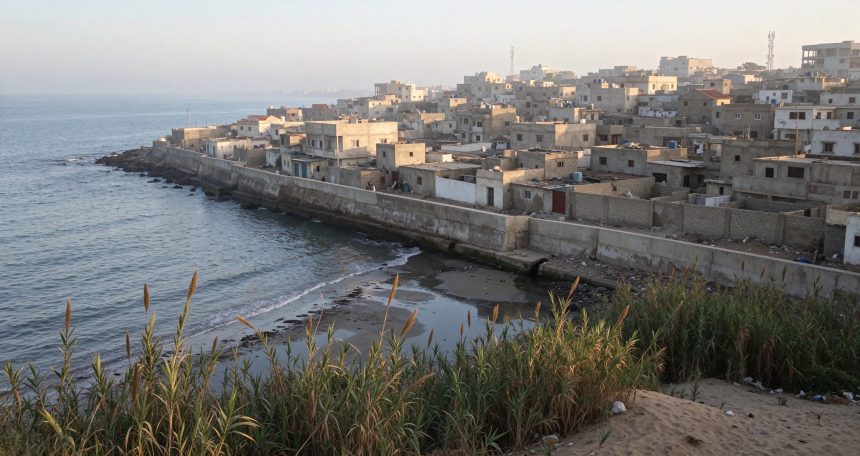
New research has warned that land subsidence is increasing the exposure of African coastal cities to flooding, with Lagos among the cities facing significant risks as sea levels continue to rise.
The study, published on November 27, 2026, analysed satellite measurements of land movement across 20 African coastal cities, combining the findings with sea-level projections, population data, building information and terrain measurements.
Under an intermediate-emissions scenario, an extreme sea-level event could expose more than seven million people and over one million buildings to coastal flooding by 2050.
Lagos and Alexandria in Egypt emerged as major land-subsidence hotspots. The study estimates that Lagos is sinking at approximately five millimetres annually, while Alexandria records about six millimetres per year.
The research also identified significant land subsidence in Luanda, Angola, while cities such as Durban, Maputo and Mombasa recorded modest upward land movement.
Within Lagos, the study found differences in land movement across neighbourhoods, with some central districts remaining relatively stable while areas along the eastern and western edges are sinking faster.
Researchers explained that land subsidence can intensify the effects of rising sea levels because the relative height of the sea depends not only on rising water levels but also on whether coastal land is sinking or rising.
Across the 20 cities examined, approximately $180 billion worth of assets, measured in 2017 international dollars, could be exposed to coastal flooding by 2050. Lagos, Alexandria, Douala and Monrovia were among the cities with substantial potential exposure.
The researchers, however, clarified that the figures represent potential exposure rather than confirmed future flood damage. The analysis also excluded existing and planned coastal protection infrastructure, including seawalls and levees.
The study noted that continued groundwater extraction, construction activities, sediment conditions and tectonic movements could influence future land subsidence rates.
Despite these limitations, the findings highlight the importance of detailed satellite monitoring, improved urban planning and stronger coastal protection measures to help African cities prepare for rising sea levels and increasing flood risks.
The research provides important evidence for policymakers and urban planners as African coastal cities confront the growing challenges of climate change, rapid urbanisation and vulnerable infrastructure.