


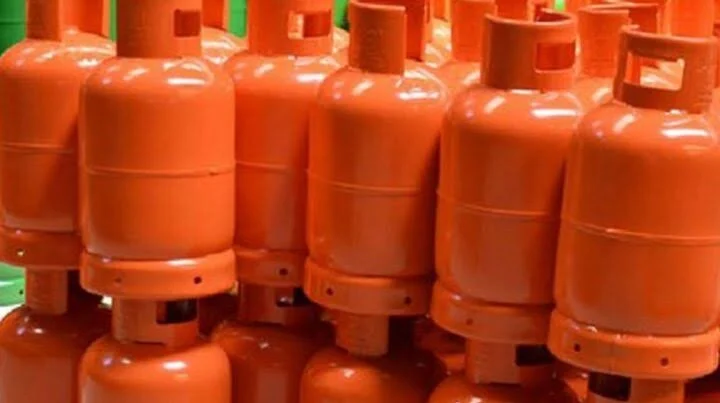
Retail prices for Liquefied Petroleum Gas, widely known as cooking gas, have begun a downward trend across major Nigerian markets following a substantial surge in supply and a corresponding decline in depot costs. Recent market reports indicate that the commodity’s price dropped by over 31 percent from its previous peak of ₦2,200 per kilogramme down to approximately ₦1,500 per kilogramme in several urban regions. This market correction follows aggressive interventions by regulatory bodies and increased commodity inflows from both local production and international shipments.
According to data compiled by the Nigerian Midstream and Downstream Petroleum Regulatory Authority (NMDPRA), the country’s average daily liquefied petroleum gas supply grew significantly to 5,040 metric tonnes in June, up from 4,262 metric tonnes recorded in May. Strategic stakeholders noted that consecutive consultations between authorities, terminal operators, and domestic plant owners succeeded in doubling national stock sufficiency from an 11-day cushion to a more stable 22-day timeline. Furthermore, the market recovery was accelerated by the removal of panic-buying trends and a strict government crackdown on unlawful product hoarding and distribution bottlenecks.
Edu Inyang, National President of the Nigerian Association of Liquefied Petroleum Gas Marketers (NALPGAM), explained that while prices are easing nationally, regional variations still exist due to local retail margins and domestic haulage costs. Currently, consumers in Lagos, Ibadan, and Abeokuta enjoy retail rates ranging between ₦1,100 and ₦1,350 per kilogramme. Meanwhile, northern distribution nodes like Kano and Kaduna report prices between ₦1,300 and ₦1,550 per kilogramme, with distant parts of the North-East observing slightly higher margins. Consequently, refilling a standard 12.5kg cylinder now averages between ₦13,750 and ₦20,625 depending on geographic proximity to regional supply depots.
To secure long-term price relief, the Minister of State for Petroleum Resources (Gas), Ekperikpe Ekpo, stated that the federal administration is prioritizing domestic consumption over export contracts while monitoring private operator import channels. The government is also advancing a local blending initiative with Nigeria LNG Limited and tracking fresh yields from new processing hubs, such as the Seplat gas facility and the Dangote Petroleum Refinery. Concurrently, infrastructure expansions like the Ajaokuta–Kaduna–Kano (AKK) gas pipeline and the OB3 River Niger crossing have both bypassed the 93 percent completion threshold, promising enhanced domestic logistics. Industry experts agree that maintaining this heightened supply momentum remains vital to defending households from broader inflationary pressures and advancing clean energy adoption across the country.