The Federal Government has announced plans to overhaul Nigeria’s education structure, citing the alarming rate of school dropouts caused by the separation of Junior Secondary Schools (JSS) and Senior Secondary Schools (SSS).
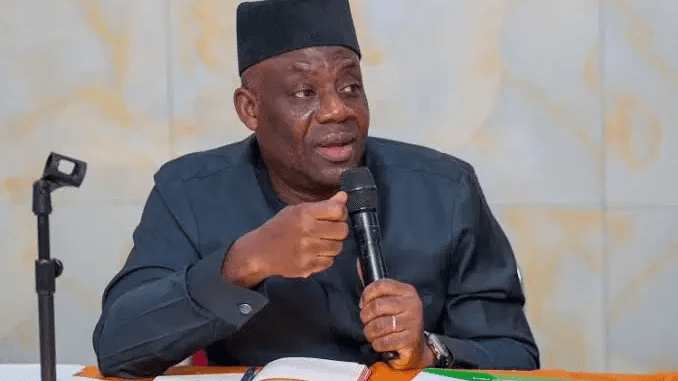
Minister of Education, Dr. Maruf Tunji Alausa, disclosed this on Tuesday during the inauguration of the Universal Basic Education Commission (UBEC) Ministerial Implementation and Monitoring Committee in Abuja.
Alausa said the existing arrangement has failed to deliver seamless access to education, revealing that more than 20 million children who enrolled in primary school dropped out before reaching senior secondary level.
According to the minister, Nigeria has about 80,000 public primary schools but only 15,000 junior secondary schools, creating a major transition gap that leaves millions of pupils without access to further education after primary school.
He explained that the policy separating JSS from SSS has contributed to overcrowding in junior secondary schools while many senior secondary schools remain underutilised.
“About 24 million children enrol in our primary schools, but only about four million complete senior secondary education. We have over 20 million children dropping out between primary school and junior secondary school. Where are those students?” he queried.
Alausa said the Tinubu administration was determined to reverse the trend and expand access to education by phasing out the policy.
“The previous governments may have failed in this regard, but this government will not fail. We are fixing this. We need to create more opportunities for children to move seamlessly through the education system.
“We have overflowing junior secondary schools and empty senior secondary schools. I can objectively report today that this disarticulation policy has failed. We will phase it out,” he stated.
The minister disclosed that the proposal would be presented at the next meeting of the National Council on Education for consideration and possible adoption.
He also inaugurated a high-powered committee chaired by education expert, Prof. Rashid Aderinoye, to accelerate the completion, handover and operationalisation of Smart Schools, Bilingual Schools and Alternative Schools funded by UBEC nationwide.
Alausa expressed concern that several completed projects remained abandoned or had not been handed over to state governments despite huge public investments.
“The purpose of these schools is to educate children, not to remain locked up after completion,” he said.
Earlier, UBEC Executive Secretary, Aisha Garba, said the Federal Government had made significant progress in expanding access to quality education through its specialised school programmes.
She revealed that 37 Smart Schools have been established across the country, with 24 already operational, while others are at different stages of completion and preparation for academic activities.
Garba also disclosed that 30 schools have been established under the UBEC-Islamic Development Bank Bilingual Education Programme across nine states, while the Alternative Schools Programme is providing learning opportunities for vulnerable and out-of-school children through flexible education models.
She said the newly inaugurated committee would ensure timely completion of projects, address implementation challenges and guarantee that educational investments deliver meaningful outcomes for Nigerian children.
Responding on behalf of the committee, Prof. Aderinoye pledged to work diligently to remove obstacles delaying project delivery and improve access to quality education nationwide.