


Lagos Housing Deficit Exceeds 3.3 Million Homes
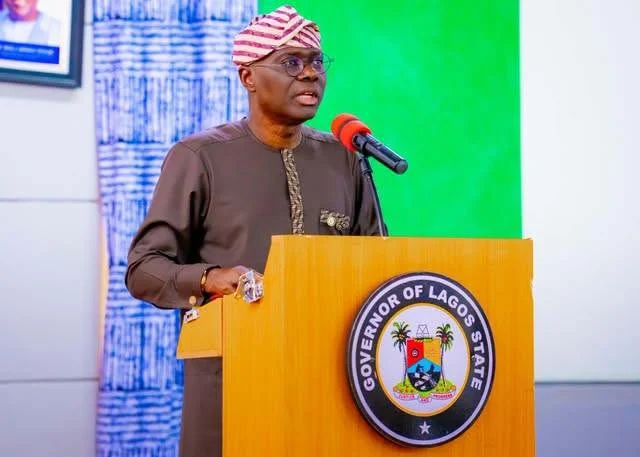
Lagos State Governor, Babajide Sanwo-Olu, has disclosed that the state’s housing deficit has exceeded 3.3 million homes, according to independent estimates, highlighting the scale of the challenge facing the state.
Sanwo-Olu made this known during an event organised to mark the 2026 World Habitat Day in Lagos. The celebration, themed “Adequate Housing for All,” took place at the Blue Roof, Lagos Television Complex, Lateef Jakande Road, Agidingbi, Ikeja.
The event was organised by the Lagos State Ministry of Physical Planning and Urban Development through its Office of Physical Planning.
Represented by the Commissioner for Housing, Moruf Akinderu-Fatai, the governor said the housing challenge required the government to focus not only on the number of homes being built but also on affordability, quality and the environment in which residents live.
Sanwo-Olu noted that about 2.8 billion people worldwide live in inadequate housing, including approximately 1.1 billion people living in slums and informal settlements. He said Lagos was also facing a major housing challenge, with its housing gap estimated at more than 3.3 million homes.
Lagos Government Reports Delivery of 10,623 Homes
The governor said his administration had delivered 10,623 homes over the past seven years through direct government funding and public-private partnerships.
According to him, 4,414 homes were delivered through direct budgetary funding, while another 6,209 were provided through public-private partnerships. He added that 23 housing estates had been completed across the state’s five divisions since 2019.
However, Sanwo-Olu acknowledged that the number of homes delivered represented only a contribution towards addressing the deficit and was not enough to resolve the wider housing challenge.
He called for a more comprehensive approach to housing delivery, stressing the need to provide homes that residents can afford, supported by essential infrastructure and located in safe communities.
He said adequate housing should offer more than shelter, noting that homes must be affordable, secure, properly serviced and suitable for the families living in them.
Government Highlights Homeownership Schemes
Sanwo-Olu said access to homeownership remained an important part of the state’s housing strategy.
He explained that the Lagos Rent-to-Own scheme allows first-time buyers to take possession of a home with an initial deposit of five per cent and repay the outstanding balance over ten years.
The Lagos HOMS scheme, he added, provides for an equity contribution of up to 30 per cent, with repayment spread over ten years.
According to the governor, more than 20,000 Lagos residents had received support through mortgage and rent-to-own schemes over the past 12 years.
He also stressed that housing estates needed supporting infrastructure to function as proper communities. These facilities include internal roads, drainage systems, electricity and water reticulation.
Sanwo-Olu cited the Greater Lagos Apartments in Surulere as an example of how underutilised land could be converted into residential housing. The development was built on a former refuse dumpsite.
He also pointed to the completion and continued development of previously stalled housing projects, including the Egan-Igando, Ajara and Abraham Adesanya schemes.
The governor disclosed that five housing schemes currently under construction through direct budgetary funding were expected to deliver another 1,584 homes.
He added that work had also commenced on the Ajara Phase II high-rise housing development.
Lagos Considers Changes to Tenancy Rules
On rental housing, Sanwo-Olu said the government recognised that homeownership would not be possible for every resident and that tenants also deserved protection.
He explained that the proposed Tenancy and Recovery of Premises Bill before the Lagos State House of Assembly was designed to address issues such as arbitrary rent increases, illegal charges, the regulation of estate agents and delays in resolving tenancy disputes.
The government was also considering proposals that would allow tenants to pay rent monthly or quarterly, rather than relying solely on longer payment periods.
The governor said tackling the housing deficit required the participation of several groups.
He urged property developers to increase housing supply while maintaining quality, financial institutions to improve access to housing finance, and planning professionals to uphold development standards.
He also called on traditional and community leaders to support orderly development and urged residents to comply with planning regulations.
Physical Planning Commissioner Calls for Coordinated Development
Earlier, the Commissioner for Physical Planning and Urban Development, Oluyinka Olumide, said the World Habitat Day theme was particularly relevant to Lagos because housing was closely connected to transportation, infrastructure, employment, security, healthcare, education, water supply, sanitation and the wider living environment.
Olumide said the rapid growth of Lagos continued to place pressure on land, housing, transportation and urban infrastructure.
He stressed that the state needed to consider not only how many houses were being built but also their locations, accessibility and whether the surrounding environment allowed residents to live safely, comfortably and productively.
The commissioner said his ministry remained committed to ensuring that development took place in an orderly and coordinated manner, in line with the goal of making Lagos functional, liveable and sustainable.
He acknowledged the governor’s support for housing, infrastructure and physical planning initiatives across the state.
Olumide also called for stronger cooperation among government agencies, private developers, financial institutions, professional bodies, development partners, community leaders and residents, noting that government could not address the housing challenge alone.
He highlighted the Electronic Physical Planning Permit Processing System as part of efforts to make planning procedures more efficient, transparent and responsive.
According to him, Lagos needed locally relevant solutions to the global housing challenge. These should include stronger planning standards, well-serviced communities, protection of planned areas, appropriate land use and greater attention to the needs of residents.
Stakeholders Urged to Support Adequate Housing
The Permanent Secretary in the Office of Physical Planning, Olayinka Wasiu, commended the governor for his commitment to housing and urban development.
He also appreciated members of the State Executive Council, particularly the Commissioner for Housing, Moruf Akinderu-Fatai, alongside permanent secretaries, general managers, directors, professional bodies, development partners, traditional leaders, community representatives and other stakeholders.
Wasiu praised the World Habitat Day Planning Committee, led by Kunle Bello, as well as the students and young people who participated in the celebration.
He described young people as future custodians of Lagos’ built environment and urged stakeholders to take the message of World Habitat Day beyond the event and apply it in their respective responsibilities.
He said building a well-planned, liveable, inclusive and sustainable Lagos required collective commitment.
The celebration brought together government officials, built-environment professionals, development partners, community representatives, academics, private-sector participants and the media. Discussions focused on practical ways to improve access to decent and affordable housing across the state.
Guest speaker Festus Adebayo also shared insights into the challenges of housing delivery and the need for practical, inclusive and sustainable approaches to ensuring that residents have access to decent homes.
His presentation explored the responsibilities of government and other stakeholders in addressing the housing crisis.
The event also featured a debate among students from selected schools, giving them an opportunity to share their views on housing, urban development and the future of Lagos’ built environment.
World Habitat Day is observed globally on the first Monday of October under the auspices of UN-Habitat. It draws attention to the condition of human settlements and the fundamental right of everyone to adequate housing.