


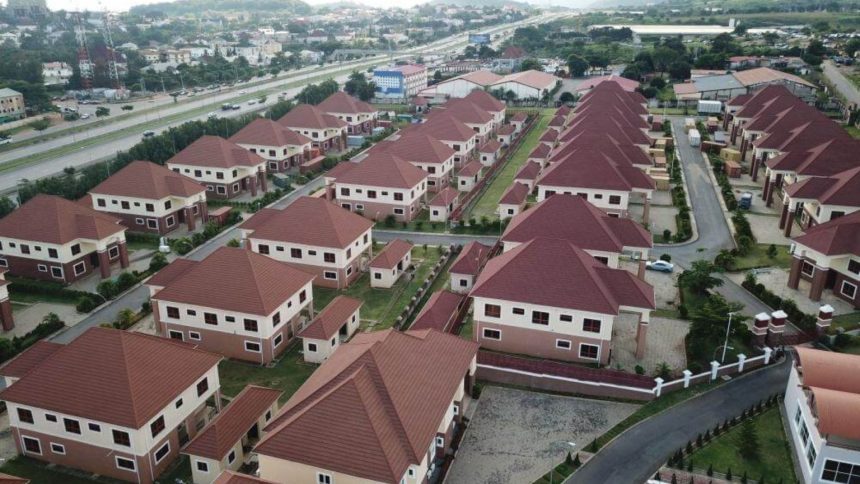
Mixta Africa Calls for Construction Finance Framework to Boost Housing Reforms
Lagos-based property developer Mixta Africa has called on the Federal Government to introduce a construction finance framework to complement proposed housing reforms and strengthen regulation in Nigeria’s real estate sector.
The company’s Group Chief Commercial Officer, Adetola Akinsulire, said improved regulation and access to financing for homebuyers would not be enough to address Nigeria’s housing deficit without adequate funding for construction.
Speaking to journalists in Lagos, Akinsulire explained that the proposed National Housing and Built Environment Regulation Policy and the national mortgage industry policy addressed two major challenges facing the sector: the lack of trust and limited access to buyer financing. However, he said construction finance remained an unresolved issue.
The Federal Ministry of Housing and Urban Development recently disclosed that real estate and construction contributed more than ₦77 trillion to Nigeria’s economy in 2025, despite the absence of a unified regulatory framework for the sector.
The proposed housing reforms include developer registration, escrow protection, land value management, construction quality standards, urban renewal and the establishment of a National Housing Data Observatory.
They also propose the creation of a housing finance authority and a structured investment window for Nigerians in the diaspora.
Akinsulire said the success of these reforms should be assessed by their ability to restore confidence in the sector, improve access to homebuyer financing and increase funding available for construction.
He welcomed the proposed National Housing Data Observatory, noting that it could improve transparency and provide better information for decision-making in the housing market. However, he cautioned that improved data alone would not automatically increase housing supply.
Mixta Africa Calls for Broader Approach to Housing Affordability
Akinsulire also urged policymakers to look beyond property prices when discussing housing affordability, arguing that the repayment period plays an important role in determining whether a home is affordable.
“Affordability is not just the price of the home. It’s the duration it takes for people to pay for it. A N60 million home is unaffordable if you have to pay for it in two years. But give someone the option to pay for that same property over 30 years, and it becomes affordable,” he said.
Nigeria’s mortgage-to-GDP ratio remains between 0.02 and 0.07 per cent, compared with approximately 30 per cent in South Africa and 70 per cent in the United Kingdom. The figures highlight the limited scale of Nigeria’s mortgage market.
Akinsulire said Mixta Africa was developing starter homes targeted at the mass market, adding that innovation led by property developers could help improve affordability and expand access to housing.
He also identified the proposed diaspora investment window as a potential early benefit of the planned reforms, citing demand among Nigerians living abroad and their familiarity with structured mortgage and property-financing products.
Construction Funding and Buyer Protection
Mixta Africa further advocated linking the release of escrow funds to construction milestones verified independently.
According to the company, protecting homebuyers must go hand in hand with sustainable construction financing to enable credible developers to deliver more housing units at scale.
The call highlights the need for housing policies to address both sides of the market: helping prospective buyers finance property purchases while ensuring developers can obtain the funding required to build homes.
Akinsulire maintained that addressing construction finance alongside regulatory improvements and mortgage access would be important to achieving the broader objectives of Nigeria’s proposed housing reforms.