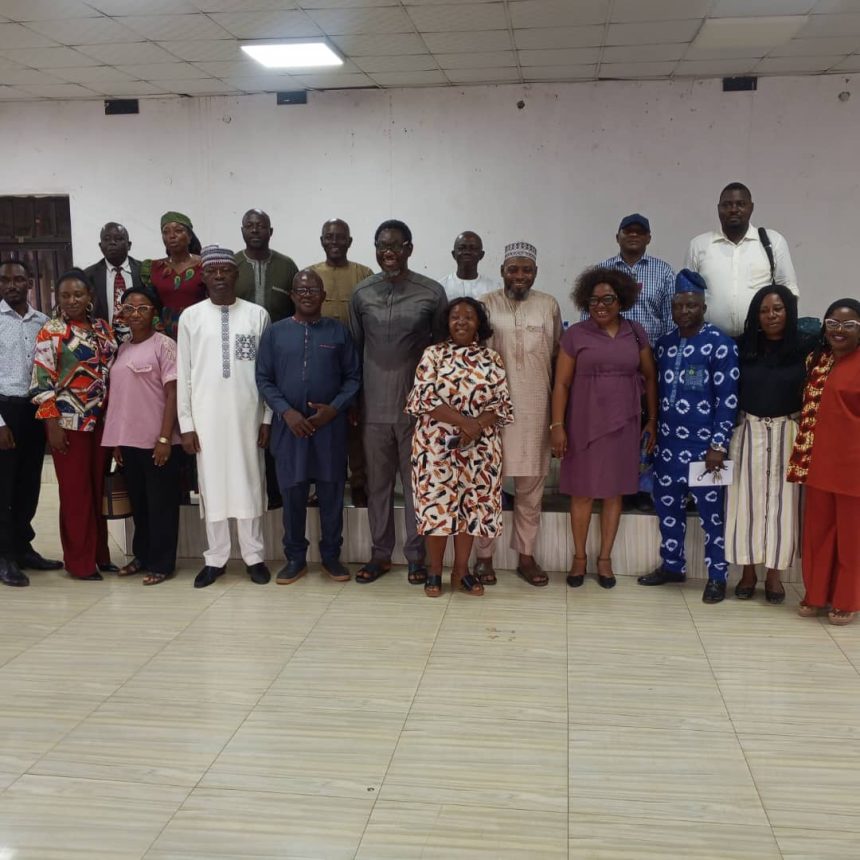
The Nigeria Social Insurance Trust Fund (NSITF) and the Federal Ministry of Housing and Urban Development have sensitised heads of federal establishments in Benue State on workers’ compensation, occupational safety and health, affordable housing and sustainable urban development.
The sensitisation took place on Tuesday, September 8, 2026, during a meeting of the Association of Heads of Federal Establishments (AHFE) in Makurdi.
The NSITF presentation was delivered by the Branch Manager of the NSITF Makurdi Branch, Mr Msugh Echono, who explained the agency’s mandate under the Employee Compensation Act (ECA) 2010.
NSITF explains compensation scheme
Echono said the Employee Compensation Scheme (ECS) provides fair, adequate and sustainable compensation to workers who suffer work-related accidents, injuries, disabilities or death.
According to him, the scheme is mandatory and covers workers in both the public and private sectors, except military and paramilitary personnel.
He said employers are required to contribute one per cent of their employees’ total emoluments to the scheme.
Employers must also notify NSITF of workplace incidents or accidents that could result in compensation claims.
Echono listed benefits under the scheme to include compensation for injuries and disabilities, occupational diseases, exposure to harmful chemicals, hearing impairment and mental stress, subject to the provisions of the law.
He added that beneficiaries could access non-cash benefits such as vocational rehabilitation, counselling and artificial limbs where necessary.
NSITF gives workers 21-day claims advice
On claims, Echono advised employees to report workplace incidents within 21 days, either through their employers or directly to NSITF.
He said affected workers should provide medical evidence of their injuries or diseases and submit claims using designated forms at any NSITF branch office.
He also disclosed that a help desk had been established at the Office of the Head of the Civil Service of the Federation (OHCSF) to support and protect injured federal workers.
Echono urged federal establishments to comply with occupational safety and health standards, warning that violations of the Employee Compensation Scheme could attract penalties and fines.
Housing Ministry addresses Nigeria’s housing deficit
In a separate presentation, the Controller of the Federal Ministry of Housing and Urban Development, Benue State Field Headquarters, Makurdi, Engr. Edwin Gyenger, highlighted the importance of affordable and decent housing to human development.
Gyenger said Nigeria’s housing deficit had been officially put at 14.925 million housing units, based on figures referenced from the National Housing Data Technical Committee involving the National Population Commission and the National Bureau of Statistics.
He clarified that the housing deficit was not simply a shortage of buildings but a shortage of decent and affordable housing for Nigerians.
According to him, successive administrations have introduced programmes to address the challenge, including the Site and Services Scheme, Shagari Low-Cost Housing Programme, National Housing Fund, monetisation policy, National Housing Programme and Renewed Hope Housing Estate.
Gyenger said the Federal Ministry of Housing and Urban Development is responsible for formulating and implementing policies, programmes and projects relating to affordable housing and sustainable urban development.
He listed the ministry’s responsibilities to include providing access to affordable housing and rental schemes, housing policy formulation, urban planning, land administration, sustainable human settlements and urban renewal.
The ministry also supervises agencies involved in mortgage financing and enforces physical planning standards, he added.
Gyenger said the ministry provides professional consultancy services to federal Ministries, Departments and Agencies and maintains federal government public buildings.
The sensitisation was organised to improve awareness among federal establishments about workers’ welfare, statutory obligations, occupational safety, housing policies and sustainable development.