The growing destruction of public infrastructure by scavengers has raised fresh concerns over the safety and durability of critical facilities in Lagos, with residents calling for urgent government intervention.
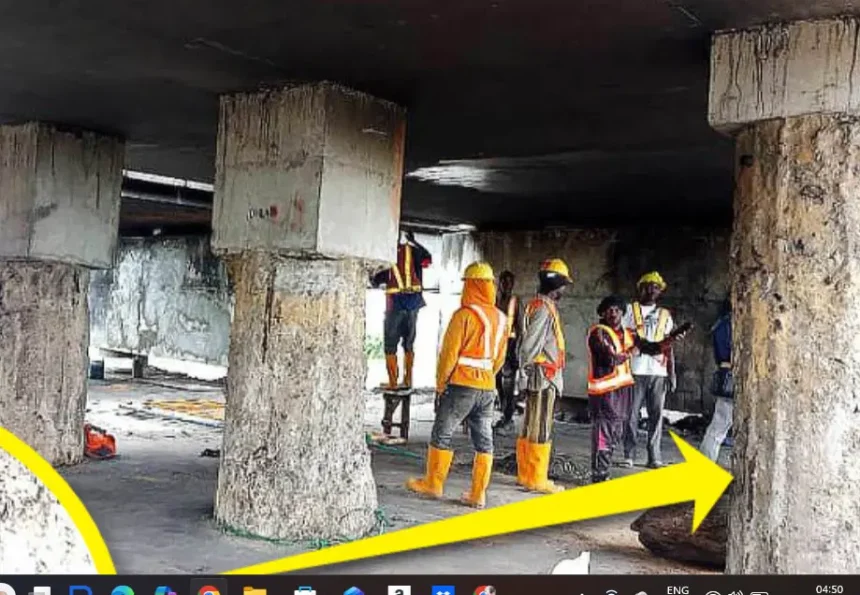
The concern follows reports of vandalism at the Alakija-Festac link bridge, where individuals suspected to be scavengers allegedly removed parts of the structure’s metal reinforcement after breaking through its concrete covering.
The incident has renewed attention on the damage caused by the illegal removal of metals from public infrastructure. Residents fear that continued interference with structural components could compromise facilities designed to serve thousands of people.
Drainage infrastructure also targeted
The problem extends beyond bridges.
Vanguard reported an earlier incident in an upscale estate in Alimosho, where scavengers removed six sets of metal gutter covers from a drainage system in the early hours of the morning.
The missing covers created a dangerous opening in front of a residential property. One resident subsequently drove into the uncovered drainage channel and reportedly spent more than ₦500,000 repairing his vehicle. The incident occurred in January 2024.
The incident illustrates how the theft of seemingly minor infrastructure components can quickly create safety risks for residents and motorists.
Bridge vandalism raises bigger concerns
The recent damage to the Alakija-Festac link bridge has generated even greater concern because of the structural role played by its reinforcement.
According to the report, scavengers allegedly broke through sections of concrete surrounding the bridge’s pillars and removed exposed iron reinforcement.
The report also said portions of the laterite piling beneath the bridge had been dug into, creating additional concerns about the condition of the structure.
The situation prompted Lagos State Governor Babajide Sanwo-Olu to inspect the affected location after videos of the damage circulated online.
The governor ordered efforts to identify those responsible for the alleged vandalism and described the destruction of public infrastructure as a serious concern.
Why infrastructure vandalism matters to housing
Infrastructure vandalism is not only a transportation or security issue. It has direct consequences for the built environment.
Roads, bridges, drainage systems, street lighting, water infrastructure and other public facilities form the foundation on which communities function.
When these facilities are damaged or removed, residents can face increased safety risks, flooding, higher maintenance costs and reduced access to essential services.
For property owners, deteriorating infrastructure can also affect the attractiveness and value of surrounding neighbourhoods.
The removal of drainage covers, for example, can expose residents to accidents while also contributing to poor drainage conditions when damaged infrastructure is not promptly restored.
The economic cost
Public infrastructure represents significant investment by government and taxpayers.
When components are stolen or damaged, authorities must spend additional resources on repairs and replacement rather than directing those funds towards new infrastructure or community development.
The problem therefore creates a cycle in which government spends money building infrastructure, criminals dismantle parts of it for scrap, and public funds are subsequently required to restore the damaged facilities.
Enforcement and scrap-metal regulation
The incidents also raise questions about the scrap-metal trade and the channels through which stolen public infrastructure enters the market.
A stronger system for monitoring scrap-metal dealers, identifying stolen infrastructure components and enforcing penalties for vandalism could help reduce the incentive to target public facilities.
At the same time, authorities need to address the economic conditions that push some people into informal scavenging while maintaining clear boundaries between legitimate recycling activities and the destruction of public assets.
For Lagos and other rapidly growing Nigerian cities, protecting existing infrastructure is becoming just as important as building new facilities.
As urban populations increase and infrastructure comes under greater pressure, unchecked vandalism could undermine the safety, functionality and economic value of entire communities.
The challenge for government is therefore twofold: build infrastructure that meets growing demand and protect what has already been built.