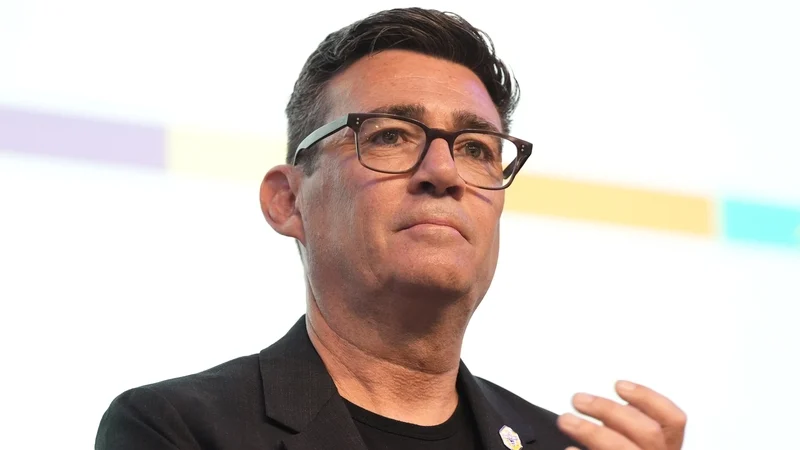
The UK government has unveiled a £442 million housing support package aimed at helping people sleeping rough move off the streets before Christmas, as Prime Minister Andy Burnham steps up efforts to tackle the country’s homelessness crisis.
The programme will provide emergency accommodation and longer-term housing support across England, with areas experiencing the highest levels of homelessness and housing pressure expected to receive the largest share of the funding.
Burnham said no one should have to sleep in doorways or outside railway stations, arguing that the scale of rough sleeping should not be accepted as normal in one of the world’s largest economies.
The announcement comes amid a significant increase in rough sleeping across England.
Government figures show that 4,793 people were sleeping rough in England in 2025, the highest figure recorded.
However, rough sleepers represent only a fraction of the country’s wider homeless population.
Housing charity Shelter estimated that about 382,000 people were homeless in England in 2025. This broader figure includes people living in temporary accommodation, families and children without permanent housing, and people without secure tenure.
The figures highlight the difference between rough sleeping and the wider housing crisis.
While getting people off the streets is an immediate priority, the larger challenge involves providing enough affordable and secure housing to prevent people from becoming homeless in the first place.
The £442 million programme will not be limited to emergency accommodation.
The government said the funding will also support the creation of more than 1,000 permanent homes over the next three years.
Housing Secretary Angela Rayner said the government was acting urgently to help people leave the streets, move into secure homes and access the support required to rebuild their lives.
The approach reflects an important principle in homelessness policy. Emergency accommodation can provide immediate protection, but permanent housing is needed to create long-term stability.
Burnham pointed to the UK’s response during the COVID-19 pandemic as evidence that government can move people sleeping rough into accommodation quickly when there is sufficient political will.
He argued that a similar effort could be mounted again to address the current crisis.
The government also plans to hold its first national summit dedicated specifically to tackling rough sleeping later this year.
Local leaders, including mayors, will be expected to play a major role in implementing the programme before Christmas.
Although the government has allocated £442 million, Burnham acknowledged that the funding may not be enough to completely achieve the target.
He has therefore called on wider society, including faith organisations and community groups, to contribute to the effort.
The programme is expected to be funded from the existing housing ministry budget rather than through a newly announced funding source.
This has already attracted criticism from opposition parties, with Conservative housing spokesman James Cleverly questioning how the government intends to deliver and finance the commitment.
Homelessness charities broadly welcomed the announcement, particularly the commitment to combine emergency accommodation with longer-term housing.
However, concerns remain over whether the programme will address the structural causes of homelessness.
Housing affordability, limited housing supply, insecure tenancies, rising rents and pressure on local authorities can all contribute to people losing stable accommodation.
Without addressing those underlying factors, emergency interventions risk treating the symptoms rather than the cause.
The UK’s homelessness figures demonstrate that housing crises are not limited to developing economies.
Even countries with large economies can struggle when housing supply, affordability and household incomes fall out of balance.
For policymakers, the challenge is therefore twofold. Governments must respond quickly to people already experiencing homelessness while also increasing the supply of affordable and secure homes.
The UK’s latest programme attempts to do both by combining immediate accommodation with funding for permanent housing.
Its success, however, will ultimately depend on whether those leaving the streets can move into stable, affordable homes rather than simply temporary accommodation.