


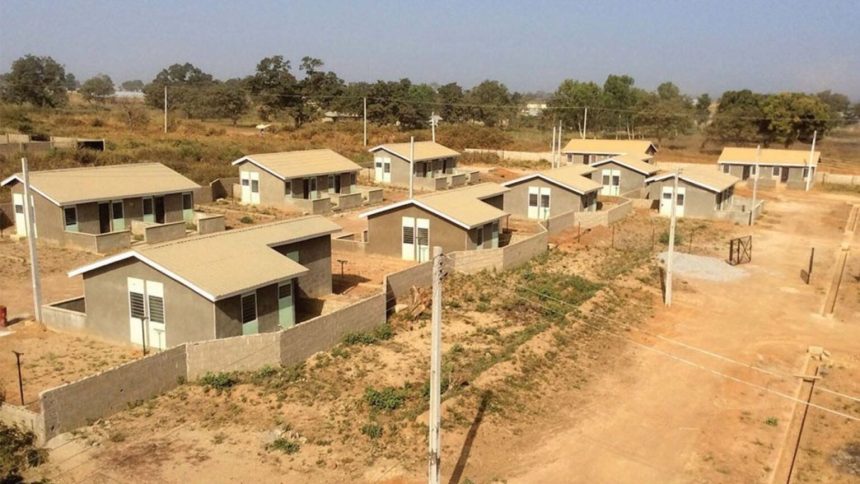
Joint ventures between governments and private developers are helping to increase Nigeria’s housing supply. However, experts say many of these projects still fail to reach low- and middle-income Nigerians.
Under a typical joint venture, government provides land and sometimes infrastructure. The private developer provides funding, construction skills and project management.
The model can reduce the burden of land acquisition. Yet the commercial structure of many projects often pushes house prices beyond what ordinary workers can afford.
High costs push up house prices
Private developers need to recover their construction and financing costs. They also need to make a profit. Government may also expect financial returns from the public land contributed to the project.
These costs eventually affect the selling price of the homes.
Rising construction costs have made the situation more difficult. Cement, steel, fittings and other building materials now account for a large share of development costs.
High financing costs add another burden. Developers who cannot access cheaper funds often depend on commercial bank loans. They then pass part of the financing cost to buyers.
Mortgage access remains a major barrier
Access to mortgages also limits the reach of JV housing projects.
Many low-income Nigerians work in the informal sector. Some have irregular incomes and cannot meet the requirements of formal mortgage providers.
Even when they qualify for loans, high interest rates and short repayment periods can make monthly payments too expensive.
As a result, many homes described as affordable eventually attract middle- and high-income buyers, investors and Nigerians living abroad.
Government support needs to go beyond land
Toye Eniola, Executive Secretary of the Association of Housing Corporations of Nigeria (AHCN), said the growing reliance on JVs had weakened social housing delivery.
According to Eniola, private developers naturally focus on recovering their investments and making profits. That approach makes higher-income markets more attractive than low-income housing.
He also said government-backed projects often face delays because of disagreements between partners and difficulties in securing funds.
Eniola argued that government must support social housing through land, infrastructure and cheaper finance. He also raised concerns about delays in accessing funds through housing finance institutions and government-backed programmes.
Construction costs squeeze developers
Olajide Dosunmu, Managing Director of Noble Grounds Limited, described JVs as a useful model but said high construction costs remained a major challenge.
He noted that cement plays an important role in several stages of construction. Dosunmu said the price of cement had increased from about N9,500-N10,000 to an average of N13,000-N14,000 over the six months referenced.
The higher costs make it harder for low-income buyers to meet mortgage payments.
Dosunmu said developers often prefer middle- and higher-income areas because homes sell faster in those markets. This allows developers to recover their costs more quickly.
He also warned that efforts to reduce construction costs in low-income areas could create pressure to lower building standards. Such compromises, he said, could affect the structural quality of housing.
Infrastructure subsidies could reduce costs
Dosunmu urged governments to provide infrastructure in areas selected for JV housing projects.
Roads, drainage, water supply and other basic infrastructure can add significantly to development costs. Government investment in these areas could reduce the amount developers need to spend before selling the homes.
He argued that government could also benefit from increased economic activity and tax revenue as new communities develop.
JVs still help unlock land
Rogba Orimalade, former Chairman of the Lagos branch of the Nigerian Institution of Estate Surveyors and Valuers (NIESV), said JVs remained an important tool for property development.
He noted that developers can use partnerships to gain access to land and create more housing units.
However, Orimalade said high land and development costs continue to exclude low-income households from many JV projects.
He called for lower development charges, approval fees and consent costs. Reducing these expenses, he said, could encourage developers to increase housing supply.
Clearer rules needed for affordable housing
Experts say successful JVs require clear agreements between government and private partners.
Such agreements should define each party’s responsibilities, project timelines, funding arrangements, risks and profit-sharing terms. Clear rules can also reduce disputes that delay construction.
However, affordability must remain a central part of the arrangement. Government land and other public incentives should come with clear targets for the number and price of affordable homes.
Nigeria needs more housing, but supply alone will not solve the affordability problem. If JV projects continue to focus mainly on buyers who can pay market prices, low-income households will remain excluded.
A stronger approach would combine public land with infrastructure support, cheaper finance, lower development charges and workable mortgage arrangements. Such measures could help government-private partnerships serve not only the property market, but also Nigerians who need affordable homes most.