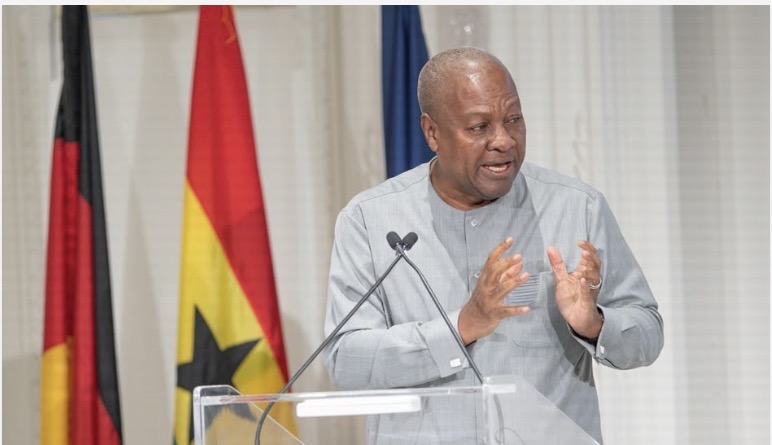
President John Dramani Mahama is expected to open Ghana’s two-day National Conference on Housing Finance in Accra on October 7, with stakeholders set to examine innovative financing mechanisms for expanding access to adequate and affordable housing.
The conference, organised by the National Homeownership Fund (NHF), will be held under the theme, “Adequate Housing for All: Innovative Financing for Ghana’s Housing Future.”
Mahama, who is the Guest of Honour, is expected to deliver the keynote address at the opening session of the conference.
The event will bring together representatives from government, financial institutions, the private sector, development institutions, civil society, academia and local government to discuss the challenges affecting housing finance in Ghana.
The conference comes amid persistent difficulties in Ghana’s housing sector, including rising construction costs, limited access to long-term financing, high mortgage rates and affordability constraints.
According to the National Homeownership Fund, these challenges continue to prevent many households from accessing adequate housing.
The two-day event will therefore focus on how capital can be mobilised and deployed more effectively to increase housing opportunities, particularly for low- and middle-income households.
Participants are also expected to examine the current state of Ghana’s housing finance ecosystem and consider financing models that could improve access to sustainable and affordable housing.
Stakeholders to examine housing finance reforms
The conference is being organised in collaboration with the Ministry of Finance, the Ministry of Works, Housing and Water Resources, the Ministry of Local Government, Chieftaincy and Religious Affairs, the Bank of Ghana and Shelter Afrique Development Bank.
Financial institutions, labour unions and private-sector stakeholders are also expected to participate in the discussions.
The organisers said the conference would seek to move the housing finance conversation beyond policy discussions by identifying practical financing solutions, institutional reforms and partnerships that could support Ghana’s housing sector.
The event is expected to end with a policy outcomes communiqué containing recommendations to guide housing policy, implementation and resource mobilisation.
Focus on affordable housing finance
The conference forms part of activities marking World Habitat Day 2026, which highlights the condition of human settlements and the importance of adequate housing to inclusive and sustainable development.
The National Homeownership Fund said the conference reflects Ghana’s effort to strengthen the systems, institutions and financing mechanisms needed to make adequate and affordable housing more accessible.
The Fund, a government-backed housing finance institution, was established to support affordable homeownership and contribute to the development of Ghana’s housing finance ecosystem.
Through partnerships with government institutions, financial institutions, housing developers and other stakeholders, the NHF seeks to develop sustainable financing solutions that can make homeownership more accessible to Ghanaians.
Housing finance challenges
Earlier in September, NHF Chief Executive Officer Prosper Hoetu said the conference would focus on structural barriers that have limited access to decent and affordable housing, particularly for low- and middle-income households.
The 2024 Ghana Housing Profile estimated the country’s housing deficit at approximately 1.8 million units, while more than 30 per cent of the existing housing stock was considered inadequate.
Hoetu said only about five per cent of Ghanaians could independently afford a home, while 60 per cent required some form of government assistance and 35 per cent required social housing.
He identified limited access to long-term financing, high interest rates, short loan tenures, land administration challenges and inefficiencies in housing delivery as major barriers to homeownership.
According to him, Ghana’s mortgage-to-GDP ratio remained below 0.3 per cent, while mortgage interest rates often exceeded 30 per cent, making formal housing finance difficult for many low- and middle-income households to access.
The conference is consequently expected to examine measures including reducing mortgage rates, extending loan tenures, developing local-currency mortgage products, expanding access to finance for informal-sector workers and attracting long-term capital into the housing market.
Construction and green housing also on agenda
Discussions will also cover financing challenges facing housing developers, including high borrowing costs, limited access to long-term capital, difficulties with land titling and perceived project risks.
Four thematic panel discussions are expected to focus on mortgage financing, construction financing, climate and green housing, and informal and social housing.
An exhibition will also provide an opportunity for financial institutions, developers, technology providers and development partners to showcase housing finance products, green-building technologies and affordable housing projects.
The NHF expects the conference to produce shared commitments, new or revised affordable housing loan products, a technical working group on green affordable housing finance and a roadmap for operationalising its homebuyer database and offtake guarantee framework.
A follow-up review of the outcomes is scheduled for the first quarter of 2027.
The conference is therefore expected to place housing finance at the centre of discussions on Ghana’s efforts to expand housing supply and improve access to homeownership for households across different income groups.