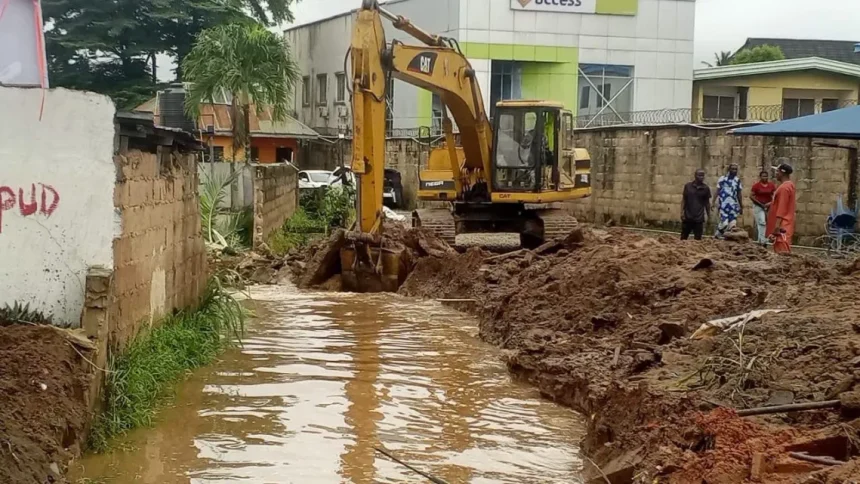
The Ondo State Government has commenced the demolition of buildings and other structures obstructing waterways and government setbacks in Akure, the state capital, as part of efforts to reduce flooding, control erosion, and strengthen compliance with physical planning regulations. The exercise is intended to improve drainage infrastructure ahead of the peak rainy season and reduce the risk of flood-related disasters.
The demolition, which began along Oyemekun Road, is being jointly carried out by the Ondo State Ministry of Physical Planning and Urban Development and the Office of the Special Adviser to the Governor on Technical and Ecological Control. Government officials said the affected structures were found to be obstructing natural drainage channels and violating approved planning standards.
Commissioner for Physical Planning and Urban Development, Sunday Olajide, represented by the Permanent Secretary of the ministry’s Building Control Unit, Abimbola Tofowomo, warned developers and property owners against erecting buildings on waterways or within government setbacks without the necessary approvals. He reiterated that the government would continue enforcing planning regulations to promote orderly urban development and public safety.
The Special Adviser to the Governor on Technical and Ecological Control, Elisha Ebijimi, disclosed that owners of the affected properties had been served statutory notices before the demolition commenced. He explained that the operation would pave the way for the expansion of blocked drainage channels and the construction of concrete retaining walls to improve stormwater management and reduce erosion.
According to Ebijimi, inspections revealed deliberate obstruction of drainage openings, resulting in trapped stormwater beneath sections of the road. Engineers have since begun clearing the affected areas to restore water flow and assess the integrity of the road infrastructure before rehabilitation works continue.
Urban planning experts have consistently stressed that protecting waterways, enforcing development control regulations, and maintaining effective drainage systems are essential to reducing flood risks in rapidly growing cities. They note that compliance with approved building plans and setback requirements remains critical to creating safer and more resilient urban communities.